
Few things are more frustrating than watching your Prayer Plant’s stunning patterned leaves develop dry, brown, crispy edges after weeks of careful care. The good news is that crispy edges are almost always a sign of a specific, correctable stressor rather than a mysterious illness. Prayer Plants (Maranta leuconeura) are naturally a bit fussier than many houseplants, and once you know what to look for, fixing the problem is usually straightforward.
Here are the most common causes of crispy edges on a Prayer Plant, how to spot each one, and what to do about it — with an image prompt and a unique title for each.
1. Low Humidity
Prayer Plants are native to humid tropical forests, and dry indoor air — especially during winter when heaters are running — is one of the most common causes of crispy, browning leaf edges. Aim for humidity around 50–60% using a humidifier, pebble tray, or by grouping it with other plants.
Why it happens: Low humidity causes the leaves to lose moisture faster than the roots can replace it, and the thin leaf edges dry out first.
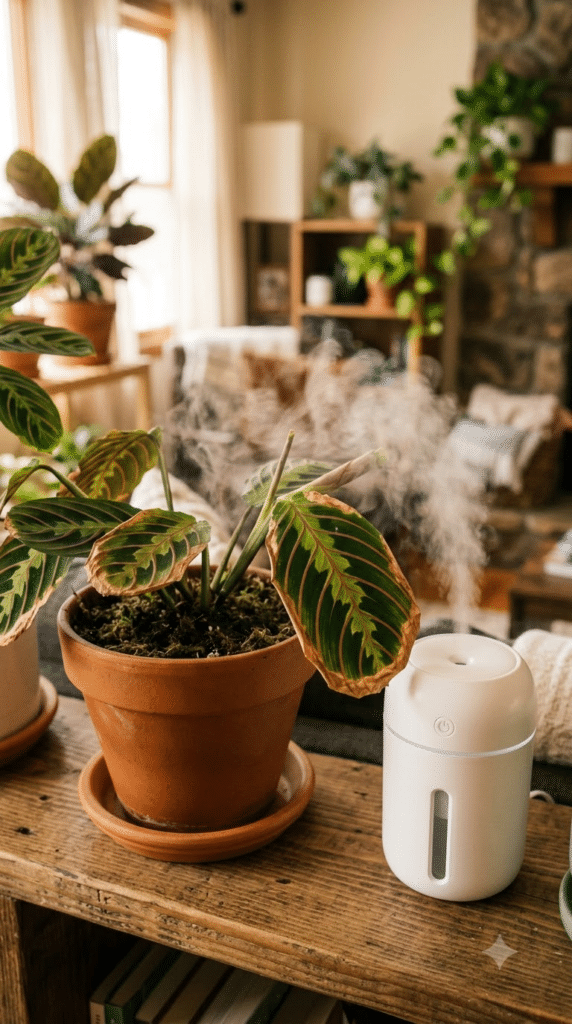
Image Title: “When the Air Gets Too Dry to Keep Up”
2. Tap Water Sensitivity
Prayer Plants are notably sensitive to the chlorine, fluoride, and salts commonly found in tap water, which can build up in the soil and cause leaf tip and edge browning over time. Switching to filtered, distilled, or rainwater often resolves the issue within a few weeks.
Why it happens: Mineral buildup in the soil damages the delicate leaf tissue, showing up first at the edges where the plant pushes excess minerals.
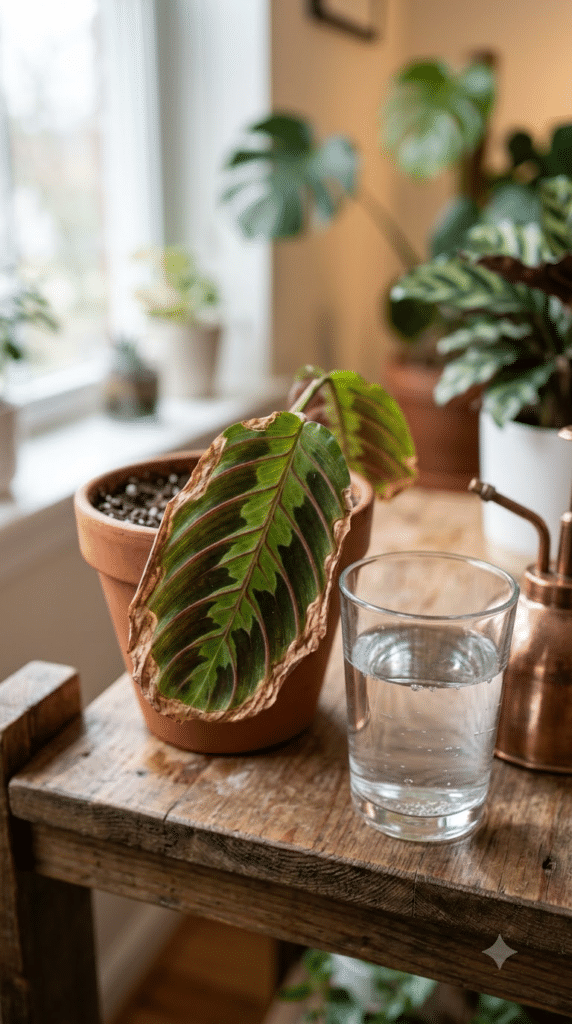
Image Title: “What’s Really in That Tap Water”
3. Underwatering
Letting the soil dry out completely between waterings stresses a Prayer Plant, which prefers consistently moist (but not soggy) soil at all times. Crispy edges paired with dry, compacted soil are a clear sign it’s time to adjust your watering schedule.
Why it happens: Without steady moisture, the plant can’t keep its thin leaf tissue hydrated, and the edges dry out and turn brown first.
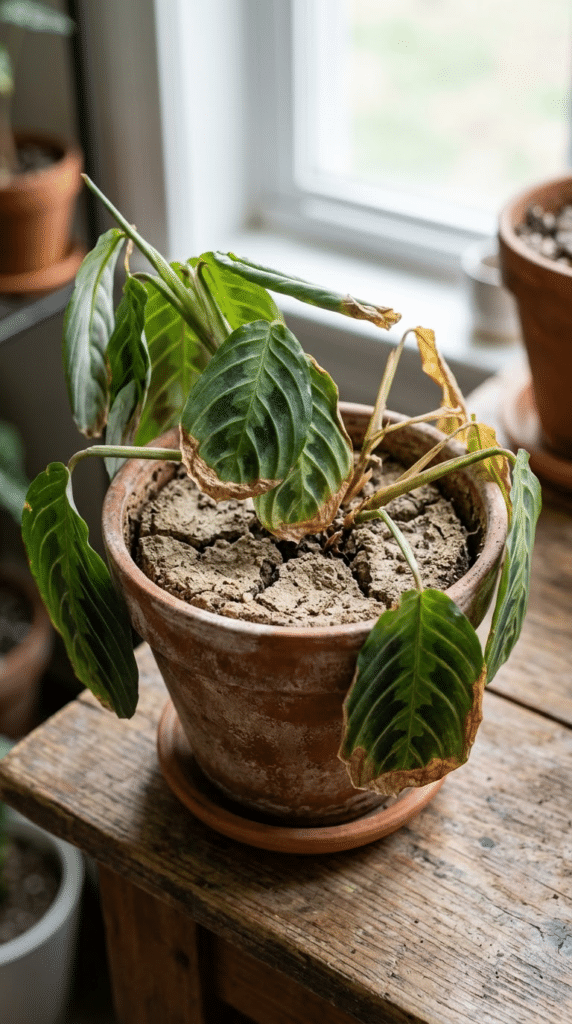
Image Title: “The Soil That Went Too Long Without Water”
4. Overwatering and Root Stress
While underwatering is common, consistently soggy soil can also stress the roots, indirectly leading to crispy or discolored leaf edges alongside yellowing leaves. Let the top inch of soil dry out before watering again, and make sure the pot drains well.
Why it happens: Waterlogged roots struggle to absorb nutrients properly, and the resulting stress often shows up first at the leaf margins.
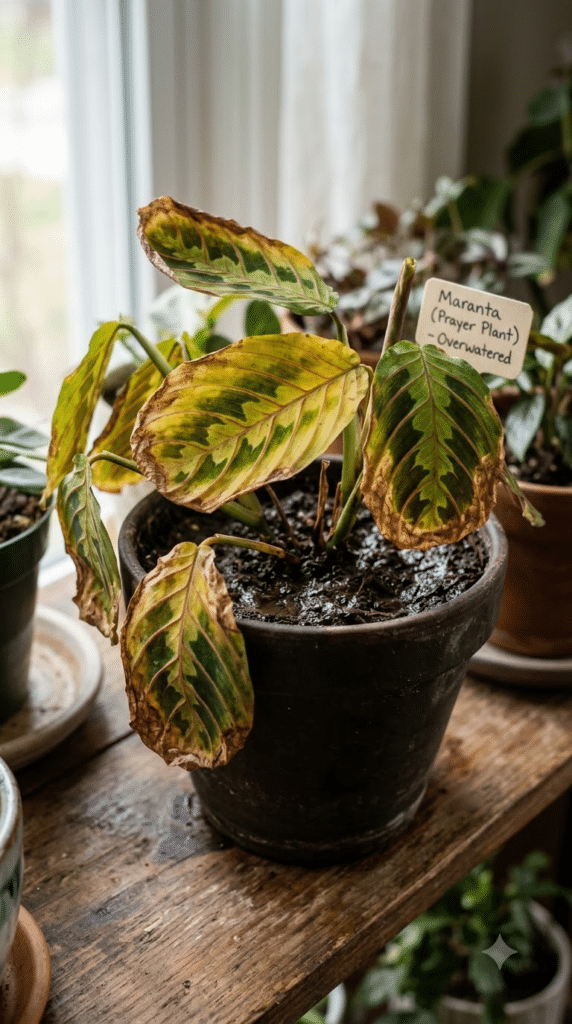
Image Title: “When Too Much Water Backfires”
5. Direct Sunlight Exposure
Prayer Plants are understory plants in the wild, evolved to grow beneath a rainforest canopy, and direct sun can scorch their delicate leaves, leading to crispy, sometimes bleached-looking edges. Move the plant to a spot with bright, indirect light instead.
Why it happens: Direct sun causes rapid water loss from the leaf surface, drying out the edges faster than the plant can compensate.
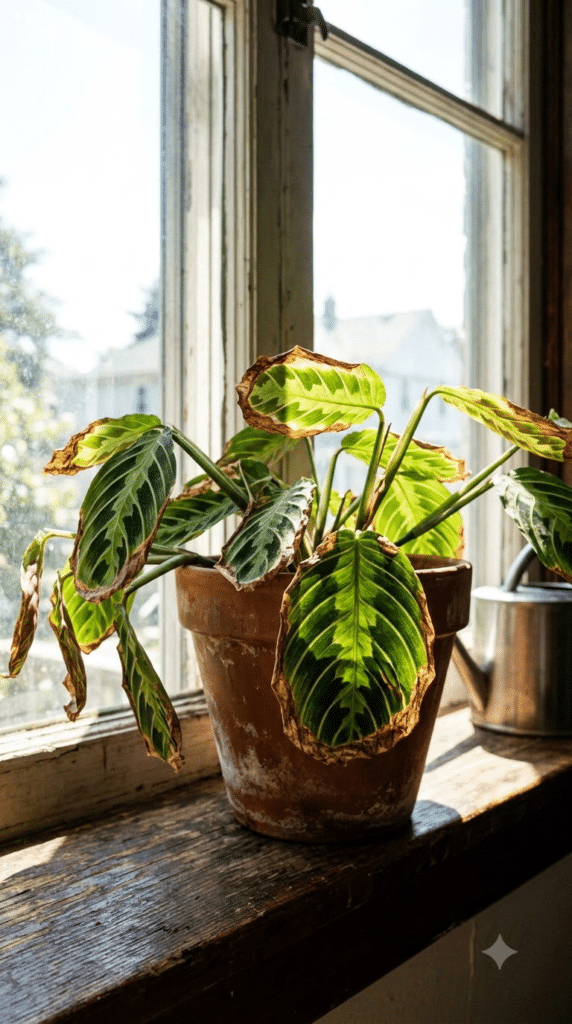
Image Title: “A Plant That Wasn’t Built for Direct Sun”
6. Low Temperatures or Cold Drafts
Prayer Plants prefer stable temperatures between 65–80°F (18–27°C) and can develop crispy, damaged edges when exposed to cold drafts from windows, doors, or air conditioning vents. Relocating the plant away from these cold spots usually stops further damage.
Why it happens: Cold air disrupts the plant’s ability to move water through its tissue efficiently, leading to localized dehydration and damage at the leaf margins.
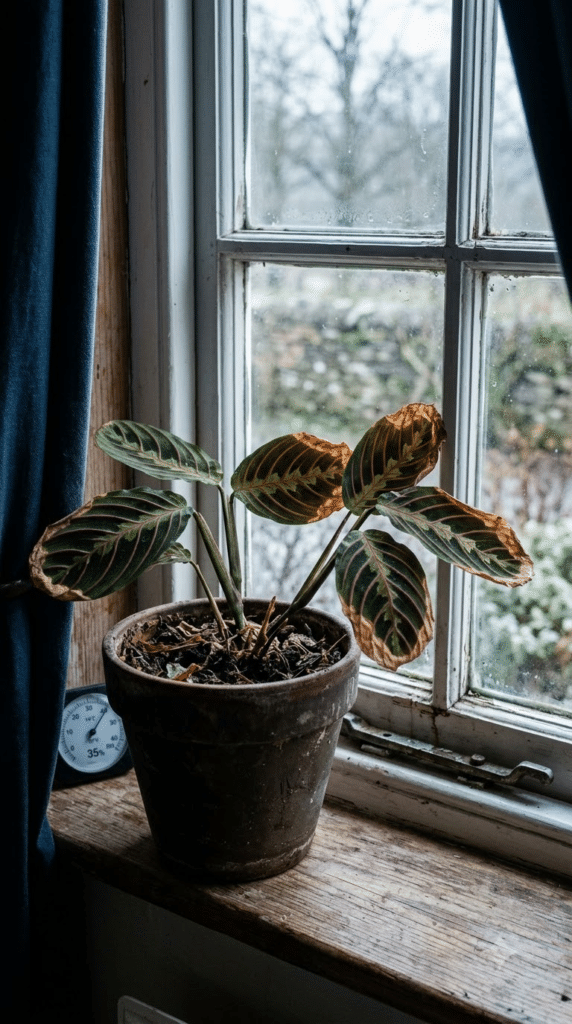
Image Title: “Too Close to the Cold Coming Through the Glass”
7. Fertilizer Buildup
Over-fertilizing, or fertilizing too frequently, can cause mineral salts to accumulate in the soil, burning the roots and leading to crispy, brown leaf edges. Stick to a diluted, balanced fertilizer no more than once a month during the growing season, and flush the soil with plain water occasionally.
Why it happens: Excess salts draw moisture out of root tissue through osmosis, weakening the plant’s ability to properly hydrate its leaves.
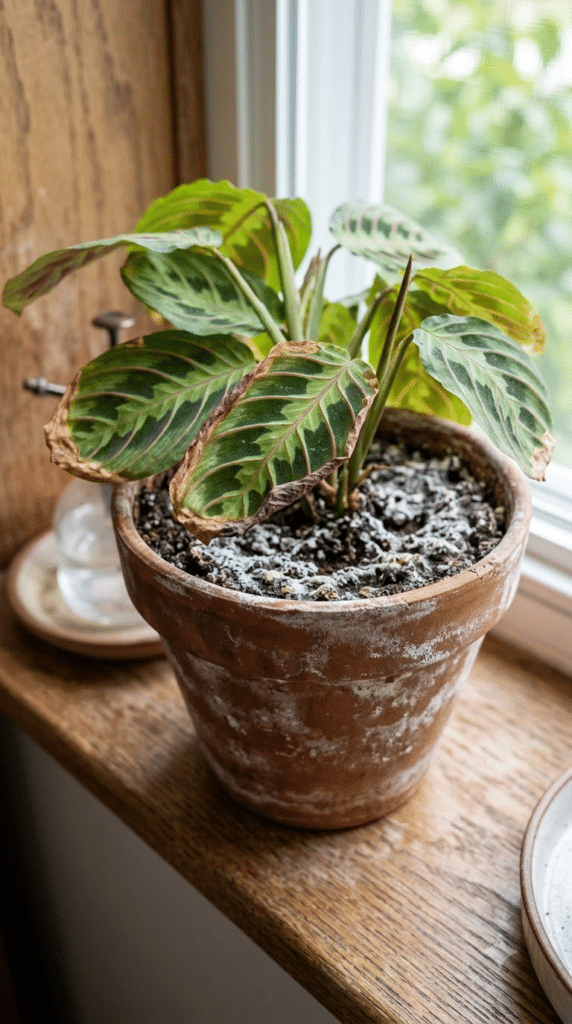
Image Title: “The Fertilizer Schedule That Went Too Far”
8. Repotting Stress or Root Disturbance
A Prayer Plant recently repotted or moved to a new container can sometimes develop temporary crispy edges as it adjusts to disturbed roots and a new soil environment. This is usually short-lived, resolving within a few weeks as the plant settles in.
Why it happens: Disturbed roots temporarily struggle to take up water efficiently, causing mild, short-term stress that shows up at the leaf edges.
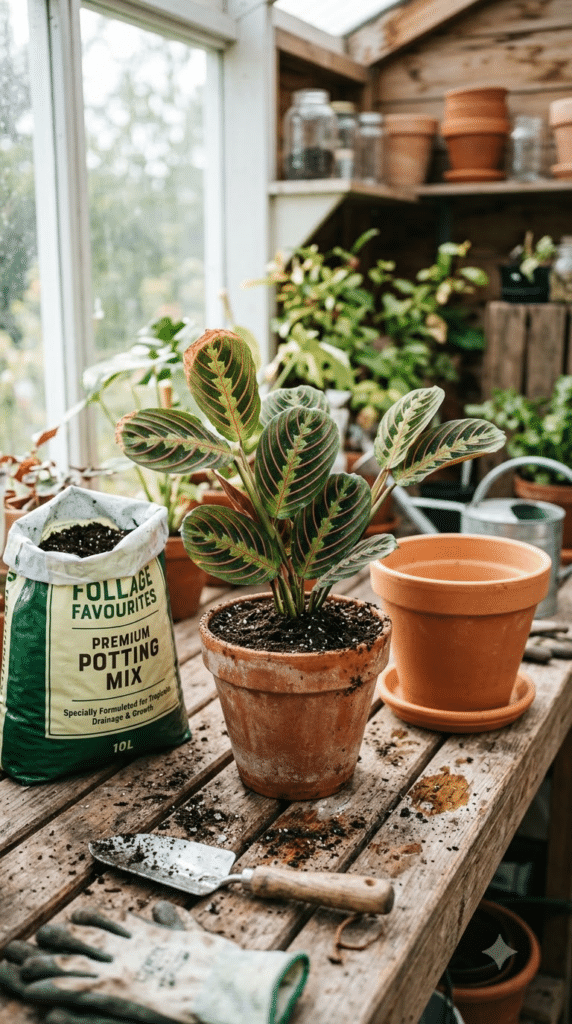
Image Title: “Settling In After the Move”
Final Thoughts
Crispy edges on a Prayer Plant are almost always fixable once you identify the underlying cause — whether that’s dry air, tap water sensitivity, inconsistent watering, or too much direct sun. Take note of where on the plant the damage is showing up, how the soil feels, and any recent changes to its environment or care routine. With a few adjustments, most Prayer Plants bounce back within a few weeks, pushing out fresh, unblemished leaves as they recover.
Quick Diagnostic Checklist
- Dry, curling edges + dry indoor air → Low humidity
- Brown tips despite regular watering → Tap water sensitivity
- Crispy edges + bone-dry soil → Underwatering
- Crispy edges + yellowing + soggy soil → Overwatering
- Bleached or scorched-looking edges → Too much direct sun
- Damage near a window or vent → Cold draft
- White crust on soil + burnt edges → Fertilizer buildup
- Recent repotting + mild edge damage → Temporary transplant stress