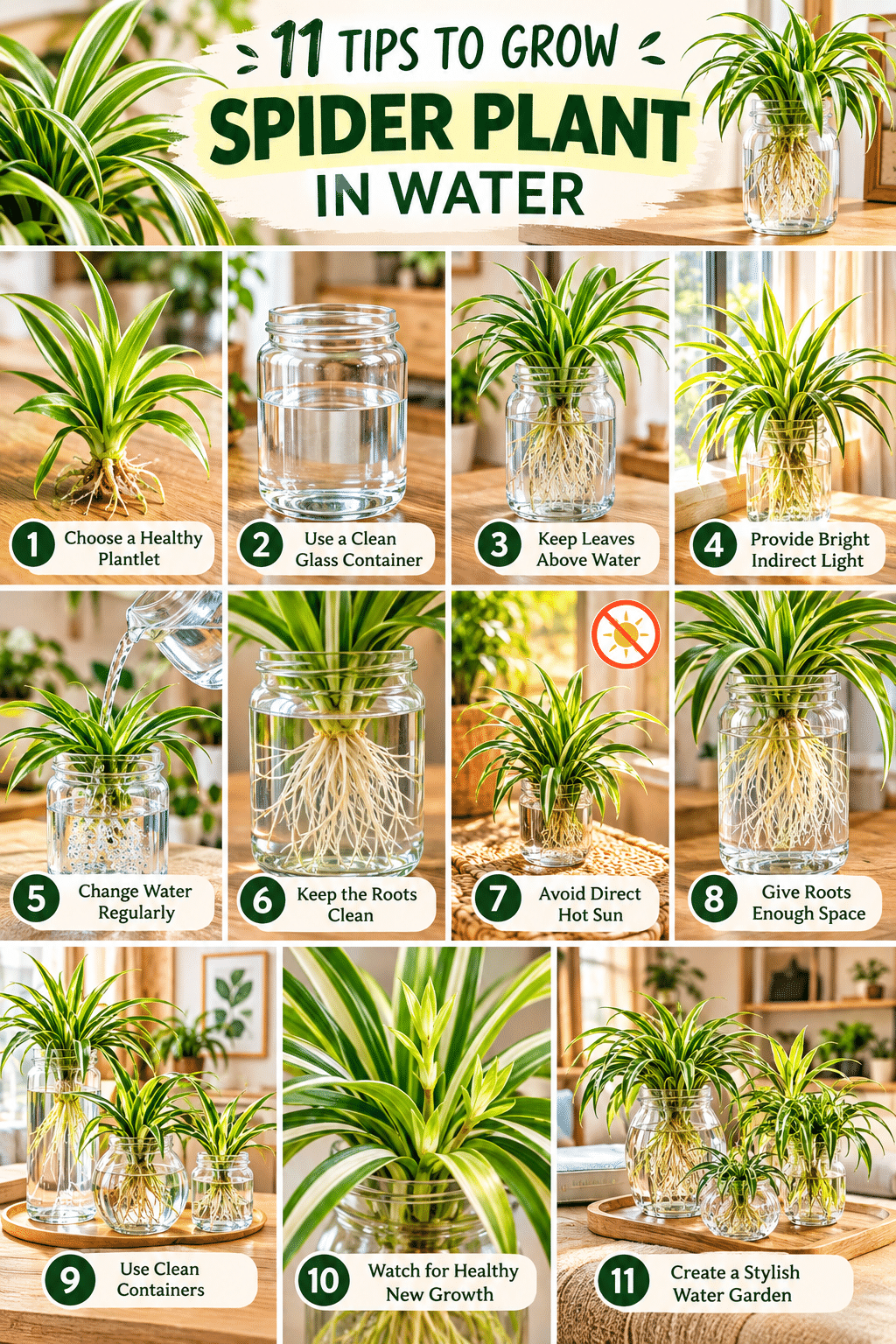
Spider Plants are famous for being nearly impossible to kill, and that resilience extends to water propagation too. Growing a Spider Plant in water — rather than soil — is a simple, satisfying way to display its arching leaves while skipping the mess of potting mix altogether. Whether you’re rooting a new baby “pup” or keeping a mature plant in water long-term, a few key habits make all the difference.
Here are 11 tips to successfully grow a Spider Plant in water, along with an image prompt and a unique title for each.
1. Start with a Healthy Plantlet or Cutting
Choose a “pup” (baby plantlet) from a mature Spider Plant that already has small visible root nubs at its base, since these root much faster in water than a plantlet with no root growth at all. Snip it from the parent plant with clean scissors, leaving a small stem attached.
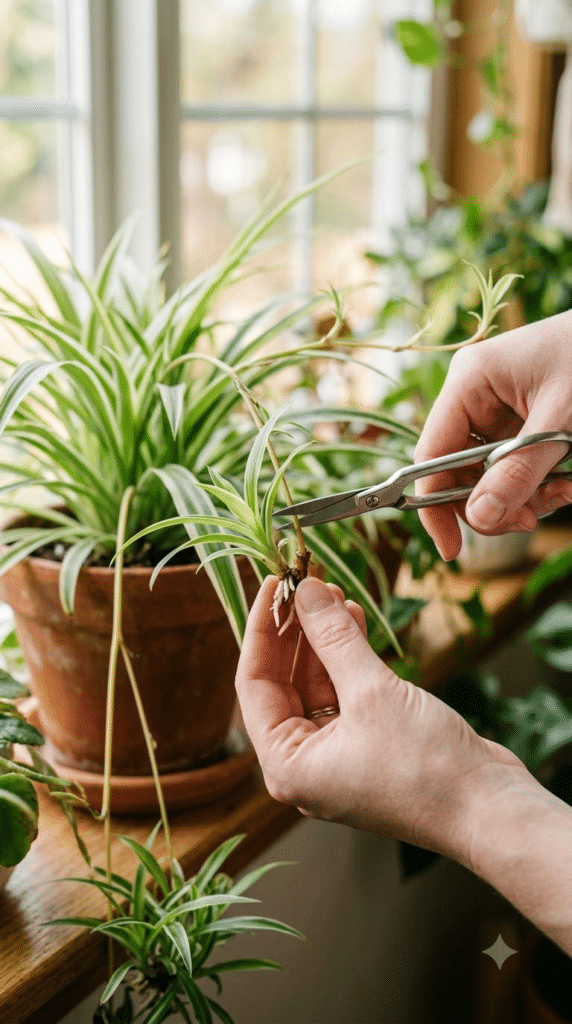
Image Title: “Choosing the Pup That’s Ready to Root”
2. Use a Clear Glass Container
A clear glass jar or vase lets you monitor root development at a glance, which is both practical and genuinely satisfying to watch. Choose a container just wide enough to hold the base of the plant without the leaves resting directly in the water.
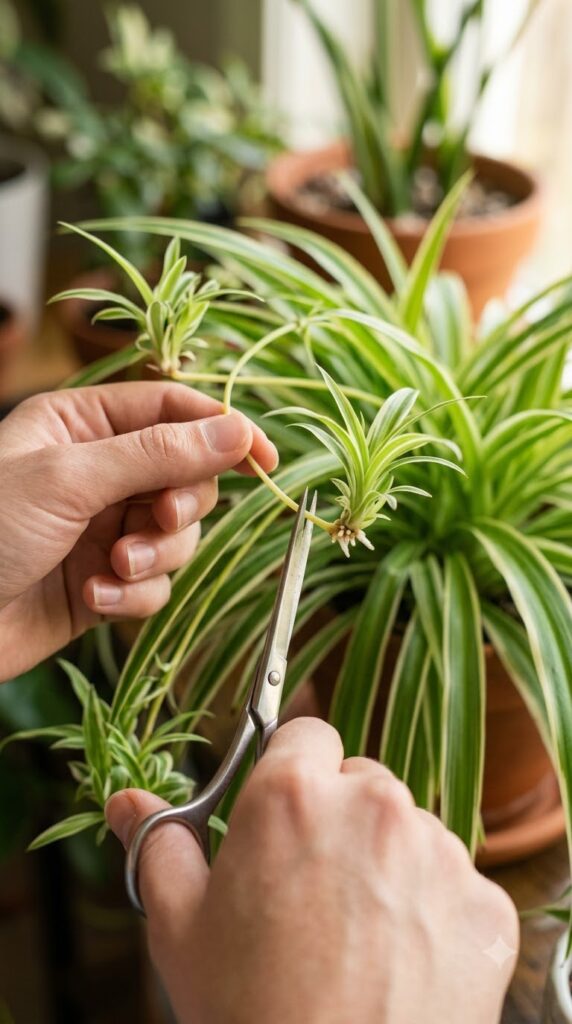
Image Title: “Watching the Roots Grow in Real Time”
3. Keep Only the Base Submerged
Submerge just the base and root nubs of the plantlet in water, keeping the leaves above the waterline to prevent rot. If the leaves droop into the water, trim the stem slightly or prop the plantlet with a small clip or mesh topper.
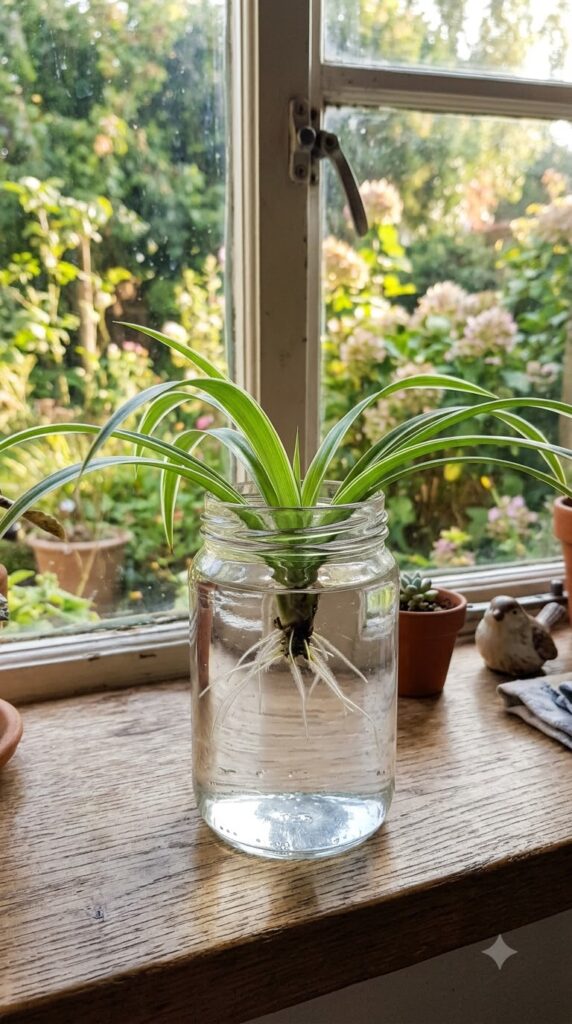
Image Title: “Keeping Leaves Dry, Roots Wet”
4. Change the Water Every Few Days
Refresh the water every three to five days to prevent bacterial growth, algae buildup, and oxygen depletion, all of which can stall root development or cause rot. Rinse the container each time you change the water to keep things clean.
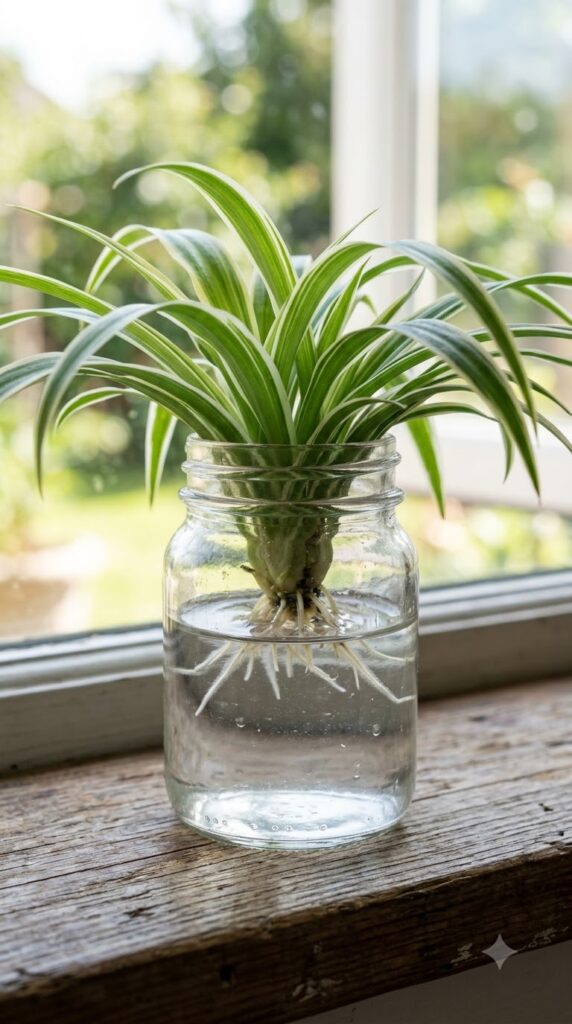
Image Title: “Fresh Water, Every Few Days”
5. Provide Bright, Indirect Light
Place the water-propagating Spider Plant near a bright window with filtered or indirect light, since direct sun can overheat the water and stress the developing roots. A few hours of gentle morning light is ideal for encouraging steady growth.
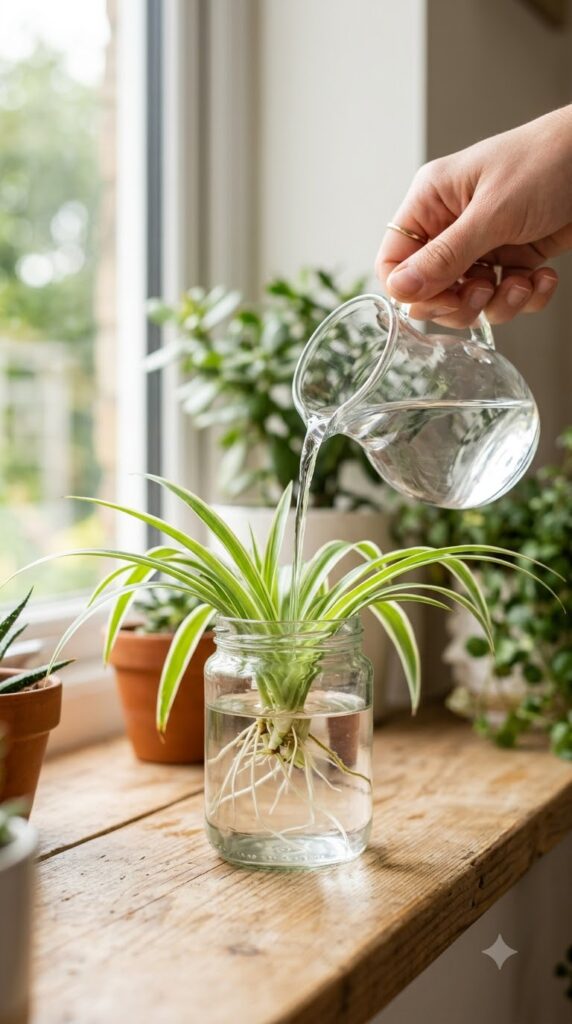
Image Title: “Finding That Just-Right Windowsill Spot”
6. Maintain Room Temperature Water
Keep the water at a stable room temperature, roughly 65–75°F (18–24°C), since water that’s too cold can slow root growth and water that’s too warm can encourage bacterial growth. Avoid placing the jar near drafty windows or heating vents.
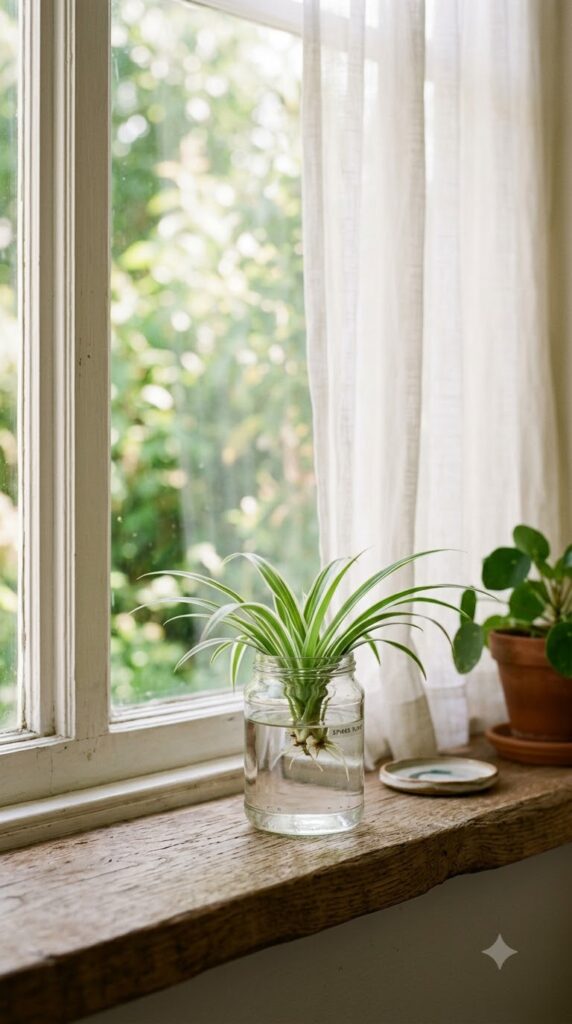
Image Title: “Water That Stays Just Right”
7. Add a Few Drops of Liquid Fertilizer
Once roots begin to develop, add a highly diluted liquid fertilizer (about a quarter of the recommended strength) to the water every few weeks to give the plant a nutrient boost. Skip fertilizing during the first week or two while roots are still establishing.
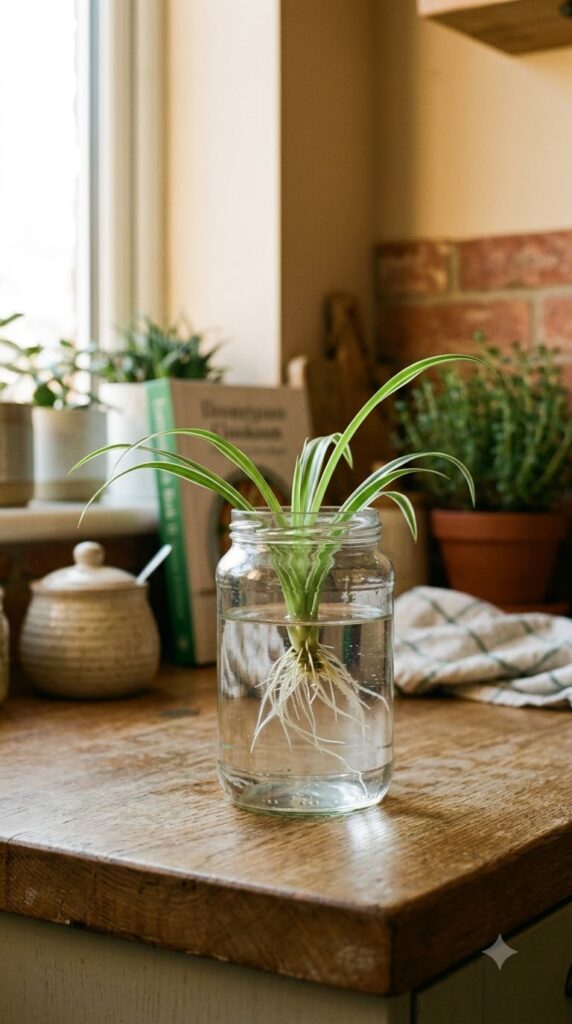
Image Title: “A Tiny Nutrient Boost Once Roots Appear”
8. Be Patient with Root Development
Spider Plant cuttings typically take two to four weeks to develop a healthy root system in water, so resist the urge to move them too early. Wait until roots are at least an inch or two long before transitioning to soil, if you choose to do so.
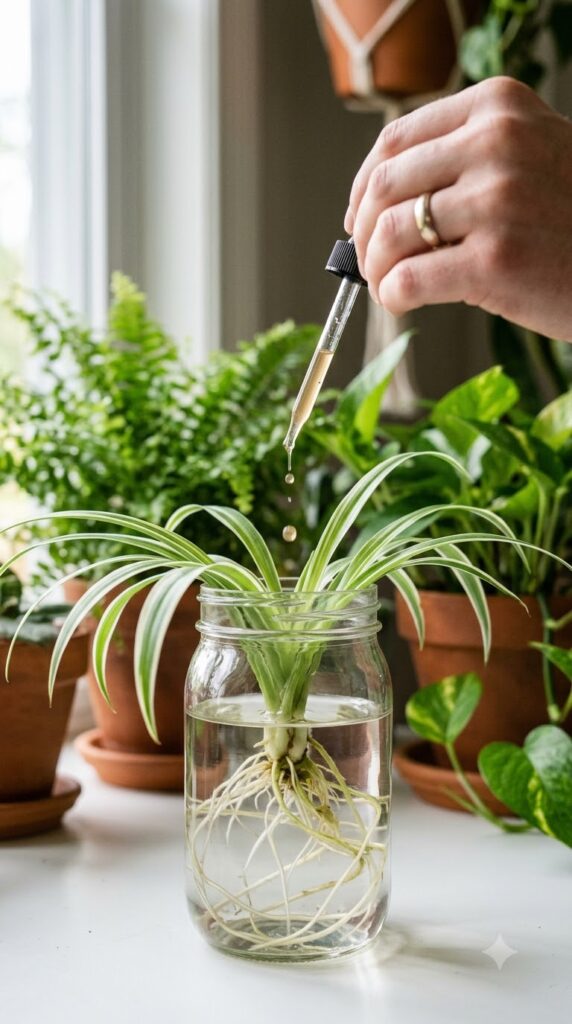
Image Title: “Letting the Roots Take Their Time”
9. Clean the Roots Regularly
Gently rinse the roots with fresh water whenever you change the water in the container, removing any slimy buildup or debris that can lead to rot. Healthy roots should appear white or pale, not brown or mushy.
Image Title: “A Gentle Rinse to Keep Roots Healthy”
10. Decide Whether to Transition to Soil or Stay in Water
While many Spider Plants can live long-term in water with occasional nutrient supplementation, transitioning to soil once strong roots have formed often leads to fuller, faster growth. If you prefer the look of water propagation, simply continue the water-changing and fertilizing routine indefinitely.
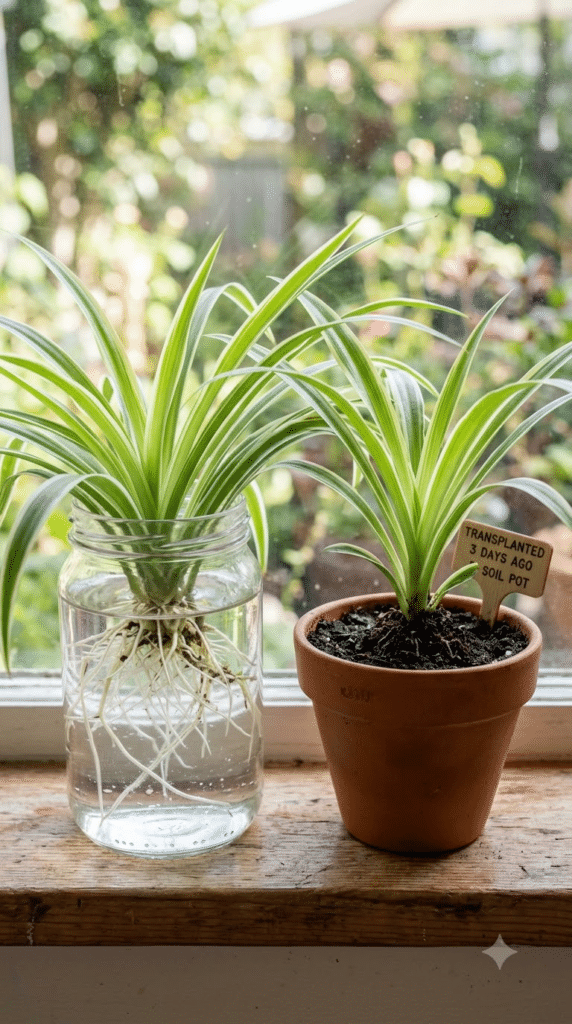
Image Title: “Water Forever, or Soil Eventually?”
11. Watch for Signs of Trouble
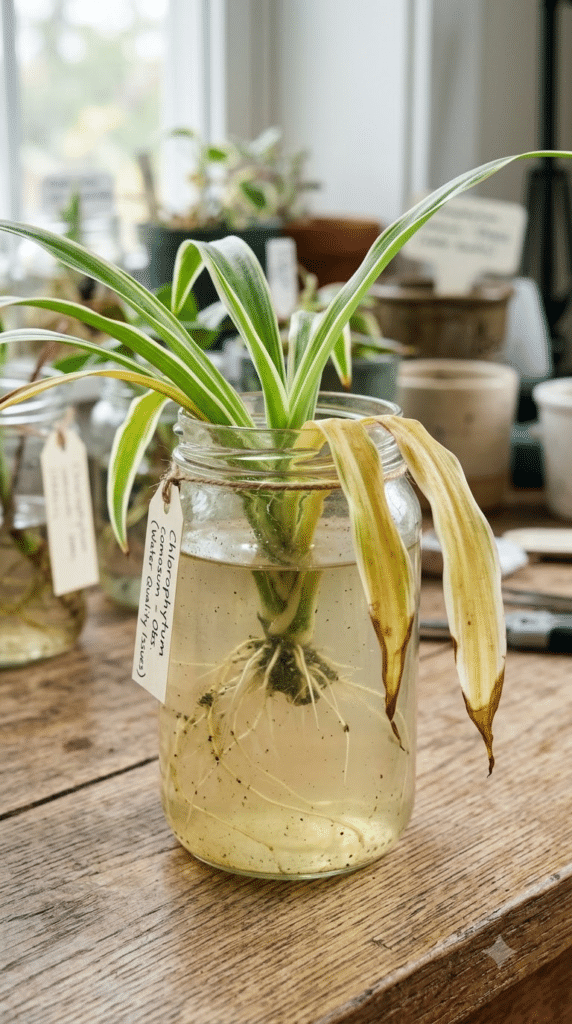
Keep an eye out for yellowing leaves, mushy or brown roots, or cloudy, smelly water, all signs that something needs adjusting — usually more frequent water changes or a brighter, less drafty location. Catching these signs early makes recovery much easier.
Final Thoughts
Growing a Spider Plant in water is one of the easiest and most rewarding ways to propagate this classic houseplant, requiring little more than a clean jar, indirect light, and a bit of patience. Whether you keep it in water permanently as a low-maintenance display piece or eventually transition it to soil for fuller growth, these simple habits will help your Spider Plant thrive every step of the way.