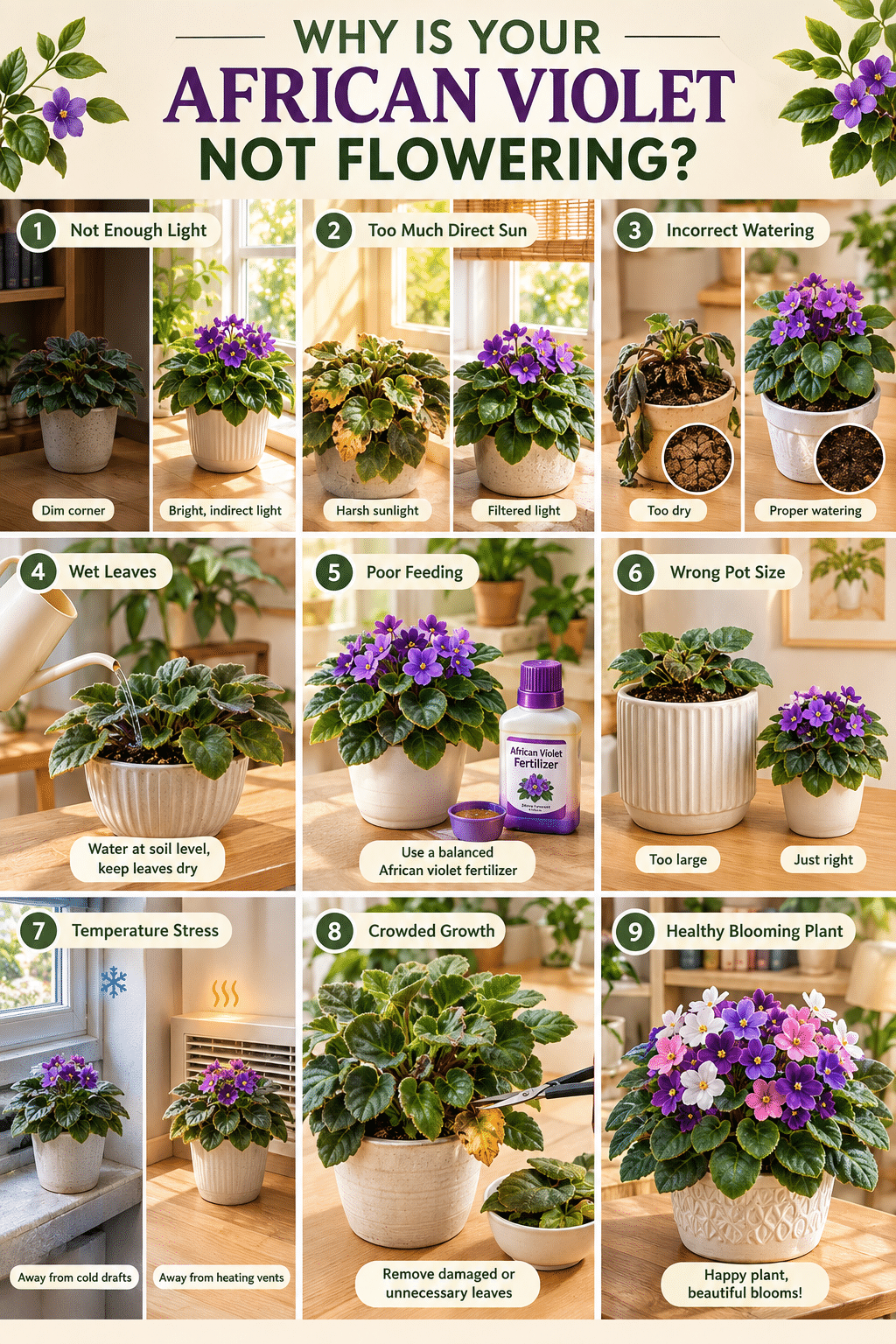
Few things are more disappointing than a healthy-looking African Violet that simply refuses to bloom. Lush, fuzzy leaves are one thing, but the whole point of this beloved houseplant is its cheerful clusters of purple, pink, or white flowers. The good news is that a lack of blooms almost always comes down to one or two fixable issues rather than anything seriously wrong with the plant.
Here are the most common reasons an African Violet won’t flower, how to identify each one, and what to do about it — with an image prompt and a unique title for each.
1. Insufficient Light
Light is the single biggest factor in African Violet blooming, and a plant that isn’t getting enough bright, indirect light will often produce healthy leaves but few or no flowers. Aim for a spot near an east or north-facing window, or supplement with a grow light for 12–14 hours a day.
Why it happens: Flowering requires significant energy, and without enough light for photosynthesis, the plant prioritizes leaf growth and survival over blooming.
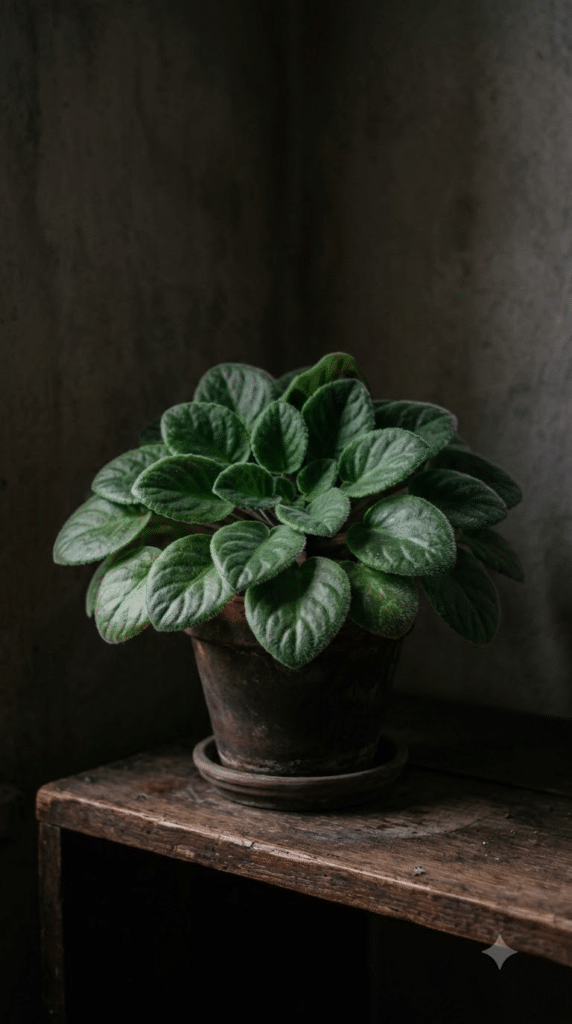
Image Title: “All Leaves, No Light to Bloom By”
2. Too Much Direct Sunlight
On the flip side, harsh direct sunlight can stress an African Violet, causing scorched leaves and suppressed flowering as the plant focuses on repairing damage rather than blooming. A sheer curtain or slightly shaded spot helps soften intense afternoon light.
Why it happens: Direct sun can overheat and dehydrate the leaves, redirecting the plant’s energy toward stress recovery instead of flower production.
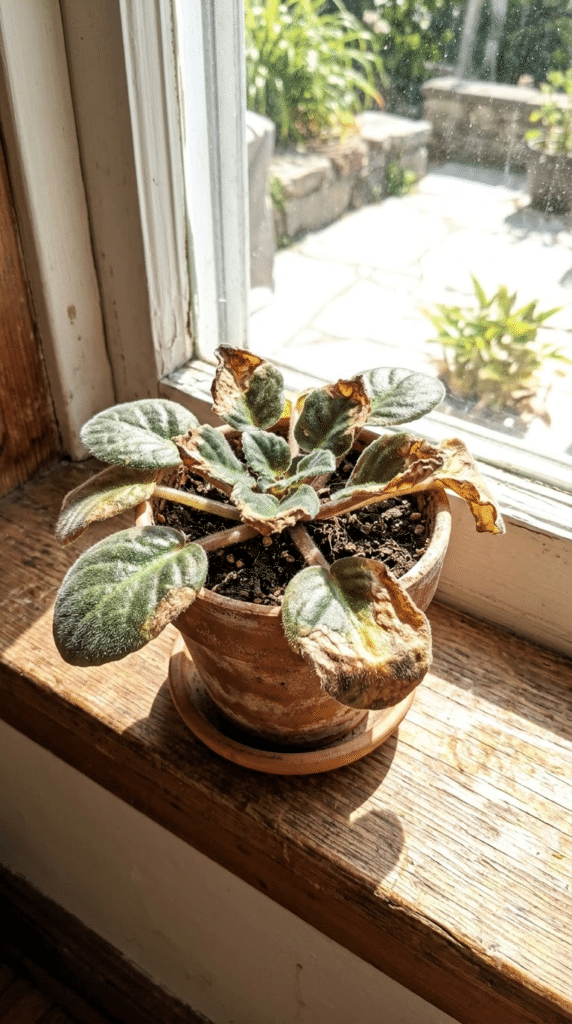
Image Title: “When the Sun Becomes the Problem”
3. Incorrect Watering Habits
Both overwatering and underwatering can prevent an African Violet from flowering, since inconsistent moisture stresses the roots and diverts energy away from blooming. Water only when the top inch of soil feels dry, and always use room-temperature water to avoid shocking the roots.
Why it happens: Root stress from soggy or bone-dry soil limits the plant’s ability to take up the nutrients needed to fuel flower production.
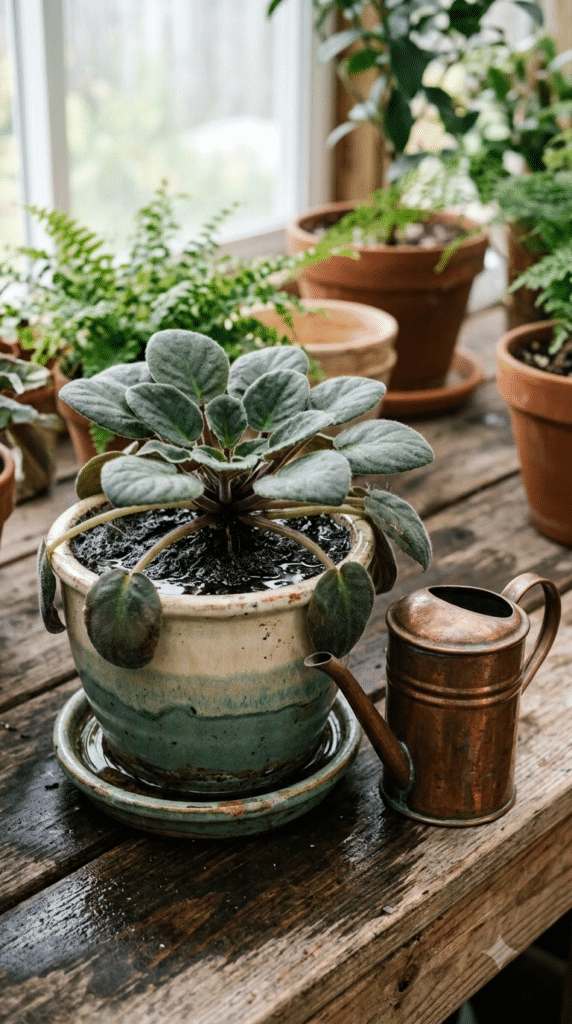
Image Title: “The Watering Routine That’s Holding It Back”
4. Low Humidity
African Violets prefer moderate humidity around 40–60%, and overly dry indoor air, especially during winter heating season, can suppress bud formation even when other conditions are ideal. A pebble tray or nearby humidifier can make a noticeable difference.
Why it happens: Low humidity increases water loss through the leaves, causing the plant to conserve energy for survival rather than investing it in flowers.
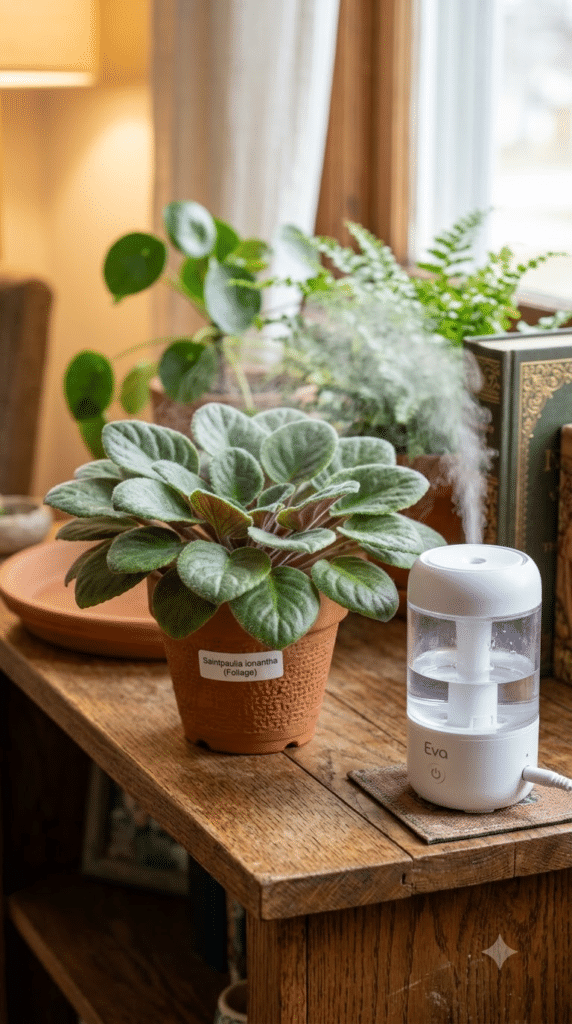
Image Title: “Waiting on Air That’s Too Dry to Bloom In”
5. Incorrect Temperature
African Violets thrive in stable temperatures between 65–75°F (18–24°C), and both cold drafts and excessive heat can interrupt flowering cycles. Keep the plant away from drafty windows, doors, and heating vents to maintain consistent warmth.
Why it happens: Temperature stress disrupts the plant’s internal growth cycle, often causing it to pause flowering until conditions stabilize.
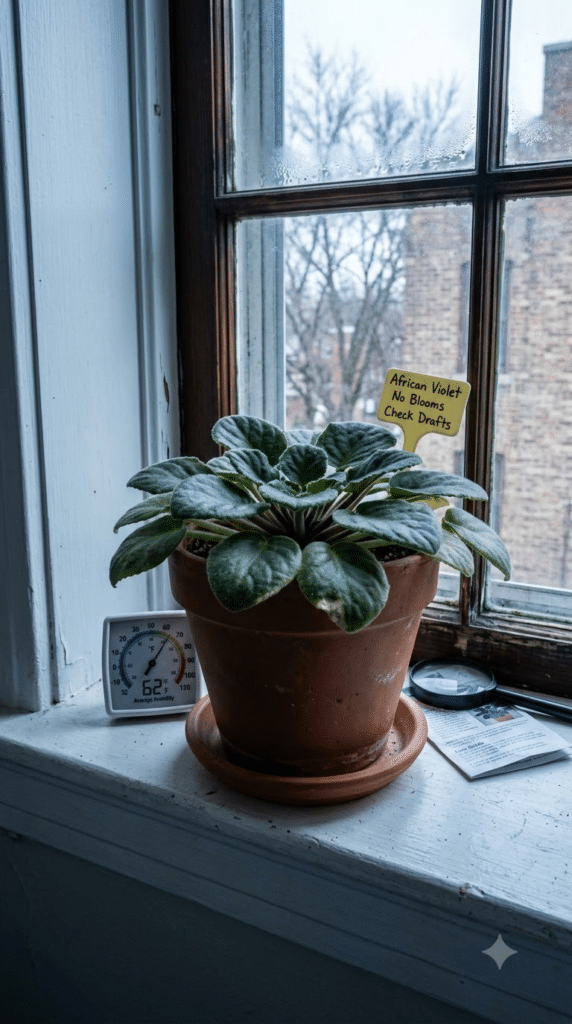
Image Title: “A Few Too Many Degrees Off”
6. Root-Bound or Oversized Pot
African Violets actually prefer being slightly root-bound and often won’t flower well in a pot that’s too large, since they put energy into filling out the soil with roots rather than blooming. Repot only when necessary, and keep the pot size just slightly larger than the root ball.
Why it happens: In an oversized pot, the plant focuses on root expansion first, delaying flowering until the roots have filled the available space.
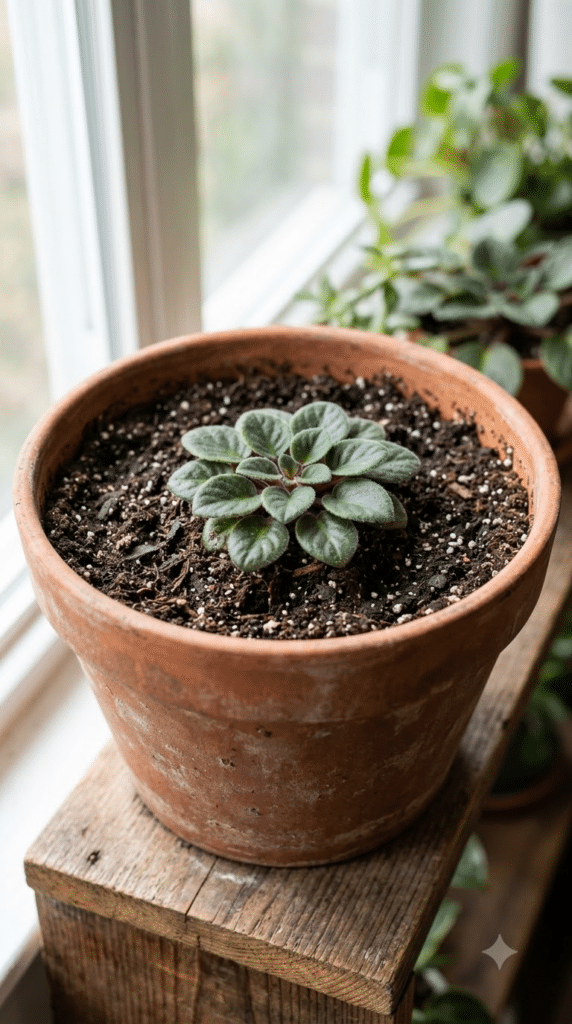
Image Title: “Too Much Room to Grow Into”
7. Lack of Fertilizer or Wrong Type
Without regular feeding, African Violets can run low on the phosphorus and potassium needed to support flower production, even if their leaves look perfectly healthy. Use a fertilizer specifically formulated for African Violets, following label instructions during the growing season.
Why it happens: Flowering is nutrient-intensive, and a lack of key nutrients like phosphorus limits the plant’s ability to form and sustain buds.
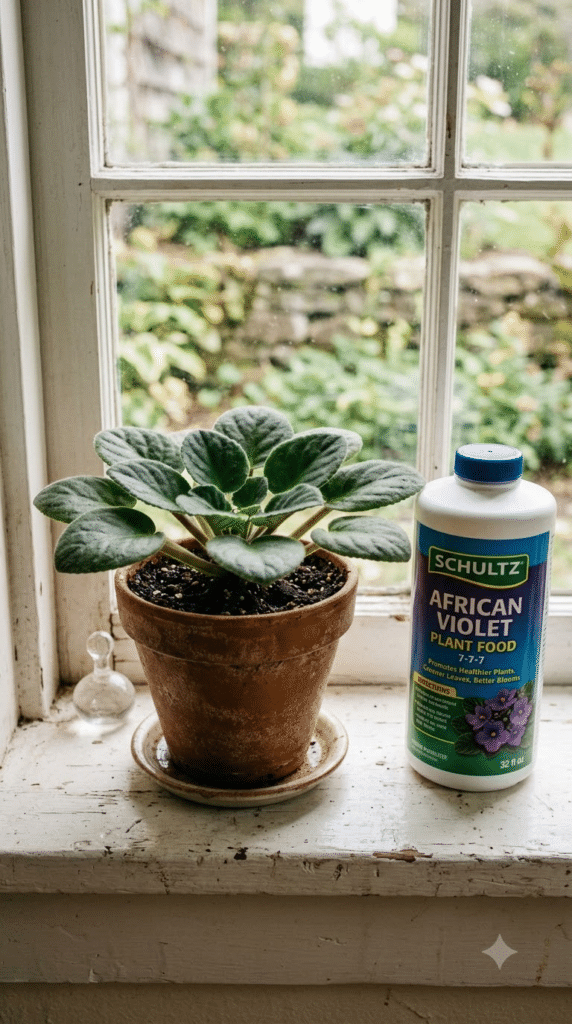
Image Title: “Missing the Nutrients Blooms Depend On”
8. Old or Dusty Leaves Blocking Energy
A buildup of dust on the fuzzy leaves can reduce the plant’s ability to absorb light efficiently, indirectly suppressing flowering over time. Gently dust leaves with a soft, dry brush, since water can cause spotting on the delicate foliage.
Why it happens: Dust-covered leaves can’t photosynthesize as effectively, reducing the overall energy available for the plant to produce blooms.
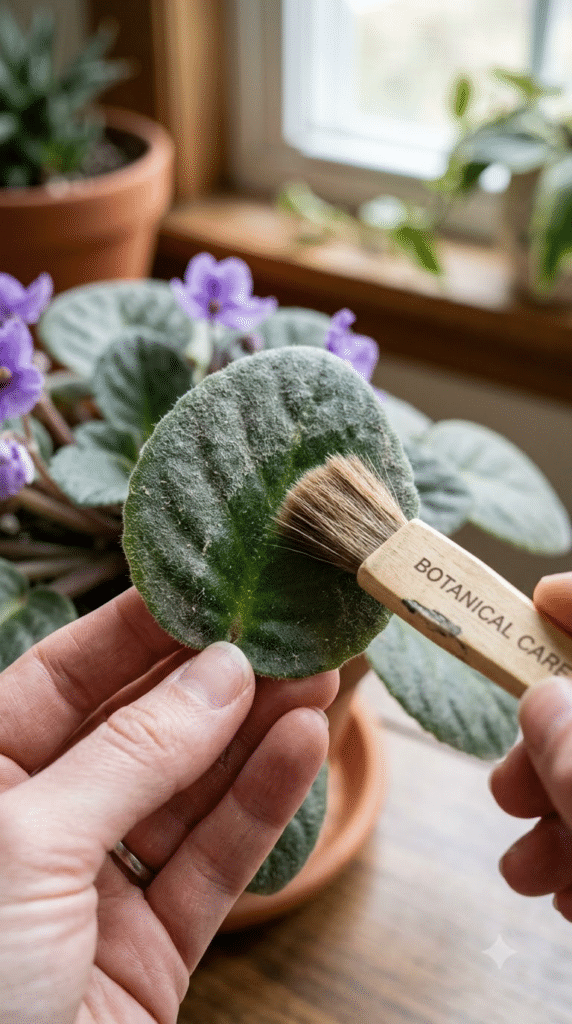
Image Title: “Dust Quietly Blocking the Light”
Final Thoughts
A non-blooming African Violet is almost always sending a clear, fixable signal — whether it’s asking for more light, a smaller pot, or a bit of fertilizer. Take stock of the plant’s current light exposure, watering routine, and pot size, and adjust one variable at a time to see what makes the biggest difference. With the right conditions restored, most African Violets reward patient care with a fresh flush of blooms within just a few weeks.
Quick Diagnostic Checklist
- Healthy leaves, no flowers, dim room → Insufficient light
- Scorched leaves near a sunny window → Too much direct sun
- Wilting or soggy soil → Incorrect watering
- Dry indoor air, especially in winter → Low humidity
- Placed near a draft or vent → Incorrect temperature
- Large pot with lots of empty soil → Root-bound preference not met
- No regular feeding schedule → Lack of fertilizer
- Dusty, dull-looking leaves → Reduced light absorption