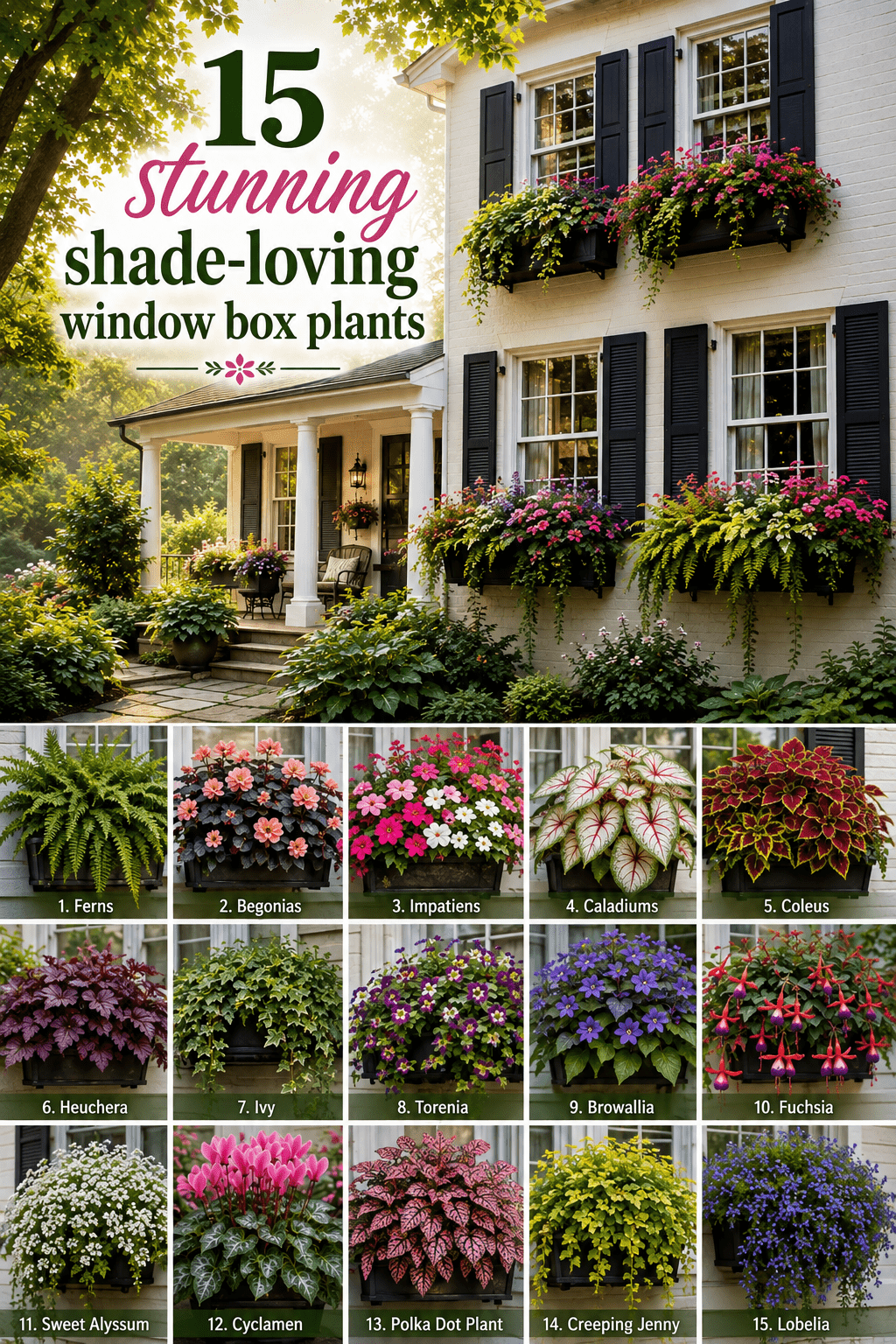
Shaded windows don’t have to stay bare and overlooked. With the right plant choices, even a north-facing box that barely sees direct sun can become one of the prettiest features on your home’s exterior. The key is leaning into plants that actually prefer low light — lush foliage, delicate blooms, and layered textures that thrive without a lot of sun.
Here are 15 shade-loving window box plants that look stunning even in dim conditions, along with quick care notes and an image prompt for each.
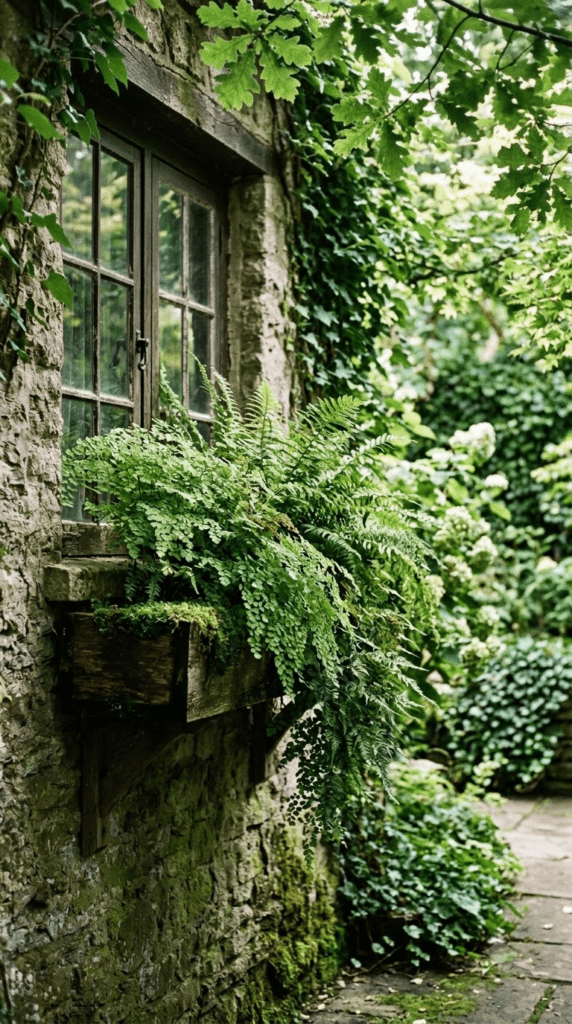
1. Fern
Ferns bring a soft, calming texture to shaded window boxes with their feathery, cascading fronds. They thrive in indirect light and consistently moist soil, staying lush and green through most of the year with just occasional misting.
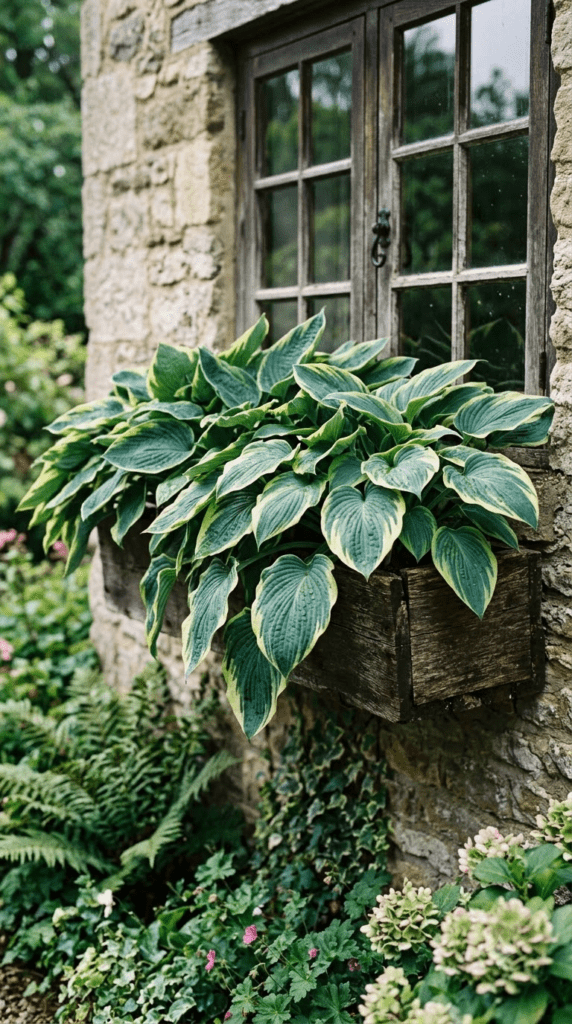
2. Hosta
Hosta’s broad, layered leaves in shades of green, blue, and cream instantly add texture and fullness to a shaded box. It thrives in partial to full shade with moist, well-drained soil, and pairs beautifully with ferns or trailing plants.
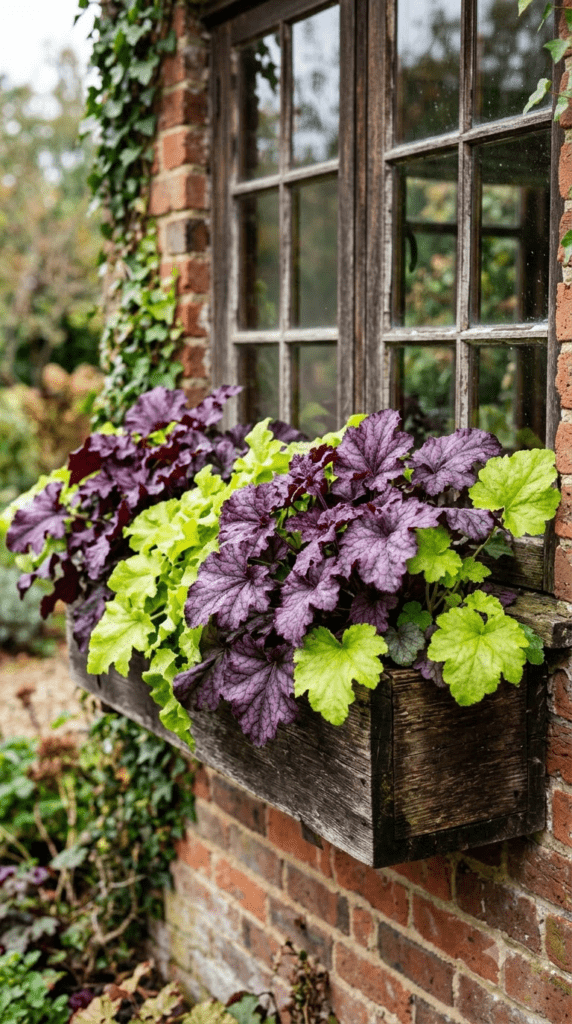
3. Heuchera (Coral Bells)
Heuchera’s ruffled leaves come in deep purple, lime green, silver, and bronze, adding rich color to a shaded window box even without blooms. It stays compact, tolerates part shade well, and often holds its color through cooler months.
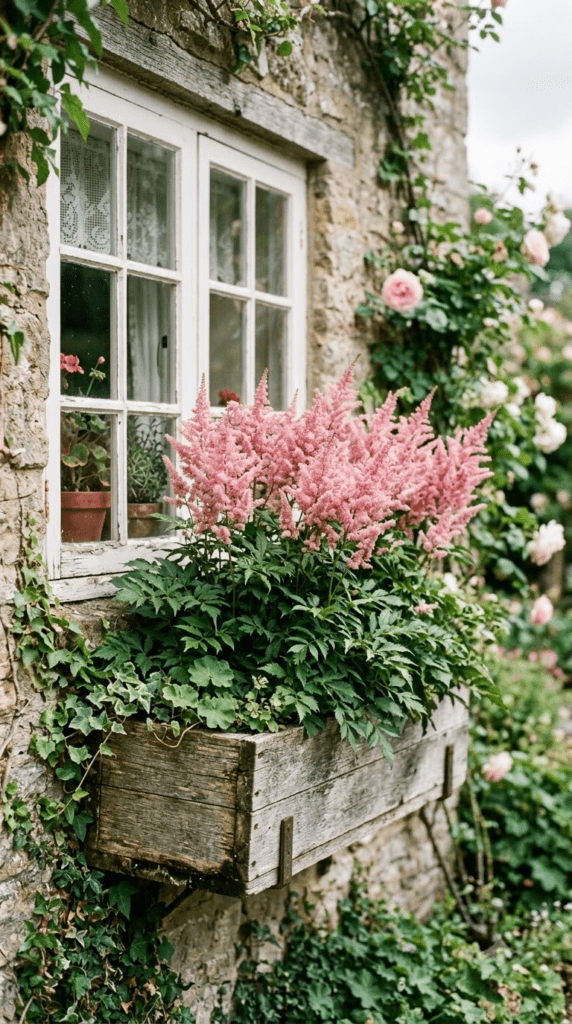
4. Astilbe
Astilbe’s soft, feathery flower plumes in pink, white, red, and lavender bring gentle color to shaded spots where many flowering plants struggle. It thrives in moist, well-drained soil and pairs well with hostas or ferns for a layered look.
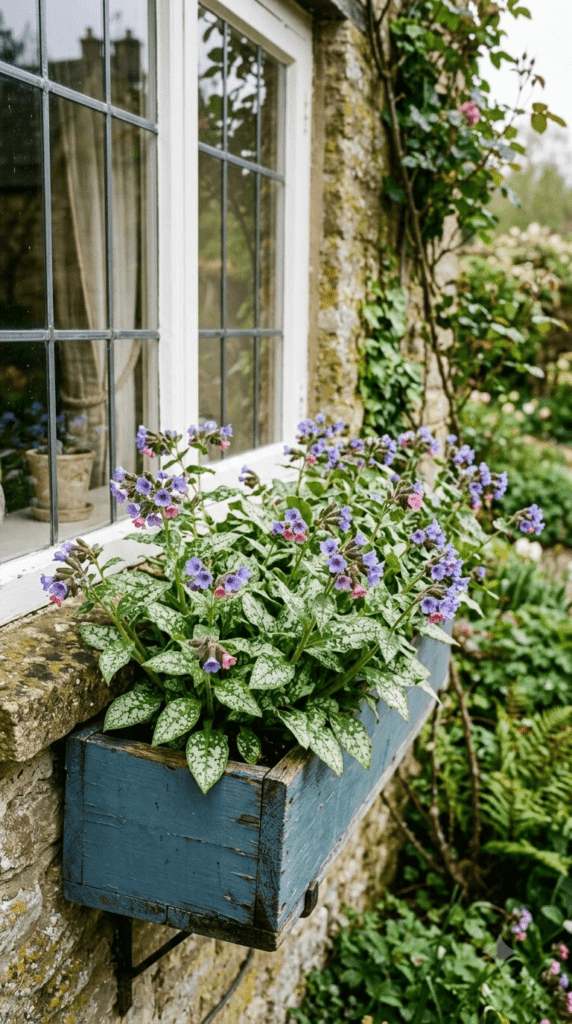
5. Lungwort (Pulmonaria)
Lungwort’s silver-speckled leaves add year-round interest, while its clusters of small blue, pink, or purple flowers bring early spring color to shaded boxes. It tolerates dry shade reasonably well and is naturally resistant to deer and rabbits.
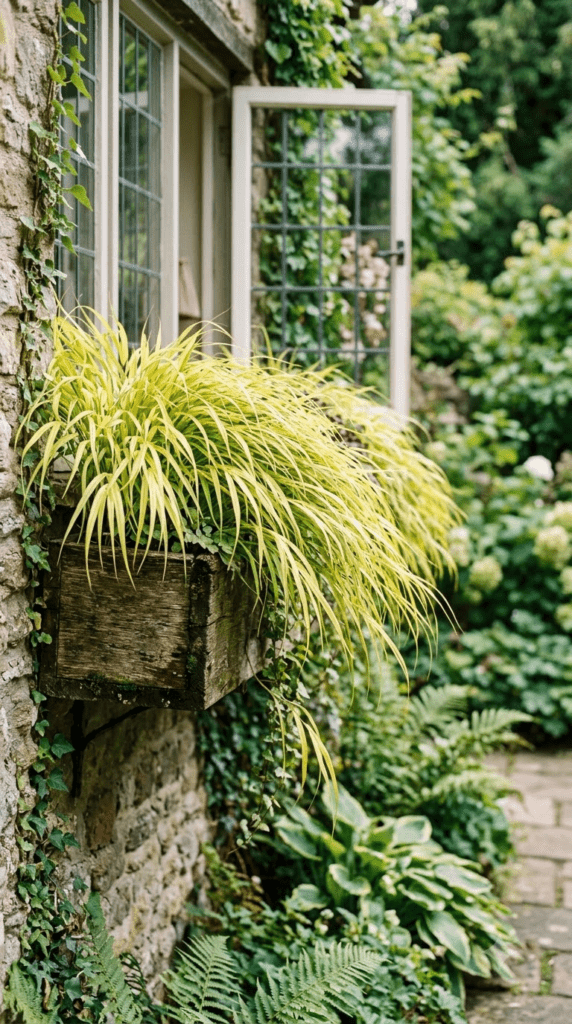
6. Japanese Forest Grass (Hakonechloa)
This ornamental grass’s slender, cascading blades — often in gold or lime-green — bring graceful movement to a shaded box, turning soft gold or tan in fall. It thrives in partial to full shade with evenly moist soil.
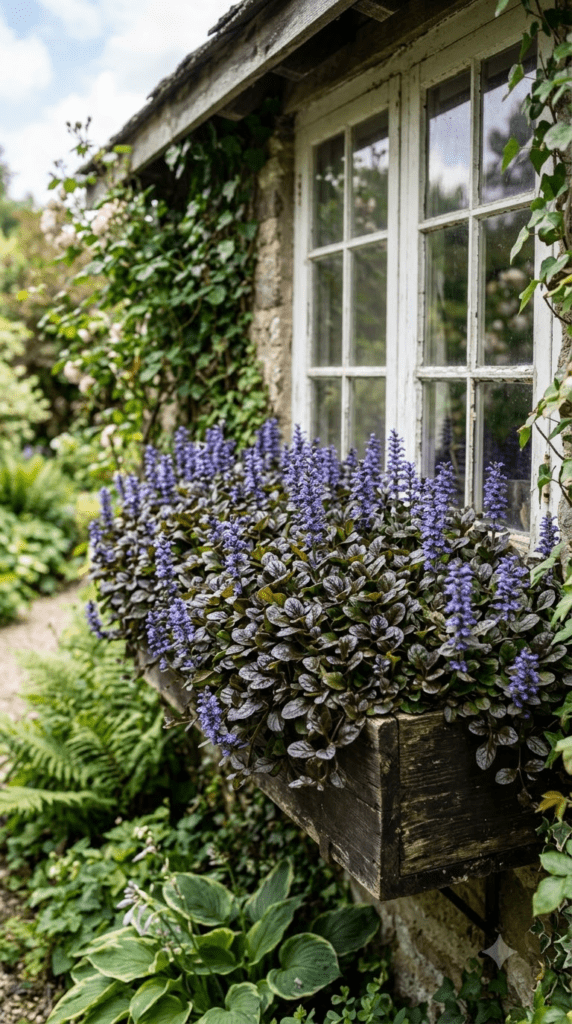
7. Ajuga
Ajuga’s low, spreading foliage in green, bronze, or purple fills gaps quickly, while short spikes of blue-violet flowers add a pop of color in spring. It thrives in partial to full shade and spreads into a soft, carpet-like texture over time.
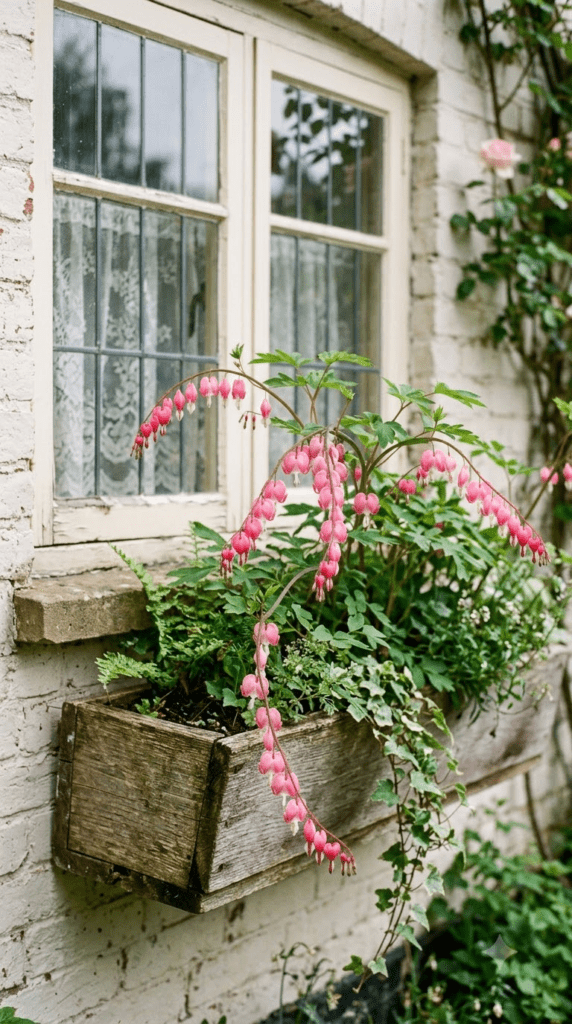
8. Bleeding Heart (Dicentra)
Bleeding Heart’s charming, heart-shaped pink or white flowers dangle from arching stems, adding graceful spring color to a shaded box. Its fern-like foliage stays attractive even after blooming, and it prefers cool, consistently moist soil.
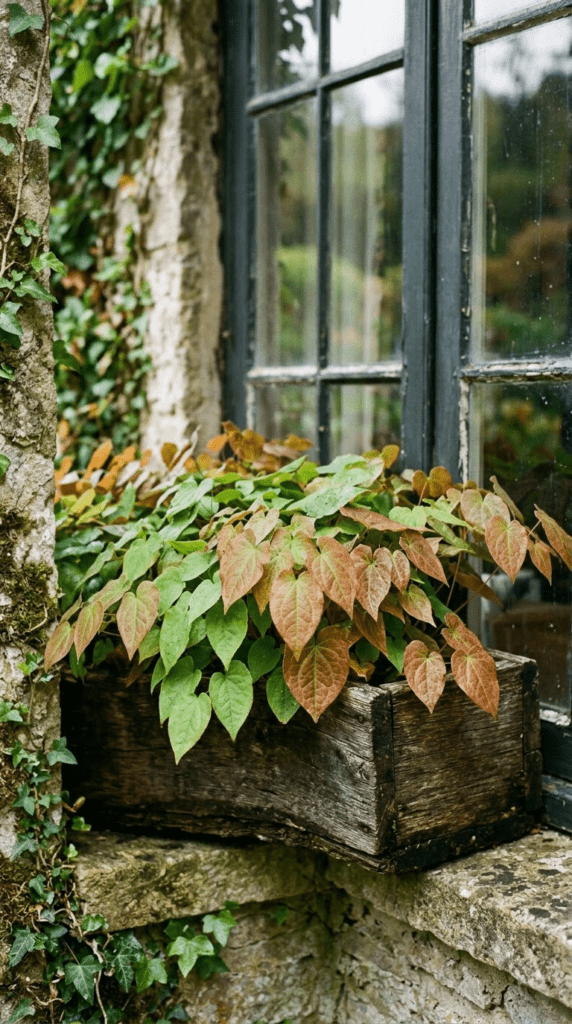
9. Epimedium (Barrenwort)
Epimedium’s heart-shaped leaves shift from soft green to red or bronze as the weather cools, while delicate spring flowers add a subtle touch of color. It tolerates dry shade well and stays neat without sprawling.
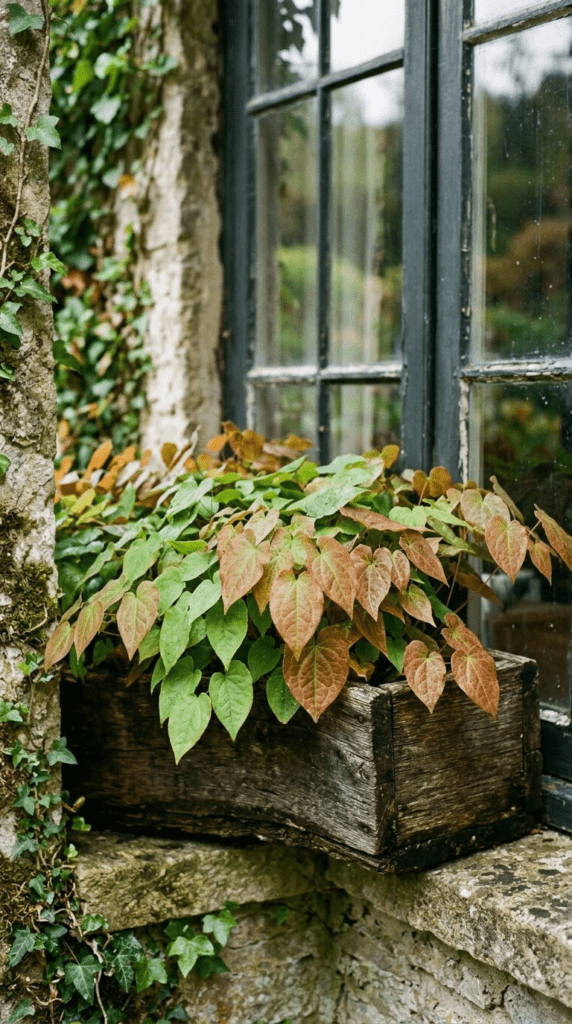
10. Solomon’s Seal
Solomon’s Seal’s gracefully arching stems spill softly over the edge of a window box, with small bell-shaped flowers dangling beneath the leaves in spring. It thrives in shade with moist, well-drained soil and turns golden yellow in fall.
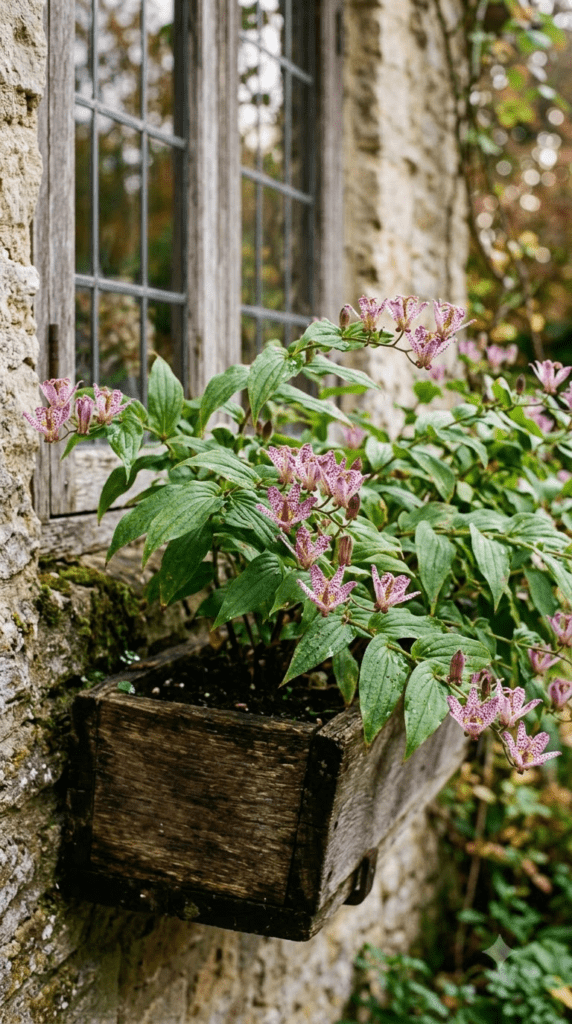
11. Toad Lily (Tricyrtis)
Toad Lily’s star-shaped, purple-speckled blooms appear in late summer and early fall, just as many other flowers are fading. It thrives in bright, indirect light with consistently moist soil, adding late-season interest to a shaded box.
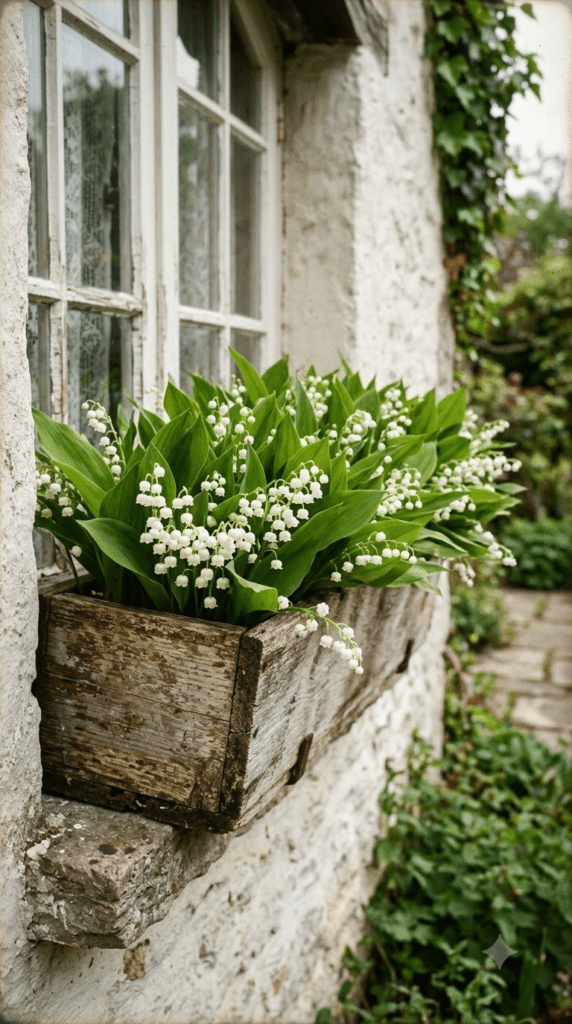
12. Lily of the Valley
Lily of the Valley’s delicate, fragrant white bell-shaped flowers bring old-fashioned charm to cool, shaded spots in spring. It spreads to form a lush green mat over time, though it’s worth noting the entire plant is toxic if ingested, so keep it away from pets and children.
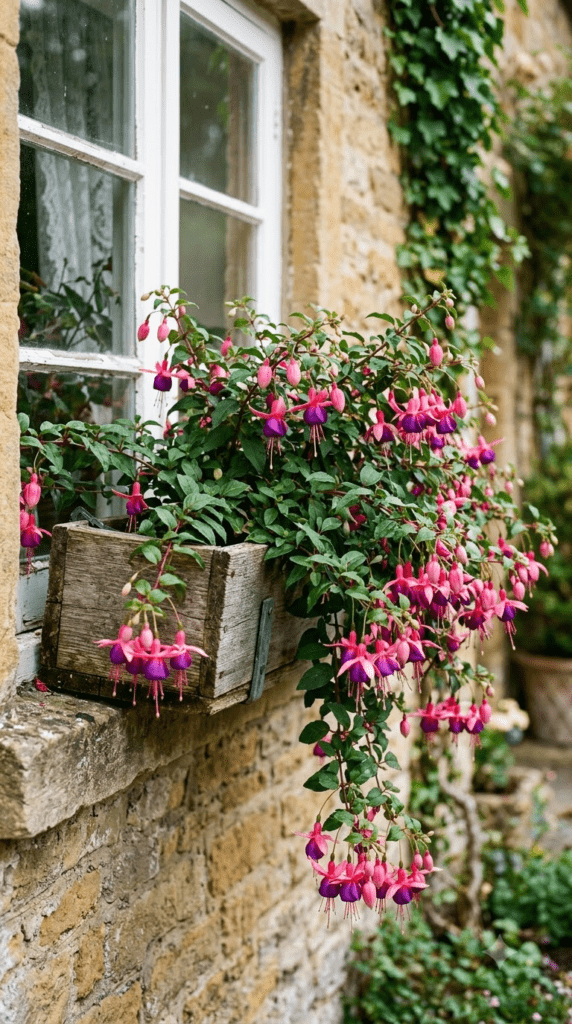
13. Fuchsia
Fuchsia’s dangling, bell-shaped flowers in pink, red, purple, and white bring vibrant color and movement to a shaded window box, often attracting hummingbirds. Trailing varieties spill beautifully over the edges and thrive with regular feeding through the growing season.
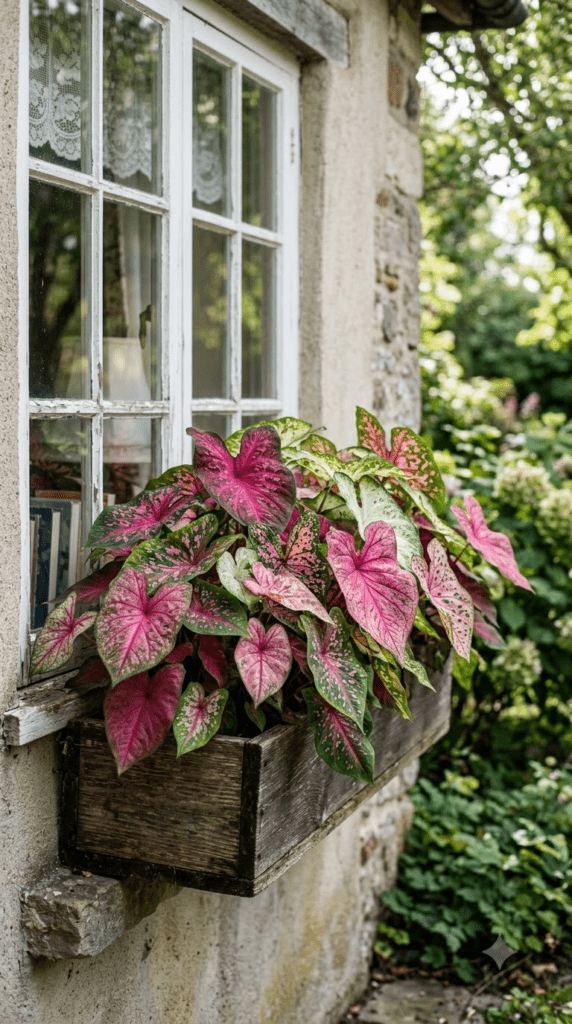
14. Caladium
Caladium’s large, heart-shaped leaves come in striking mixes of pink, red, green, and white, delivering bold color without needing a single bloom. It prefers filtered light or full shade and consistently moist, well-draining soil.
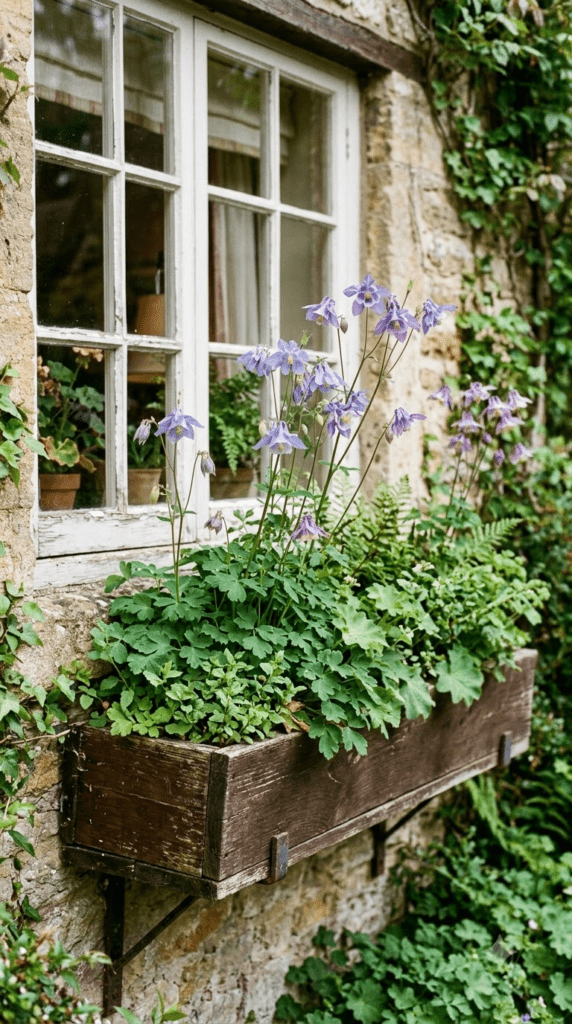
15. Columbine (Aquilegia)
Columbine’s delicate, bell-shaped flowers in blue, pink, purple, red, and yellow bring graceful color to partially shaded boxes in spring and early summer, drawing in hummingbirds and bees. Its distinctive foliage stays attractive even after the blooms fade.
Caring for Shade-Loving Window Box Plants
Best soil: Use a lightweight, well-draining mix of peat moss, perlite, and compost. Avoid heavy garden soil, which retains too much water and can lead to root rot in containers.
Watering: Shaded boxes dry out more slowly than sunny ones, so check the top inch of soil before watering and water only when it feels dry. Use room-temperature water and reduce frequency during cooler months.
Fertilizing: Feed with a balanced liquid fertilizer at half strength about once a month during the growing season. Over-fertilizing can burn roots or cause leggy growth, so less is often more with shade plants.
Common Challenges and Quick Fixes
Mold or root rot: Improve drainage with added perlite or coarse sand, ensure the box has proper drainage holes, and only water when the soil is dry to the touch. If mold appears, scrape off the top layer of soil and sprinkle on a bit of cinnamon or activated charcoal.
Pests: Fungus gnats, aphids, and slugs are more common in cool, damp shade. Rinse leaves regularly, use a mild soap-and-water spray for aphids, and set out small beer traps or citrus peels to catch slugs overnight.
Final Thoughts
A shaded window doesn’t have to mean a dull one. By combining textured foliage plants like hostas and ferns with pops of color from astilbe, fuchsia, or columbine, you can build a window box that looks just as lush and inviting as any sunny spot — proof that shade gardening has its own quiet beauty.