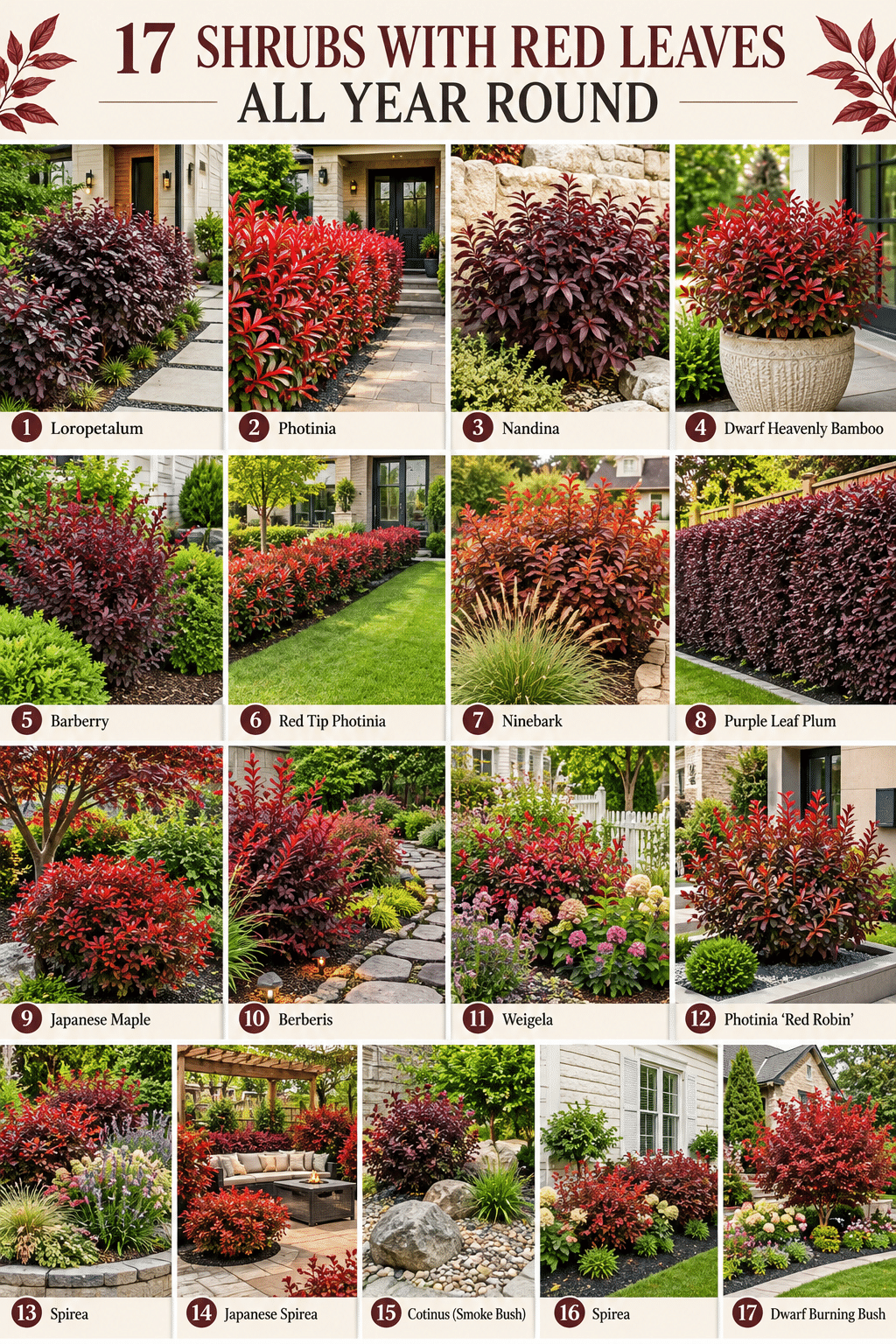
Red foliage is one of the easiest ways to add drama to a landscape. Unlike flowers, which come and go, colorful leaves keep working for months. A quick note on “all year round”: evergreen shrubs on this list carry their red, burgundy, or bronze tones right through winter, while deciduous ones hold deep red-purple leaves from spring until leaf drop, often finishing with a fiery fall display. Either way, you get far more color than a typical green shrub provides.
Here are 17 shrubs with red leaves, each with quick care notes (hardiness zones are approximate), an image , and a unique image title.
1. Loropetalum (Chinese Fringe Flower)
Burgundy to deep purple-red evergreen leaves, topped with fringe-like pink spring flowers. Dwarf selections stay compact enough for foundation beds, while larger ones make a bold hedge.
Care notes: Full sun to part shade, well-drained soil, roughly zones 7 to 10. Color is richest in more sun.
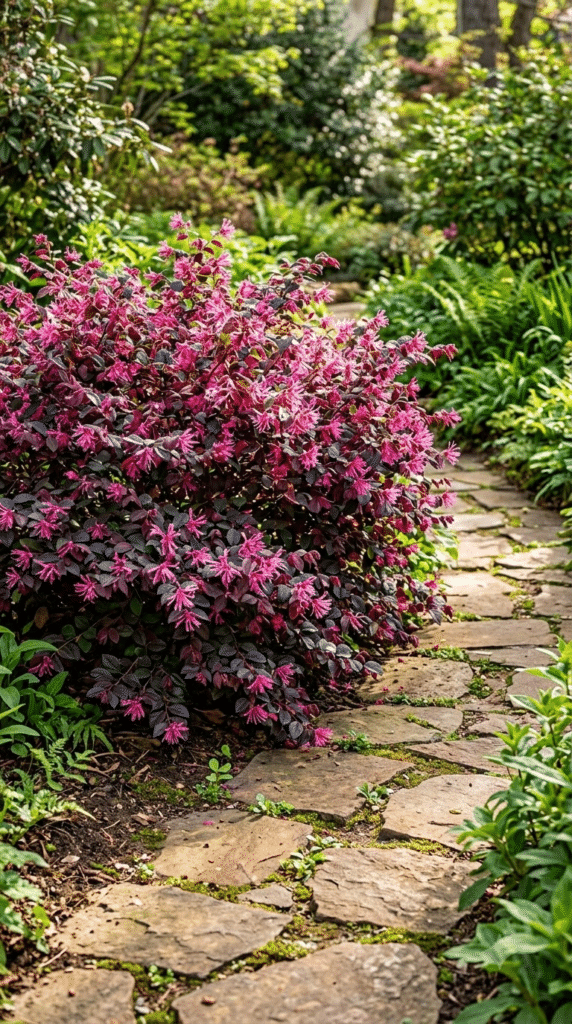
Image Title: “Burgundy Leaves Under Pink Fringe Blooms”
2. Nandina (Heavenly Bamboo)
This airy evergreen shrub shifts from bronze-green in summer to brilliant red in cool weather. Compact varieties glow in winter, when most gardens look dull.
Care notes: Sun to part shade, tolerant of many soils, roughly zones 6 to 9. Check local guidance, since it can spread in some regions.
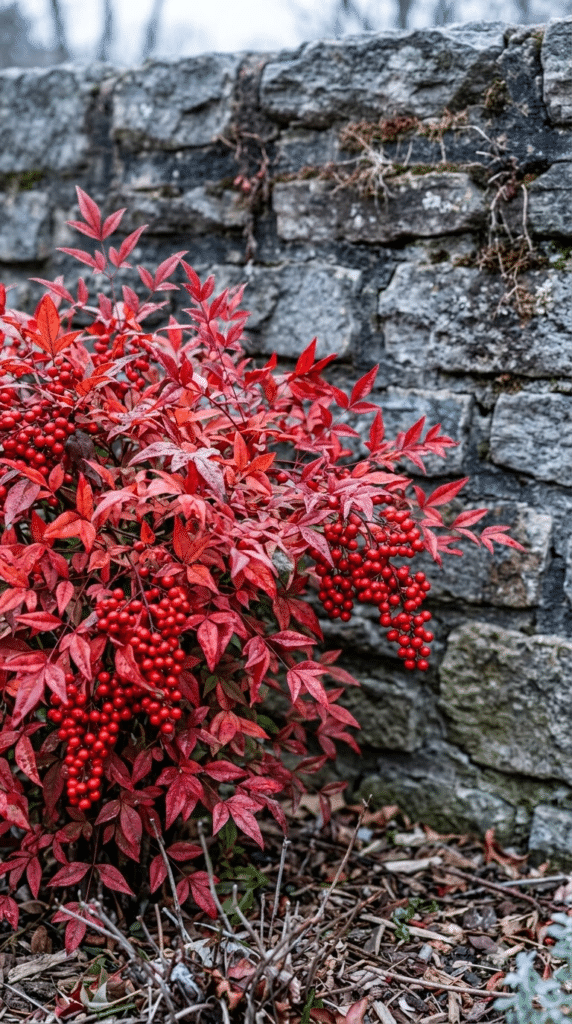
Image Title: “Winter Flame on a Slender Shrub”
3. Red Tip Photinia
Famous for glossy new growth that flushes bright red in spring, Photinia is a fast-growing evergreen screen. Light shearing encourages fresh red growth through the growing season.
Care notes: Full sun, good air circulation, roughly zones 7 to 9. Space plants well, since leaf spot can be an issue in humid areas.
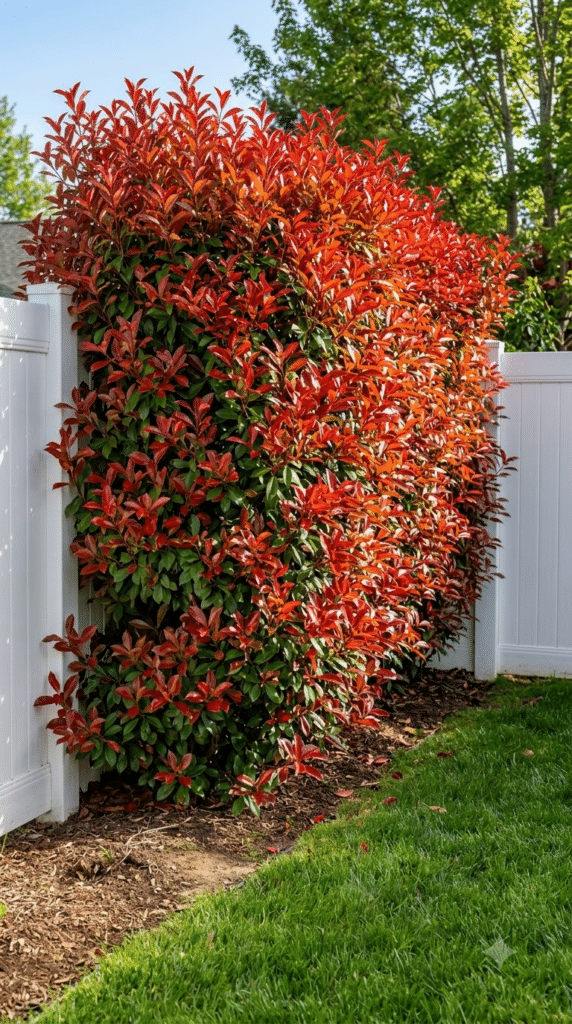
Image Title: “A Hedge Tipped in Fresh Red”
4. Pieris ‘Mountain Fire’
An evergreen with brilliant red new growth in spring that matures to deep green, plus drooping white flower clusters in early spring. It adds a woodland feel to shady borders.
Care notes: Part shade, acidic, well-drained soil, roughly zones 5 to 8.
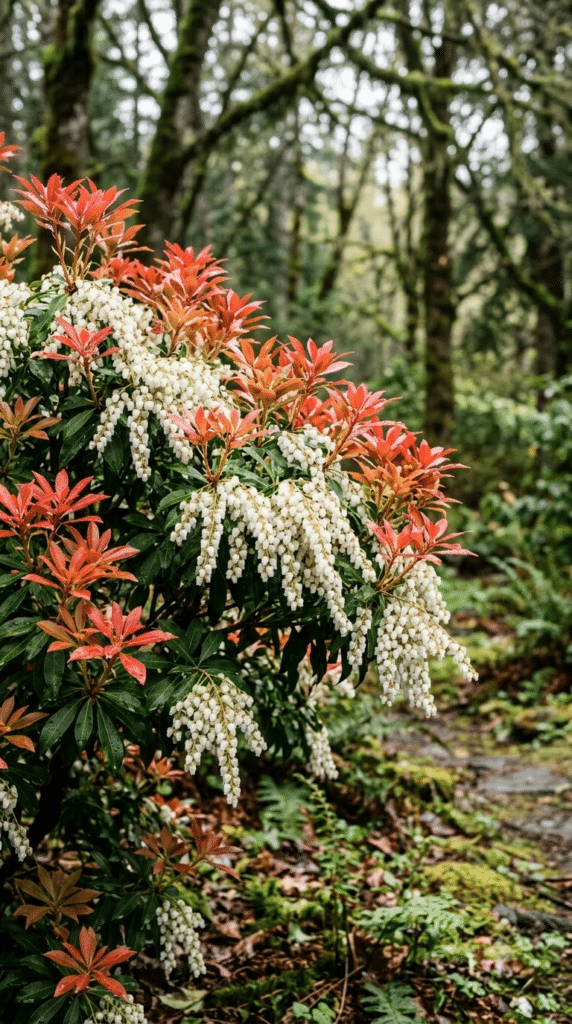
Image Title: “Red New Growth in a Woodland Corner”
5. Leucothoe ‘Scarletta’
A compact evergreen with red new growth that turns deep green in summer, then returns to rich burgundy in winter. It works well as a mid-height shrub in shady foundation plantings.
Care notes: Part to full shade, consistently moist, acidic soil, roughly zones 5 to 8.
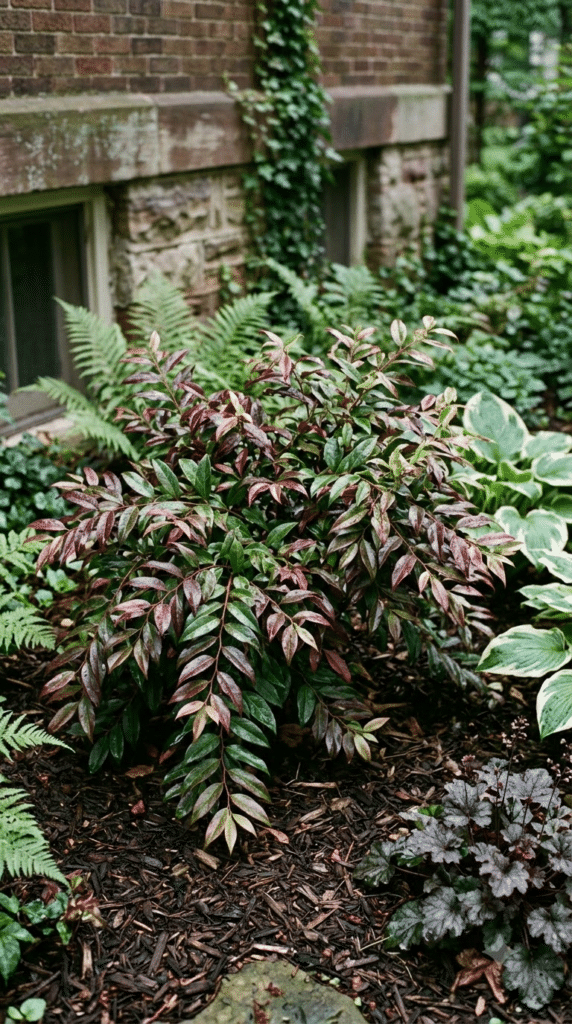
Image Title: “Arching Burgundy in the Shade”
6. Pittosporum ‘Tom Thumb’
A rounded, compact evergreen with glossy purple-bronze leaves that look almost black in sunlight. It suits modern gardens and containers, especially where winters are mild.
Care notes: Full sun to part shade, well-drained soil, roughly zones 8 to 10.
Image Prompt: “A compact pittosporum ‘Tom Thumb’ shrub with purple-bronze leaves in a modern garden bed, bright natural light, sleek landscape photography.”
Image Title: “A Dark Purple Mound in the Sun”
7. Purple Hopseed Bush
An evergreen with narrow bronze-purple leaves that deepen in cool weather, topped with papery reddish seed capsules. It’s very drought tolerant once established.
Care notes: Full sun, well-drained soil, roughly zones 9 to 11.
Image Prompt: “A purple hopseed bush with bronze-purple leaves and reddish seed capsules in a sunny dry garden, bright natural light, drought-tolerant landscape photography.”
Image Title: “Bronze-Purple Leaves Holding Up to the Heat”
8. Barberry ‘Crimson Pygmy’
A compact deciduous shrub with burgundy-red leaves from spring through fall, finishing with a bright red fall color. It’s tidy and tough, and its thorns deter foot traffic.
Care notes: Full sun, well-drained soil, roughly zones 4 to 8. Barberry is invasive in parts of North America, so check local regulations or choose a sterile cultivar.
Image Prompt: “A compact barberry ‘Crimson Pygmy’ shrub with burgundy-red leaves along a sunny walkway, bright natural light, vivid landscape photography.”
Image Title: “A Compact Crimson Mound Along the Walkway”
9. Ninebark ‘Diabolo’
A tall, vase-shaped deciduous shrub with deep wine-purple foliage and peeling bark for winter interest. Pale pink flower clusters in early summer contrast beautifully with the dark leaves.
Care notes: Full sun for best color, adaptable soil, roughly zones 3 to 7.
Image Prompt: “A ninebark ‘Diabolo’ shrub with deep wine-purple leaves and pale pink flowers in a mixed border, bright natural light, dramatic landscape photography.”
Image Title: “Wine-Dark Leaves Backing the Border”
10. Smokebush ‘Royal Purple’
Rounded, deep purple leaves that glow when backlit, plus airy, smoky plumes in summer. It turns scarlet in fall and makes a dramatic specimen.
Care notes: Full sun, well-drained soil, roughly zones 4 to 8.
Image Prompt: “A smokebush ‘Royal Purple’ with deep purple leaves and airy smoky plumes in a sunny garden, soft golden light, dramatic specimen photography.”
Image Title: “Purple Leaves Wrapped in Smoke”
11. Weigela ‘Wine & Roses’
A compact deciduous shrub with dark burgundy-purple leaves and bright pink spring flowers that attract hummingbirds. It’s an easy way to bring both color and pollinators to a sunny border.
Care notes: Full sun, regular water, roughly zones 4 to 8. Prune right after flowering.
Image Prompt: “A weigela ‘Wine & Roses’ with dark burgundy leaves and bright pink flowers in a sunny border, bright natural light, colorful spring photography.”
Image Title: “Pink Blooms Against Dark Burgundy Leaves”
12. Japanese Maple ‘Bloodgood’
A small tree or large shrub with deep red-purple leaves that hold their color well into summer and turn crimson in fall. It makes an elegant focal point or a container specimen.
Care notes: Part shade in hot climates, moist well-drained soil, roughly zones 5 to 8. Shelter from harsh afternoon sun to prevent scorch.
Image Prompt: “A Japanese maple ‘Bloodgood’ with deep red-purple leaves as a focal point in a landscaped garden, soft natural light, elegant specimen photography.”
Image Title: “A Red-Purple Maple Holding Court”
13. Purple Leaf Sandcherry
A fast-growing, cold-hardy shrub with reddish-purple leaves and light pink spring flowers. It works well as a hedge or accent where other red-leaved shrubs struggle with winter.
Care notes: Full sun, well-drained soil, roughly zones 2 to 8.
Image Prompt: “A purple leaf sandcherry shrub with reddish-purple leaves and pale pink spring flowers in a sunny yard, bright natural light, hardy landscape photography.”
Image Title: “Reddish-Purple Leaves That Handle Winter”
14. Elderberry ‘Black Lace’
Finely cut, almost black leaves resembling Japanese maple, plus pink lemon-scented flowers in early summer. It brings an elegant, dark texture to borders.
Care notes: Full sun for darkest color, consistent moisture, roughly zones 4 to 7.
Image Prompt: “An elderberry ‘Black Lace’ with finely cut near-black leaves and pink flower clusters in a garden border, soft natural light, elegant dark foliage photography.”
Image Title: “Lacy Black Leaves in the Garden Border”
15. Redleaf Rose (Rosa glauca)
A graceful shrub rose with plum-red foliage, small pink single flowers, and red hips. It’s low-maintenance and lovely in naturalistic plantings.
Care notes: Full sun to part shade, adaptable soil, roughly zones 2 to 8.
Image Prompt: “A redleaf rose shrub with plum-red foliage and small pink single flowers in a naturalistic garden, soft natural light, graceful landscape photography.”
Image Title: “Plum-Red Foliage Behind Simple Pink Roses”
16. Purple-Leaf Hazelnut
A large, upright deciduous shrub with big purple-red leaves that make a bold backdrop. It can also produce edible nuts once established.
Care notes: Full sun, well-drained soil, roughly zones 4 to 8.
Image Prompt: “A large purple-leaf hazelnut shrub with big purple-red leaves in a sunny garden backdrop, bright natural light, bold foliage photography.”
Image Title: “Big Purple-Red Leaves as a Garden Backdrop”
17. Spirea ‘Magic Carpet’
A low, mounded deciduous shrub with warm red-orange new growth that fades to gold and green, topped with pink summer flowers. It finishes the year with orange-red fall foliage.
Care notes: Full sun, well-drained soil, roughly zones 4 to 8.
Image Prompt: “A low mounded spirea ‘Magic Carpet’ with red-orange new growth and pink flowers along a garden edge, bright natural light, colorful landscape photography.”
Image Title: “A Glowing Mound of Red-Orange Growth”
Tips for Growing Red-Leaved Shrubs
Give them sun: Most red and purple foliage develops its deepest color in full sun, while shade often turns leaves greener.
Balance with calmer colors: Pair red shrubs with silver, chartreuse, or soft gray plants so the red stands out without overwhelming the space.
Prune smartly: Many red-leaved shrubs push fresh colorful growth after pruning, but follow each plant’s timing so you don’t remove flower buds.
Mulch and water consistently: A layer of mulch conserves moisture and helps keep leaves looking glossy and healthy.
Check your zone and region: Confirm hardiness and local invasiveness before planting, especially with barberry and nandina.
Final Thoughts
Red-leaved shrubs offer color that lasts far longer than any flower bed. Evergreens like loropetalum, nandina, and Pieris carry warmth through winter, while ninebark, smokebush, and Japanese maple provide deep burgundy from spring to fall. Choose a few that suit your climate and sun, and you’ll have a landscape with rich color in every season.