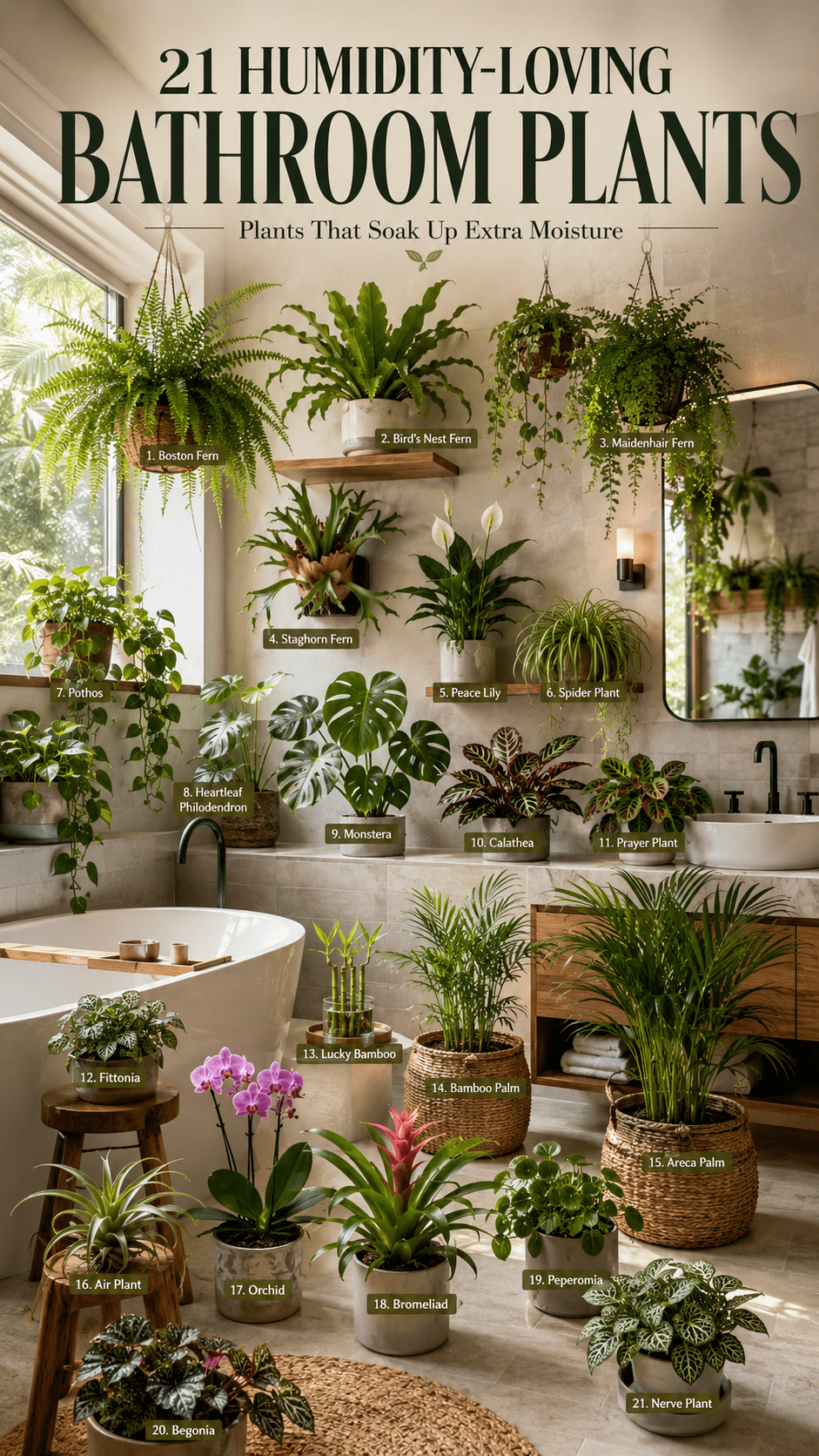
Bathrooms are often overlooked as a place to grow plants, but the warm, steamy conditions from hot showers actually create a microclimate that many tropical plants love. If you’ve got a bathroom window or even just a bit of ambient light, you can turn that steamy corner into a lush, spa-like retreat with plants that genuinely thrive on the extra moisture.
Here are 21 humidity-loving plants perfect for bathrooms, along with quick care notes and an image prompt for each.
1. Boston Fern
Boston Fern’s soft, feathery fronds practically drink up bathroom humidity, staying lush and full without much fuss. It prefers indirect light and consistently moist soil, making a steamy shower routine almost a built-in watering schedule.
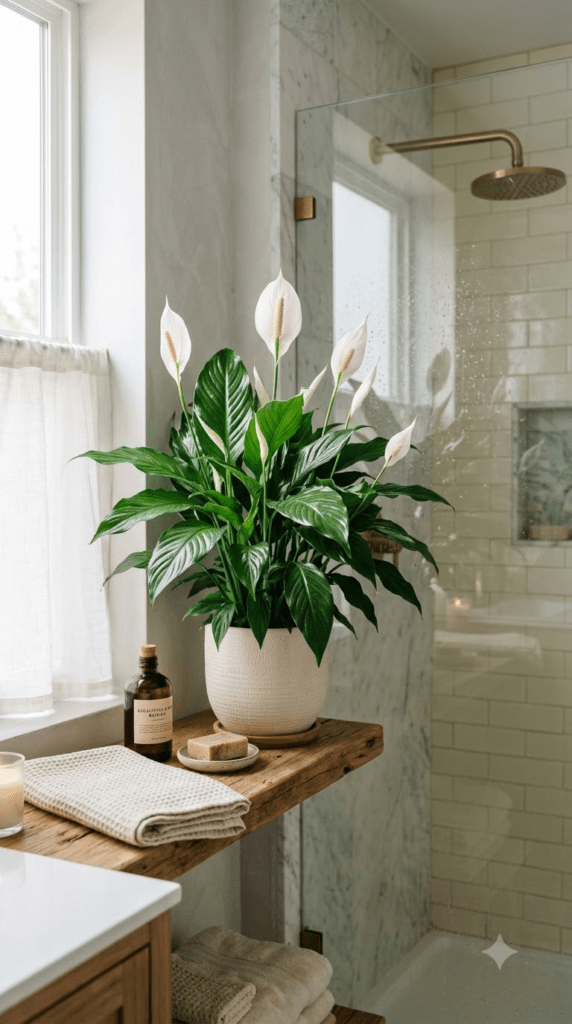
2. Peace Lily
Peace Lily’s glossy leaves and elegant white blooms thrive in the humid, low-light conditions typical of many bathrooms, and it dramatically droops to signal when it needs water. Its air-purifying reputation makes it a popular choice for spaces that could use a little freshening.
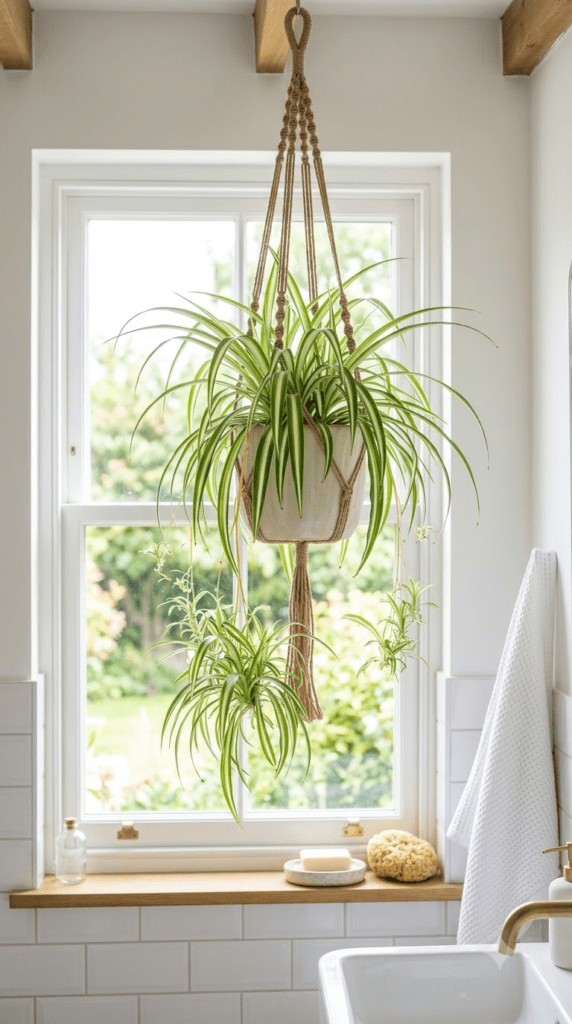
3. Spider Plant
Spider Plant’s arching, striped leaves handle bathroom humidity well while tolerating a range of light conditions, from bright to fairly dim. It’s forgiving of inconsistent care, making it a low-stress addition to a steamy, sometimes-neglected corner.
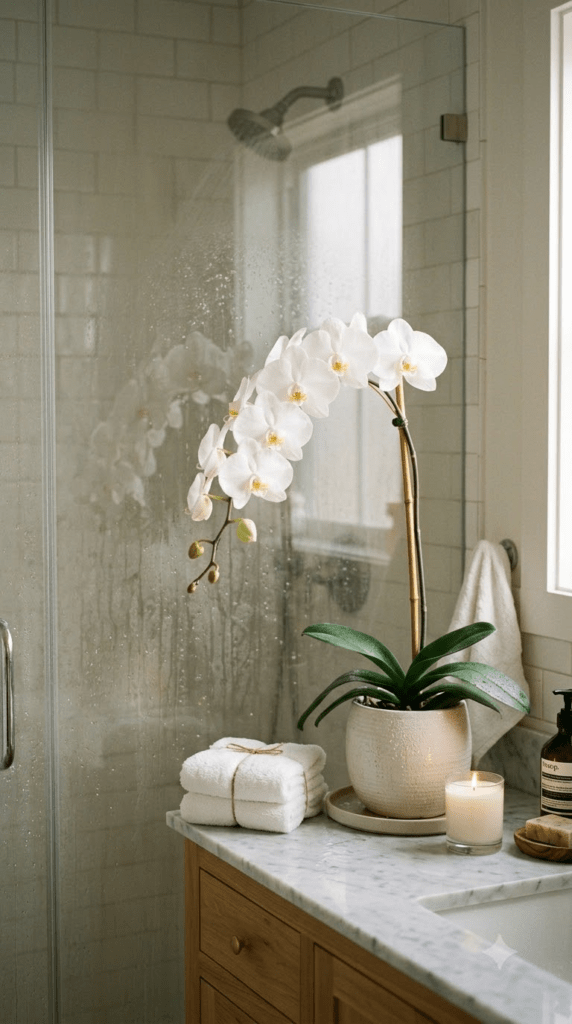
4. Orchids (Phalaenopsis)
Orchids naturally grow in humid, tropical environments, making a steamy bathroom nearly ideal for their care, especially near a window with filtered light. Their long-lasting blooms bring an elegant, spa-like touch, and the humidity helps prevent the papery root rot that dry air can cause.
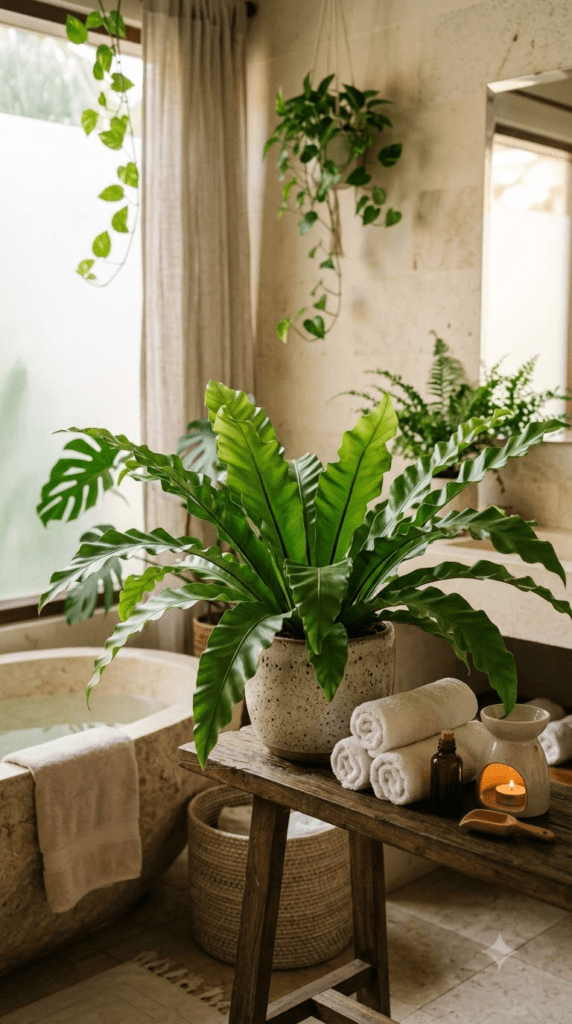
5. Bird’s Nest Fern
Bird’s Nest Fern’s wide, wavy, rosette-shaped fronds thrive in the warm humidity of a bathroom, tolerating lower light better than many ferns. It prefers to be kept out of direct sun, making it perfect for a windowless or dimly lit bathroom corner.
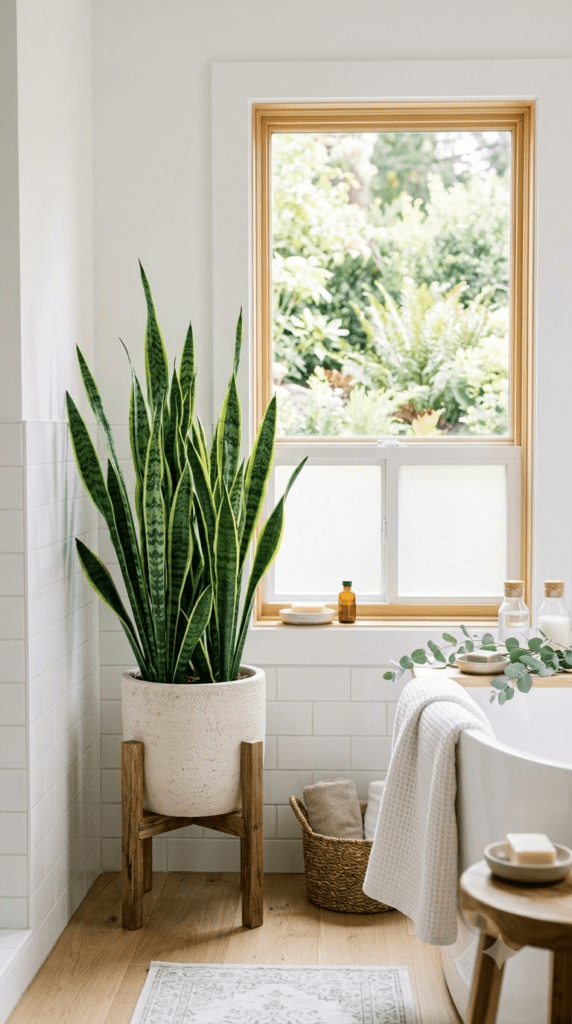
6. Snake Plant
Snake Plant tolerates both the humidity and inconsistent light of a bathroom with ease, needing infrequent watering and almost no maintenance. Its tall, upright leaves add clean, modern structure to a small or narrow bathroom space.
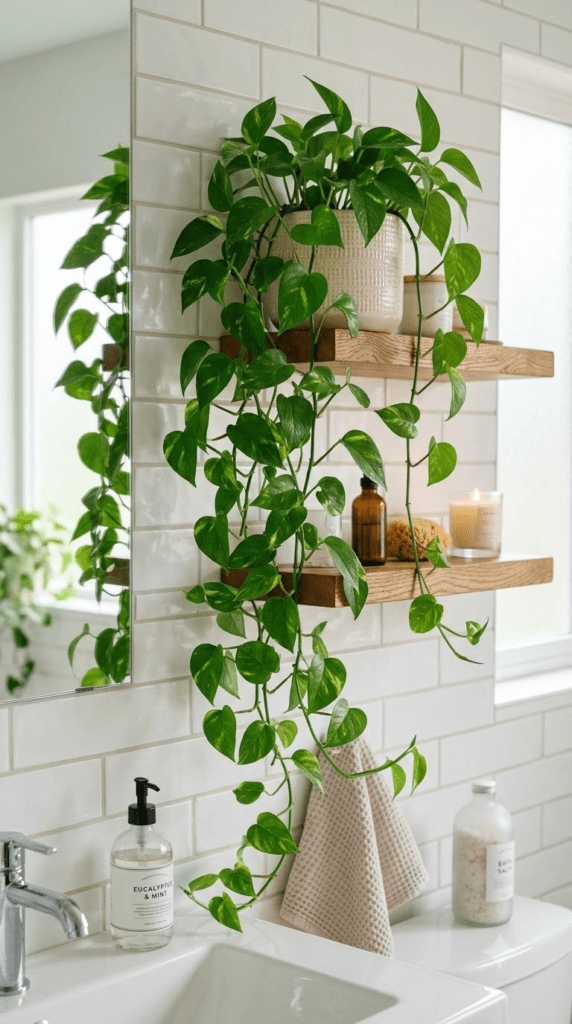
7. Pothos
Pothos handles humid bathroom air effortlessly, its trailing, heart-shaped leaves cascading beautifully from a shelf or hanging planter. It tolerates lower light conditions well and only needs watering when the top inch of soil feels dry.
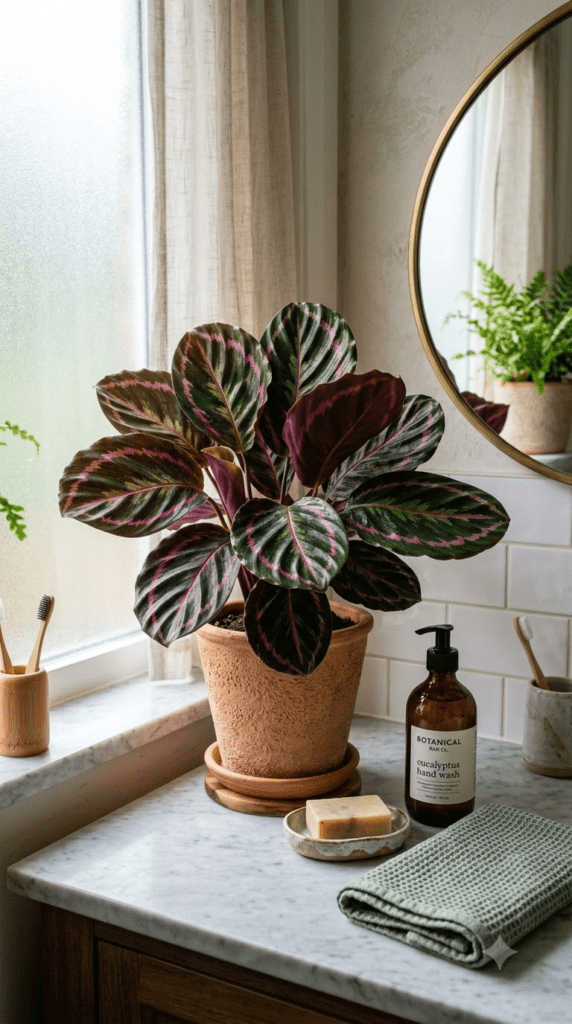
8. Calathea
Calathea’s bold, patterned leaves thrive in the consistent humidity a bathroom provides, since dry air tends to cause its leaf edges to brown. Indirect light and regular moisture keep its colors and patterns looking their vivid best.
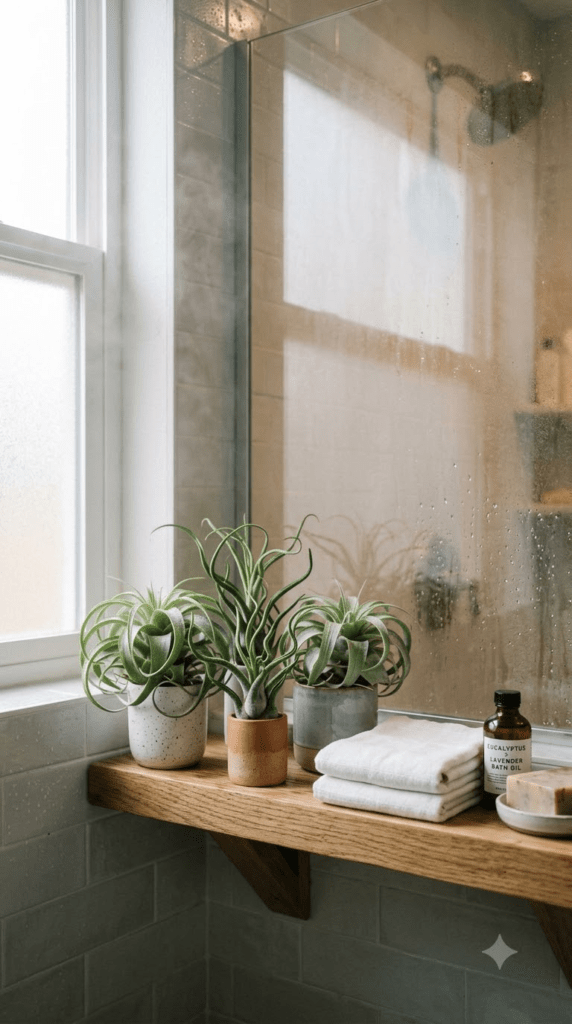
9. Air Plants (Tillandsia)
Air Plants absorb moisture directly from humid air, making a steamy bathroom one of the best possible environments for them, no soil required. Displayed in a glass terrarium or mounted on driftwood, they add effortless, sculptural greenery to any surface.
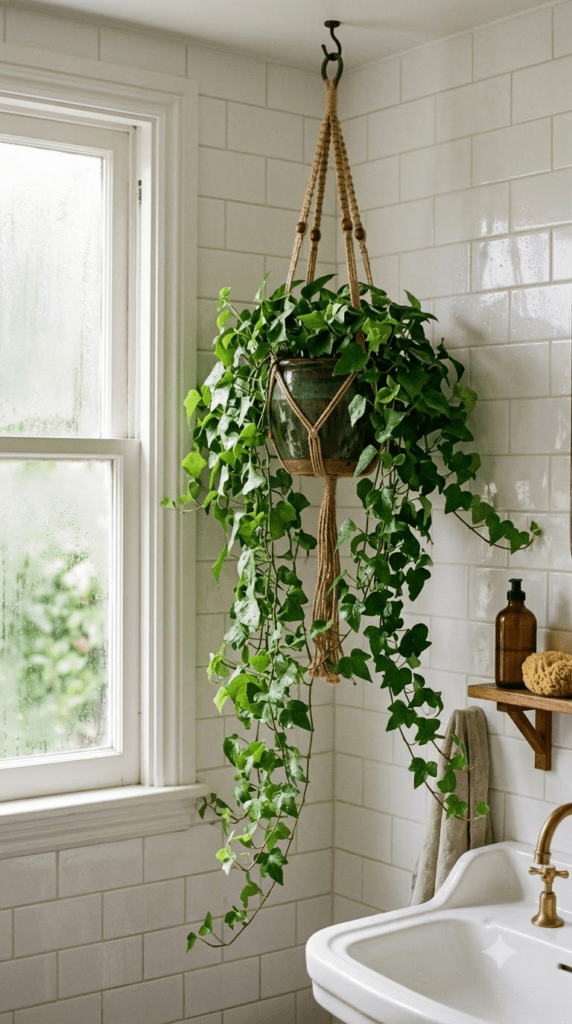
10. English Ivy
English Ivy’s trailing vines enjoy the added humidity of a bathroom, growing lush and full when given indirect light and consistently moist soil. It works especially well cascading from a hanging planter or high shelf where its vines can drape freely.
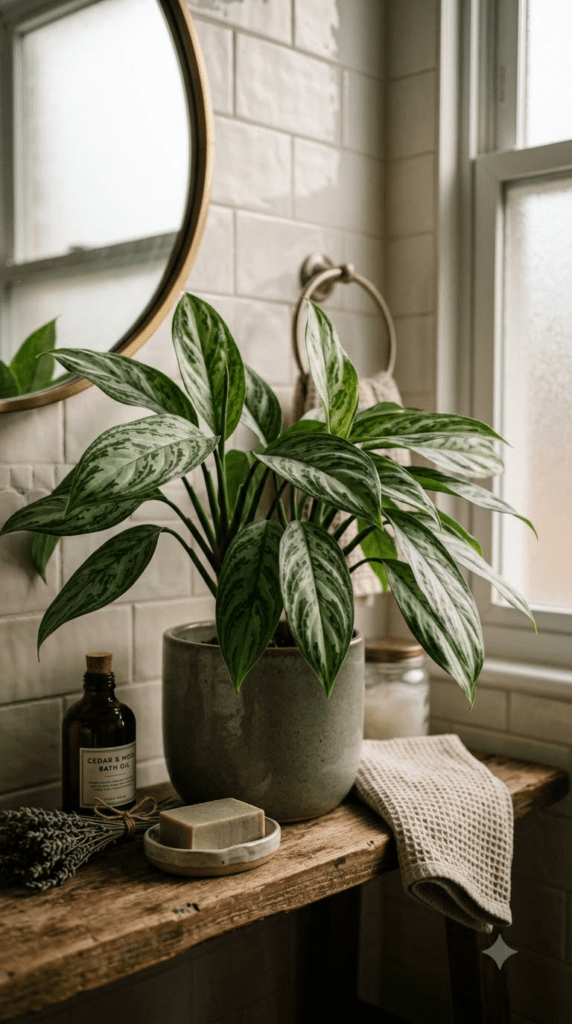
11. Chinese Evergreen
Chinese Evergreen’s patterned green and silver leaves tolerate both low light and high humidity with ease, making it well-suited to windowless or dimly lit bathrooms. It’s remarkably forgiving of inconsistent watering, ideal for a space that sometimes gets overlooked.
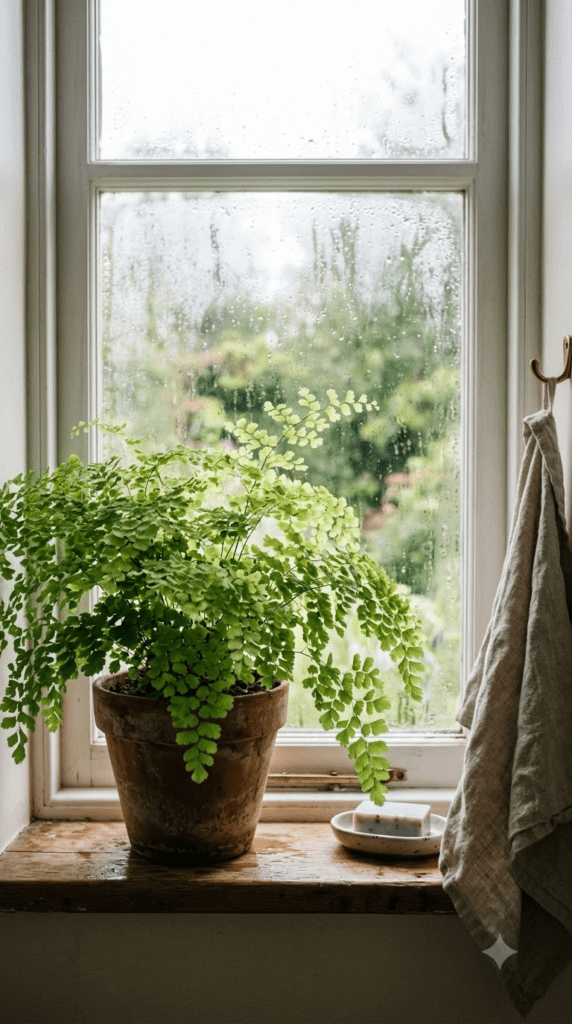
12. Maidenhair Fern
Maidenhair Fern’s delicate, lacy fronds thrive on the consistent moisture a bathroom provides, since this fern is notoriously fussy about dry air elsewhere in the home. Bright, indirect light and steady humidity keep its fine foliage looking soft and full.
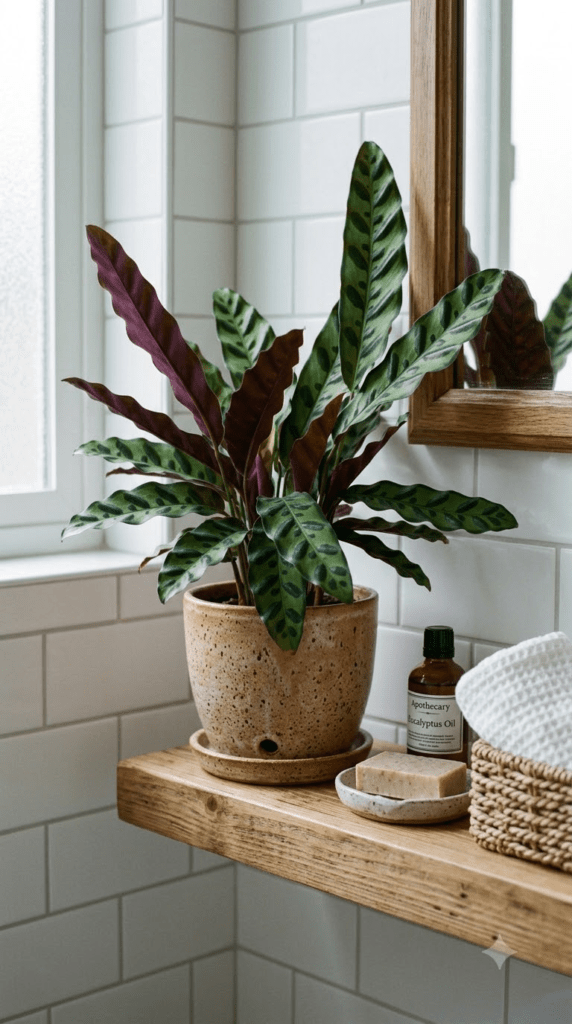
13. Rattlesnake Plant
Rattlesnake Plant’s wavy, patterned leaves with deep purple undersides benefit from the higher humidity a bathroom naturally provides, helping prevent the crispy edges dry air can cause. It prefers bright, indirect light and evenly moist soil.
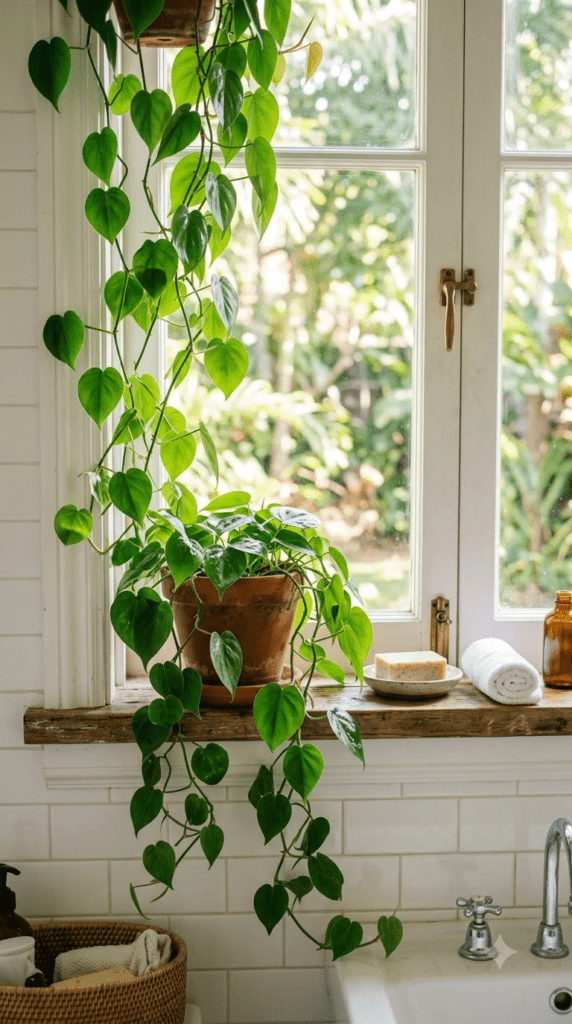
14. Philodendron
Philodendron’s glossy, heart-shaped leaves stay lush in bathroom humidity, tolerating both bright and lower light conditions with ease. Trailing varieties look especially at home cascading from a windowsill or shelf near the shower.
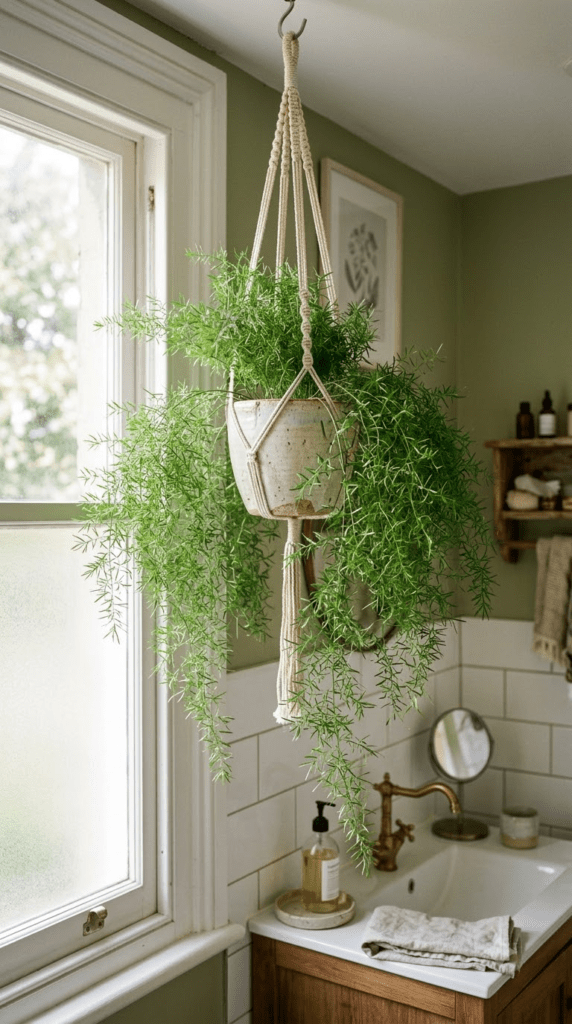
15. Asparagus Fern
Asparagus Fern’s soft, feathery, needle-like foliage thrives in humid air, adding delicate texture to a bathroom shelf or hanging planter. It prefers bright, indirect light and benefits from the extra moisture that dry-air-loving plants can’t tolerate.
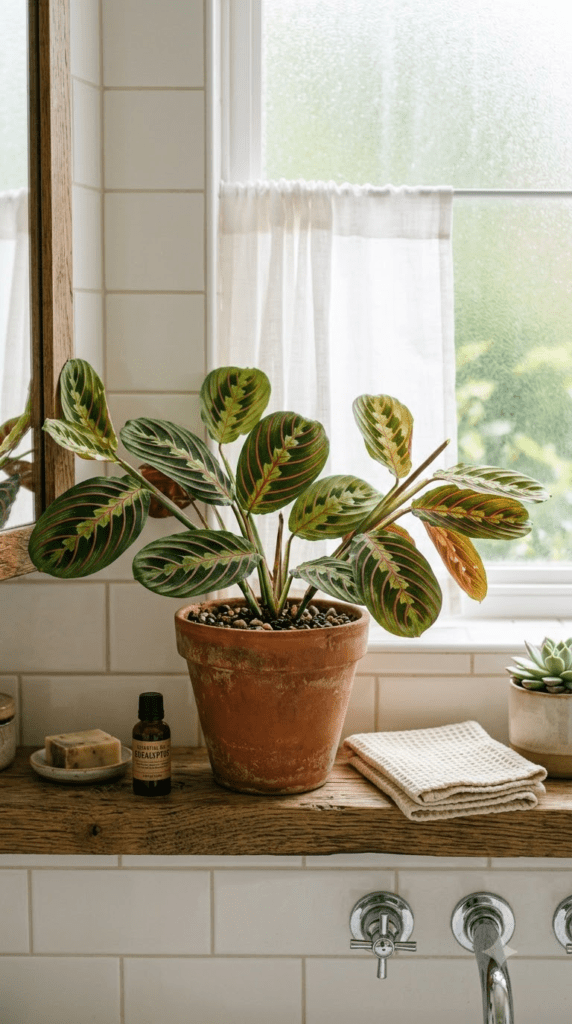
16. Prayer Plant
Prayer Plant’s patterned leaves, which fold upward at night, thrive in the humid warmth of a bathroom, since dry air often causes its leaf edges to curl and brown. Indirect light and consistently moist soil keep its colorful patterns vibrant.
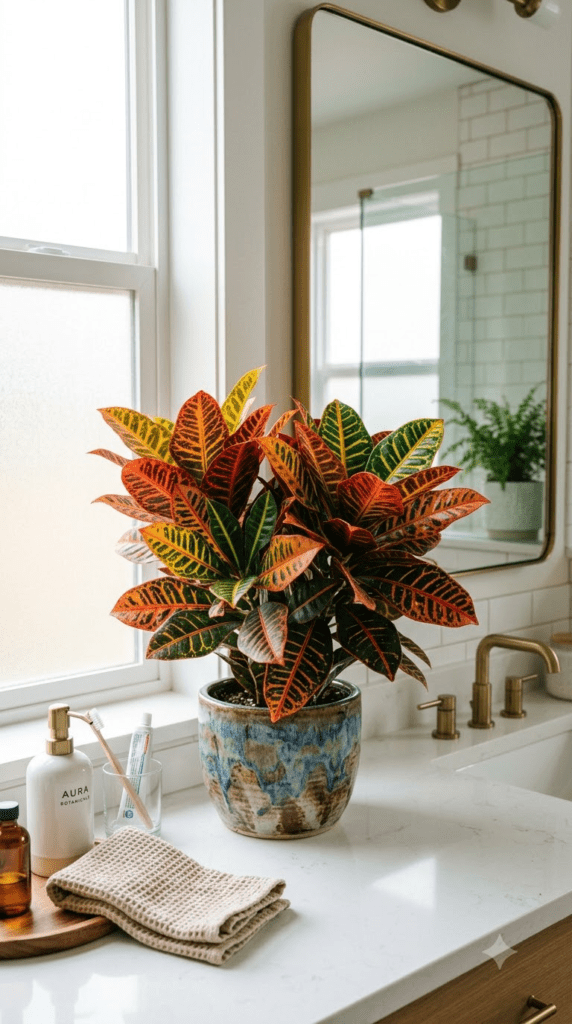
17. Croton
Croton’s bold, colorful leaves in red, orange, yellow, and green hold their vibrant color best with consistent humidity and bright, indirect light. A bathroom’s steamy conditions help prevent the leaf drop that dry indoor air can sometimes cause.
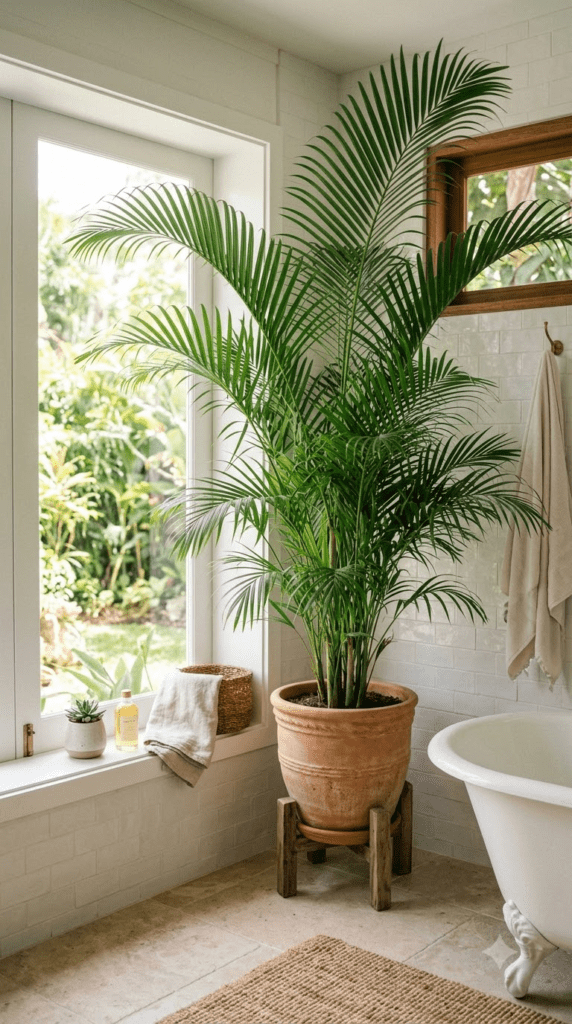
18. Areca Palm
Areca Palm’s feathery fronds bring a soft, tropical resort feel to a bathroom, thriving on the humidity while tolerating bright, indirect light. It also acts as a natural humidifier, helping balance moisture levels in drier parts of the home.
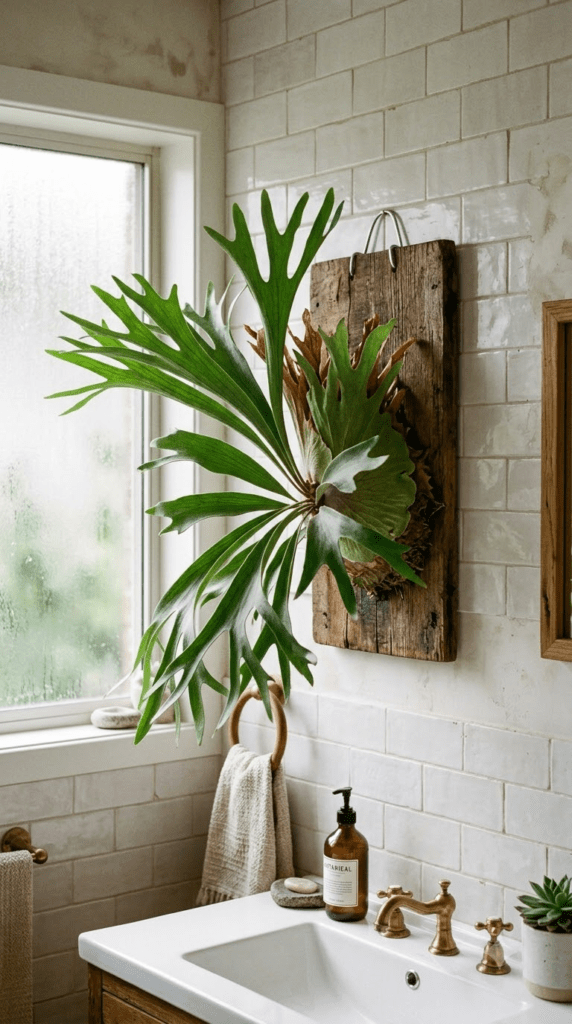
19. Staghorn Fern
Staghorn Fern’s unique, antler-shaped fronds thrive in humid, warm conditions and are often mounted on a wooden board for a striking wall display. It prefers bright, indirect light and benefits greatly from the steam a bathroom naturally provides.
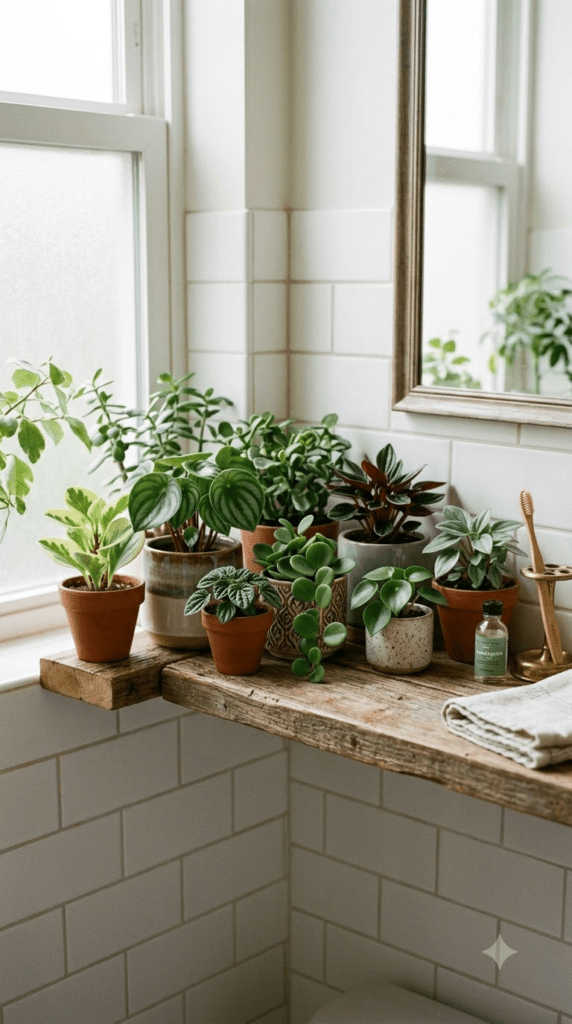
20. Peperomia
Peperomia’s thick, compact leaves in varying textures and colors handle bathroom humidity well while staying small enough for a narrow shelf or windowsill. It’s low-maintenance and forgiving, tolerating both bright and lower light conditions.
21. Bromeliad
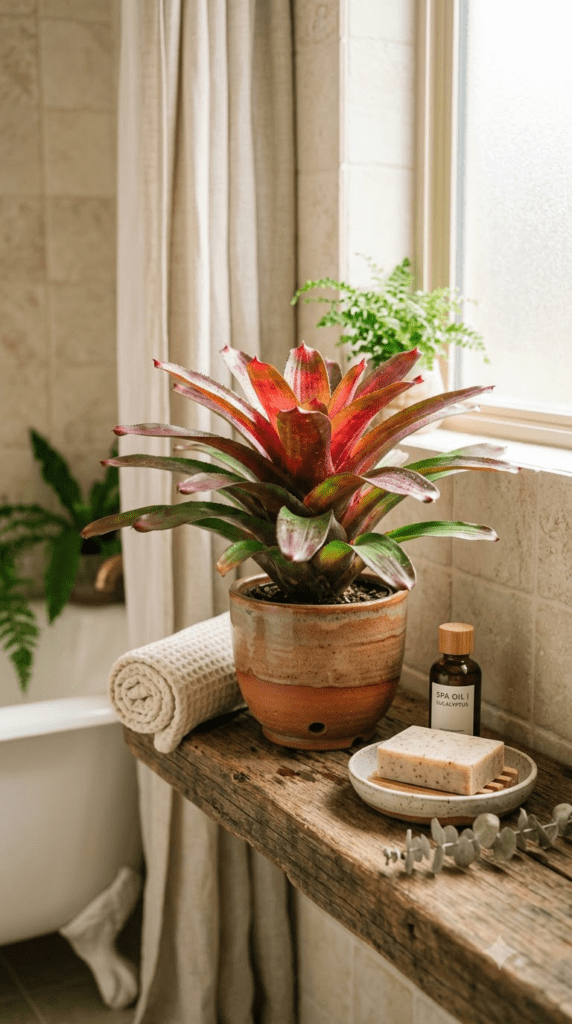
Bromeliad’s bold, colorful rosettes thrive on humidity, often absorbing moisture through their central cup as well as their roots, making a steamy bathroom an ideal environment. It tolerates low to medium light, adding a vibrant pop of color to shaded corners.
Why Bathrooms Make Great Growing Spaces
The steam from hot showers and baths regularly pushes humidity levels well above what the rest of a typical home offers, closely mimicking the tropical, humid environments many houseplants originate from. This makes bathrooms especially forgiving for plants that usually struggle with dry, heated indoor air elsewhere in the house.
Tips for Growing Plants in a Bathroom
Light matters most: Check how much natural light your bathroom actually gets — a window means more options, while windowless bathrooms should stick to low-light-tolerant plants like snake plant, pothos, or ZZ plant, possibly supplemented with a small grow light.
Ventilation: While humidity is beneficial, stagnant, overly damp air can encourage mold, so cracking a window or running a fan after showers helps keep both your plants and bathroom healthy.
Watering: Bathroom plants often need less frequent watering than expected, since they’re already absorbing moisture from the air — always check the soil before watering to avoid overdoing it.
Placement: Keep plants away from direct water spray in the shower, and use a saucer or tray under pots to catch drips and protect surfaces from water damage.
Final Thoughts
A bathroom’s warm, humid air is a genuine growing asset, not just a decorating afterthought. By choosing plants that naturally crave moisture — ferns, orchids, calathea, and air plants among them — you can transform an ordinary bathroom into a lush, spa-like retreat that both you and your plants will love spending time in.