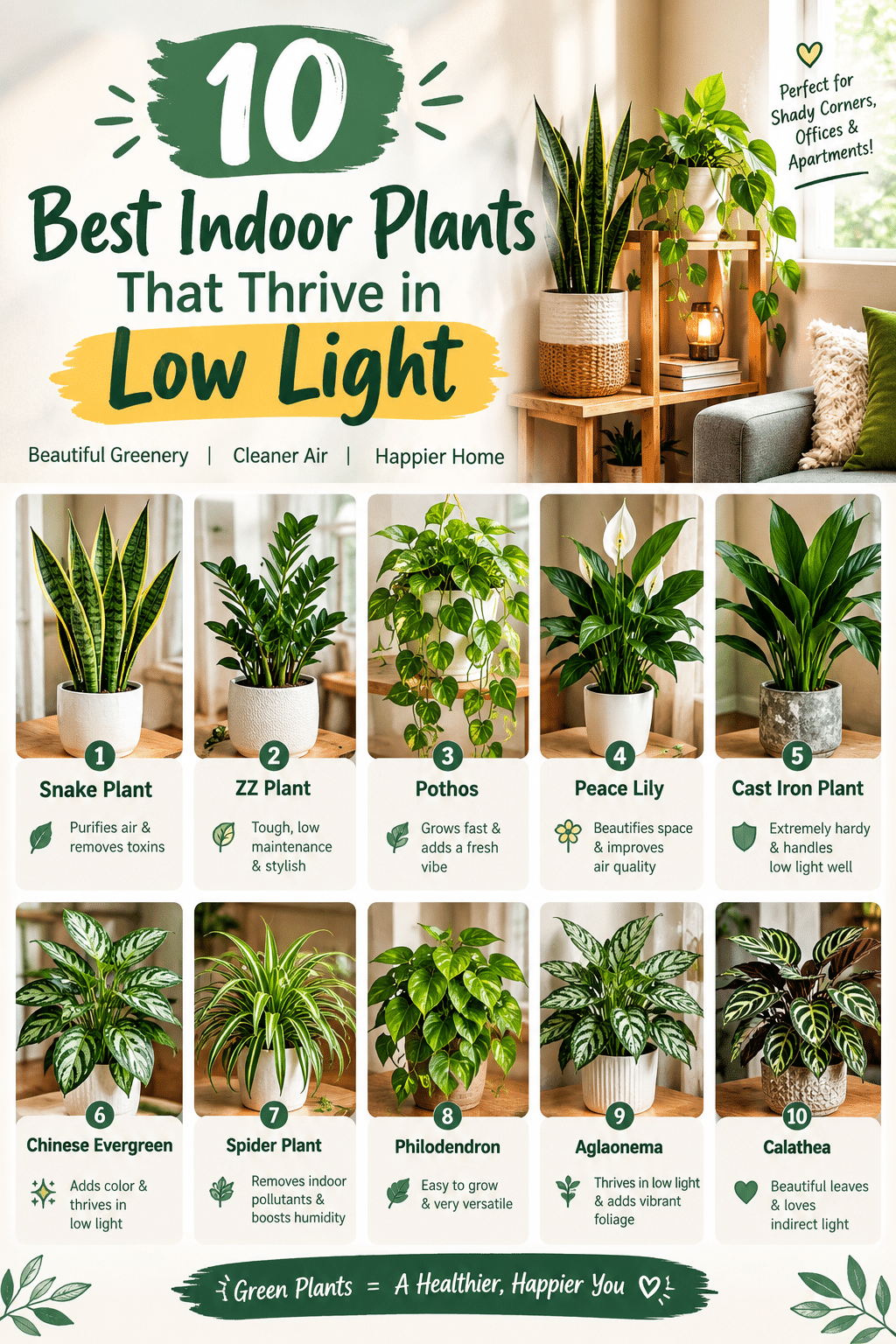
A dim apartment, a north-facing window, or a windowless hallway doesn’t have to mean a plant-free home. Plenty of houseplants evolved on shaded forest floors, so they’re perfectly happy with the gentle light most indoor spaces offer. The trick is picking species that tolerate low light well, then adjusting your watering to match, since plants in dim rooms use water more slowly.
Here are 10 of the best indoor plants for low light, along with quick care notes, an image, and a unique image title for each.
1. Snake Plant
Snake Plant’s tall, upright leaves handle dim corners and long stretches between waterings better than almost any other houseplant. It adds clean, architectural shape to a room and asks for very little in return.
Care notes: Water only when the soil is completely dry, roughly every 2 to 4 weeks in low light.
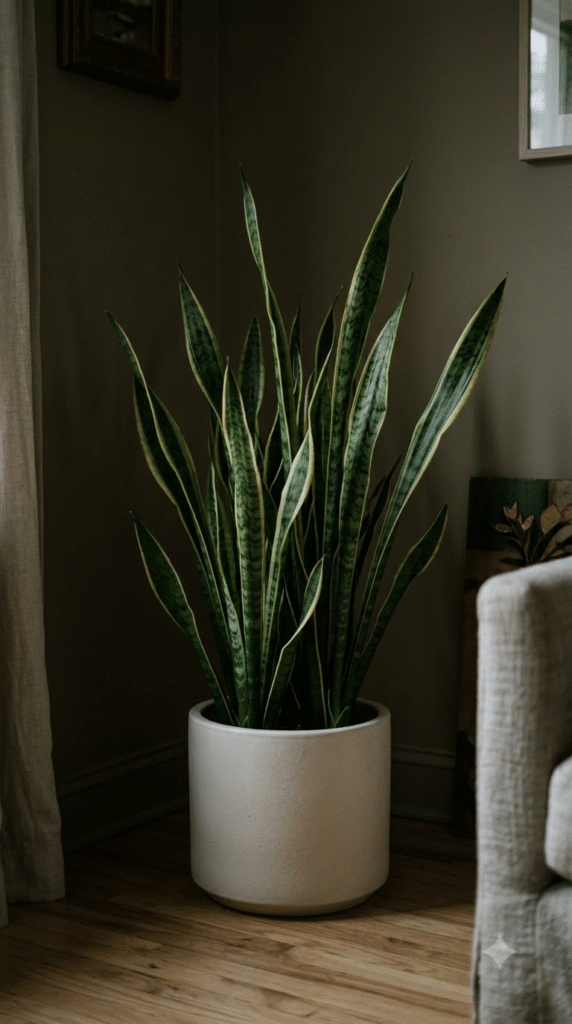
Image Title: “Standing Tall in the Dimmest Corner”
2. ZZ Plant
The ZZ Plant’s glossy, waxy leaves store water, so it shrugs off both low light and missed waterings. Its slow, steady growth means it stays tidy for years without much attention.
Care notes: Let the soil dry out fully between waterings and avoid overwatering, which is its main weakness.
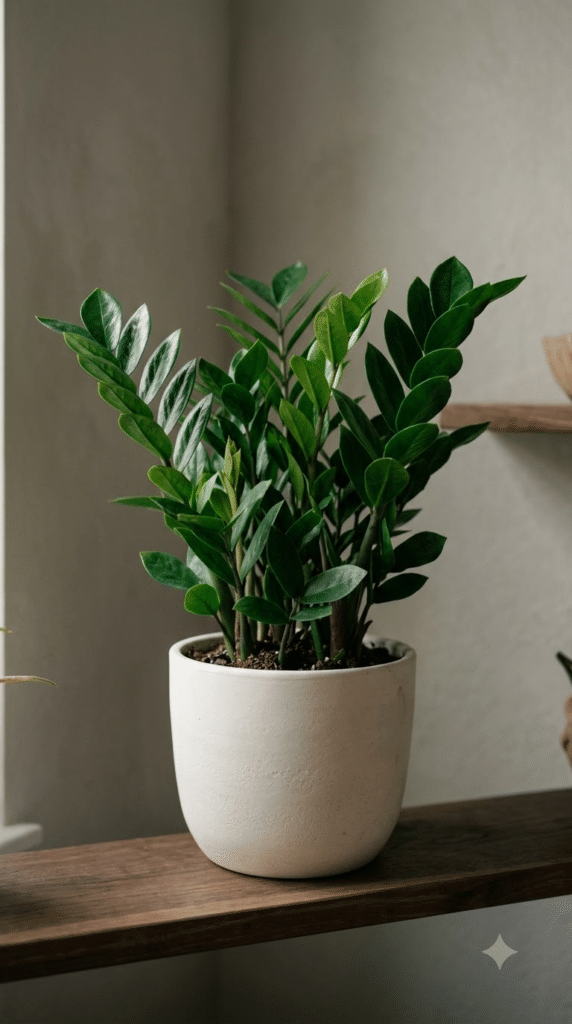
Image Title: “Glossy Green That Needs Almost Nothing”
3. Pothos
Pothos grows happily in low light, though its variegation may fade a little. Its trailing heart-shaped vines look great spilling from a shelf or hanging basket, and cuttings root easily in water.
Care notes: Water when the top inch or two of soil is dry; trim vines to keep it full.
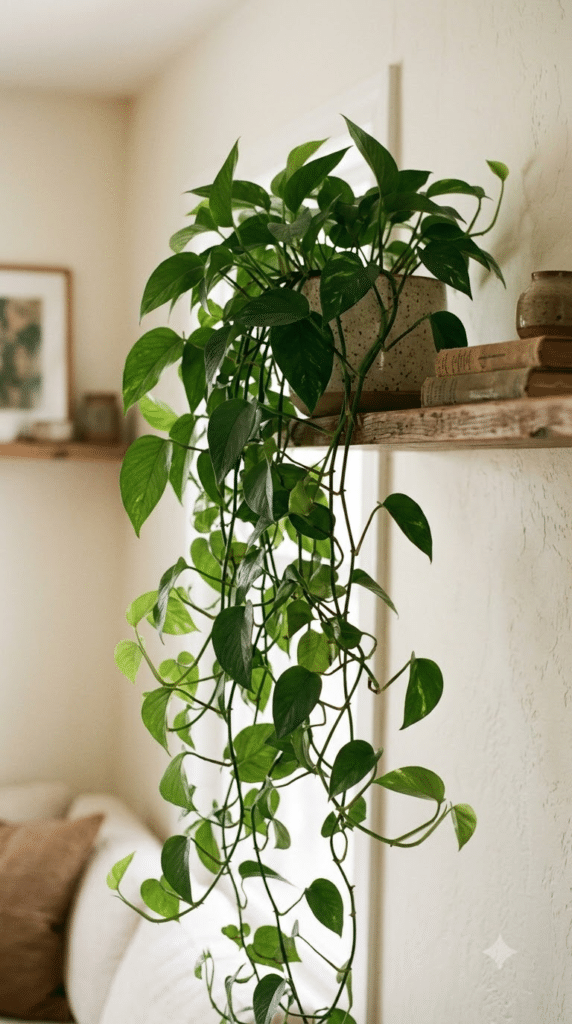
Image Title: “Trailing Vines in Soft Shade”
4. Cast Iron Plant
True to its name, the Cast Iron Plant tolerates deep shade, temperature swings, and irregular care. Its broad, dark green leaves bring a calm, lush look to the shadiest spots.
Care notes: Water sparingly and keep it out of direct sun, which can scorch the leaves.
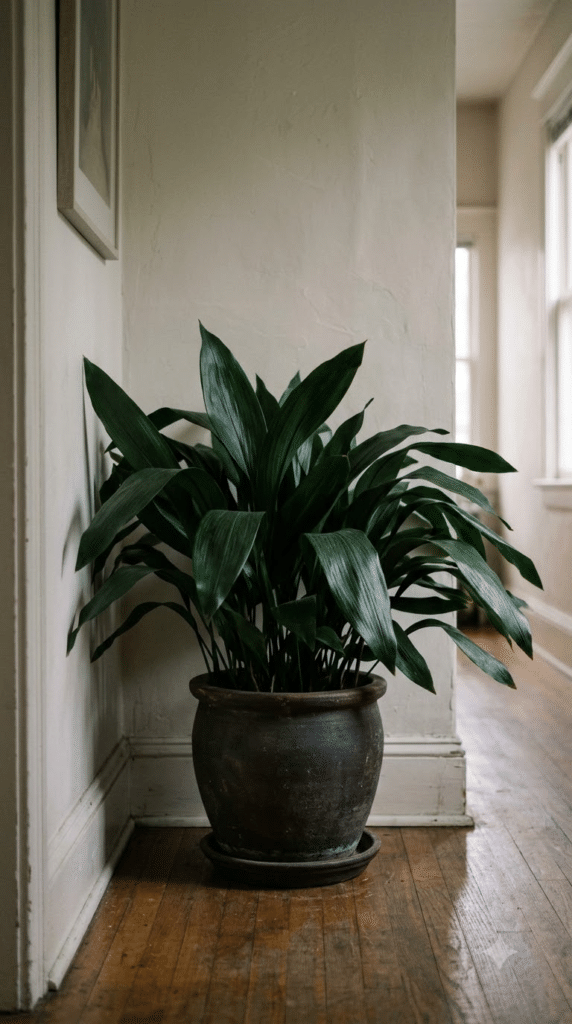
Image Title: “Deep Green for the Darkest Hallway”
5. Peace Lily
Peace Lily tolerates low light and even blooms with its elegant white flowers in modest conditions, though blooming is stronger with a bit more brightness. It also droops dramatically when thirsty, which makes watering easy to time.
Care notes: Keep soil lightly moist, and note that it is toxic to cats and dogs if chewed.
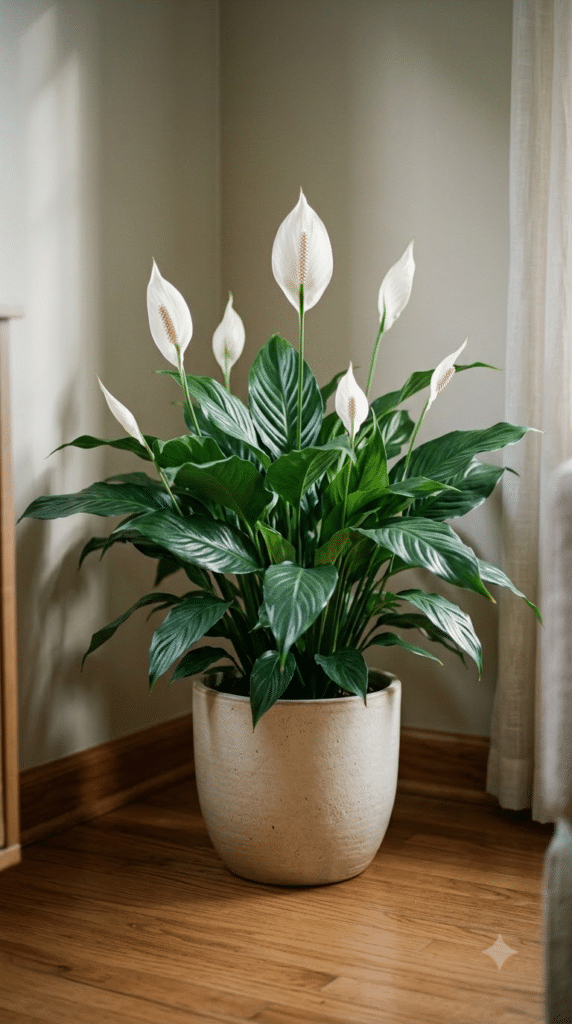
Image Title: “White Blooms in a Quiet Corner”
6. Chinese Evergreen
Chinese Evergreen’s patterned leaves in silver, green, and pink bring color to rooms with little sun. Darker-leaved varieties handle the lowest light, while lighter, more variegated ones prefer a bit more.
Care notes: Let the top inch of soil dry between waterings and keep it away from cold drafts.
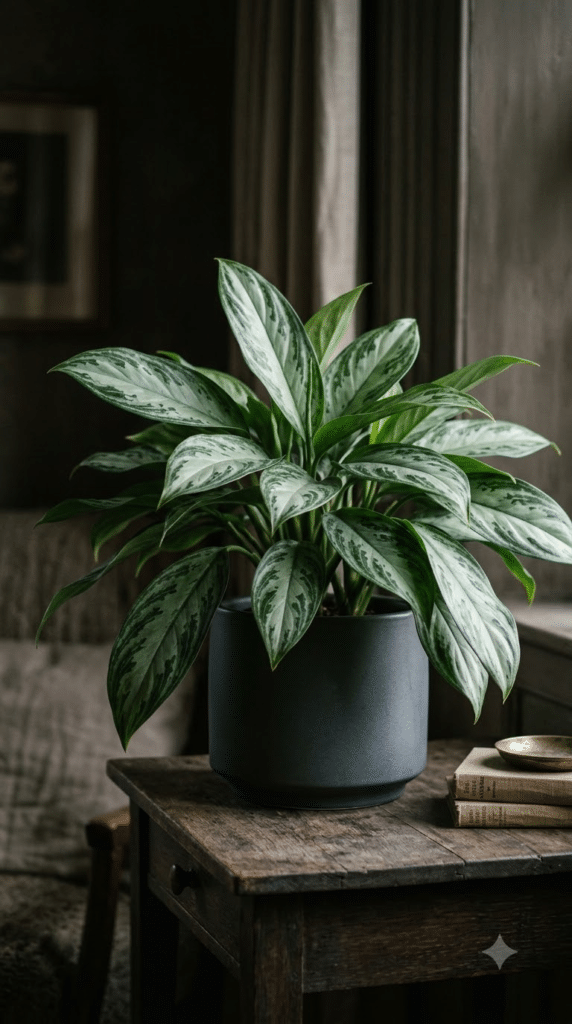
Image Title: “Silver Patterns Glowing in the Shade”
7. Parlor Palm
Parlor Palm is a compact, slow-growing palm that tolerates low light better than most of its relatives. Its soft, feathery fronds give a tropical feel to desks, shelves, and small rooms.
Care notes: Keep soil lightly moist and mist occasionally in dry air; it’s safe for cats and dogs.
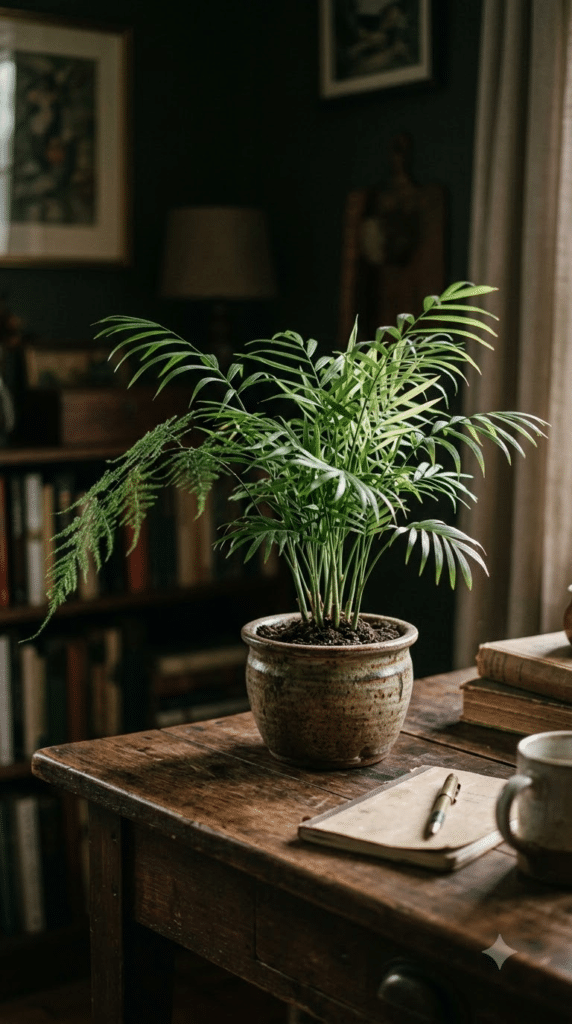
Image Title: “A Tiny Palm for Tucked-Away Places”
8. Philodendron Heartleaf
Heartleaf Philodendron looks much like pothos and is just as forgiving of low light. Its velvety, heart-shaped leaves trail beautifully or can be trained up a small support.
Care notes: Water when the top inch of soil feels dry; pinch tips to keep it bushy.
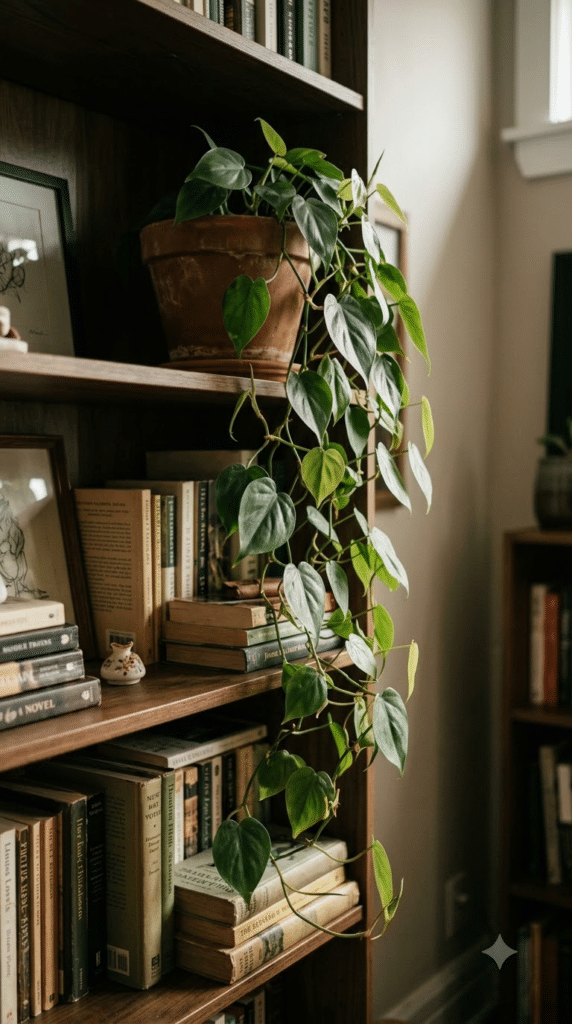
Image Title: “Velvet Hearts on the Bookshelf”
9. Dracaena
Dracaena varieties like ‘Janet Craig’ and ‘Lemon Lime’ tolerate dim rooms and add height with their arching, strappy leaves. They grow slowly, so they stay manageable without frequent pruning.
Care notes: Let the soil dry out between waterings and use filtered water, since fluoride can brown the tips.
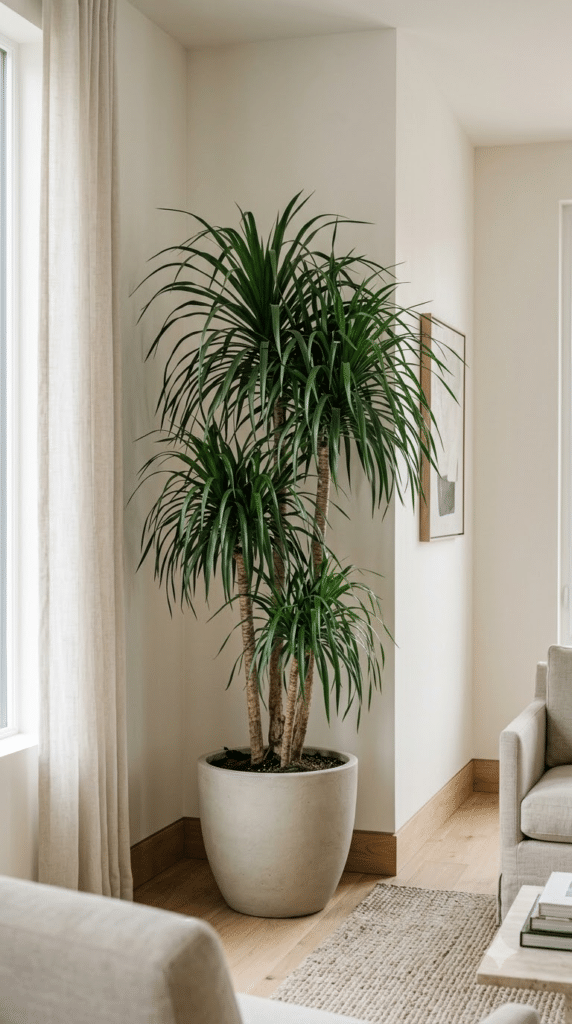
Image Title: “Arching Leaves Reaching Up From the Shade”
10. Bird’s Nest Fern
Bird’s Nest Fern forms a rosette of wavy, bright green fronds and does well in low to medium light with decent humidity. It’s a great fit for bathrooms or kitchens without much window space.
Care notes: Keep soil evenly moist but not soggy, and avoid pouring water into the center of the rosette.
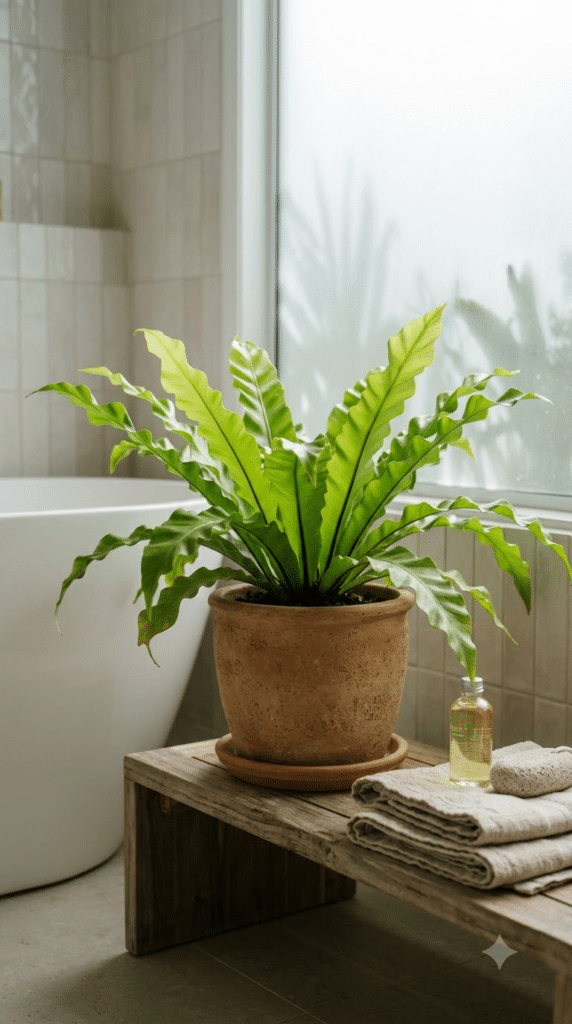
Image Title: “A Wavy Green Rosette Away From the Window”
Tips for Growing Plants in Low Light
Water less often: Plants in dim rooms photosynthesize and drink more slowly, so overwatering is the most common mistake.
Clean the leaves: Dust blocks what little light is available, so wipe leaves every few weeks.
Rotate regularly: Turn pots a quarter turn weekly so all sides get even light and growth stays balanced.
Add a grow light if needed: A simple full-spectrum bulb in a nearby lamp can make a big difference for windowless rooms.
Remember “low light” isn’t “no light”: Even the toughest plants need some ambient light, so place them where you can comfortably read without turning on a lamp.
Final Thoughts
Low light doesn’t have to limit your plant collection. Snake plants, ZZ plants, pothos, and cast iron plants prove that some of the most beautiful houseplants are also the most adaptable. Pick a couple that suit your space, water them sparingly, and enjoy a greener home no matter how little sun your windows get.