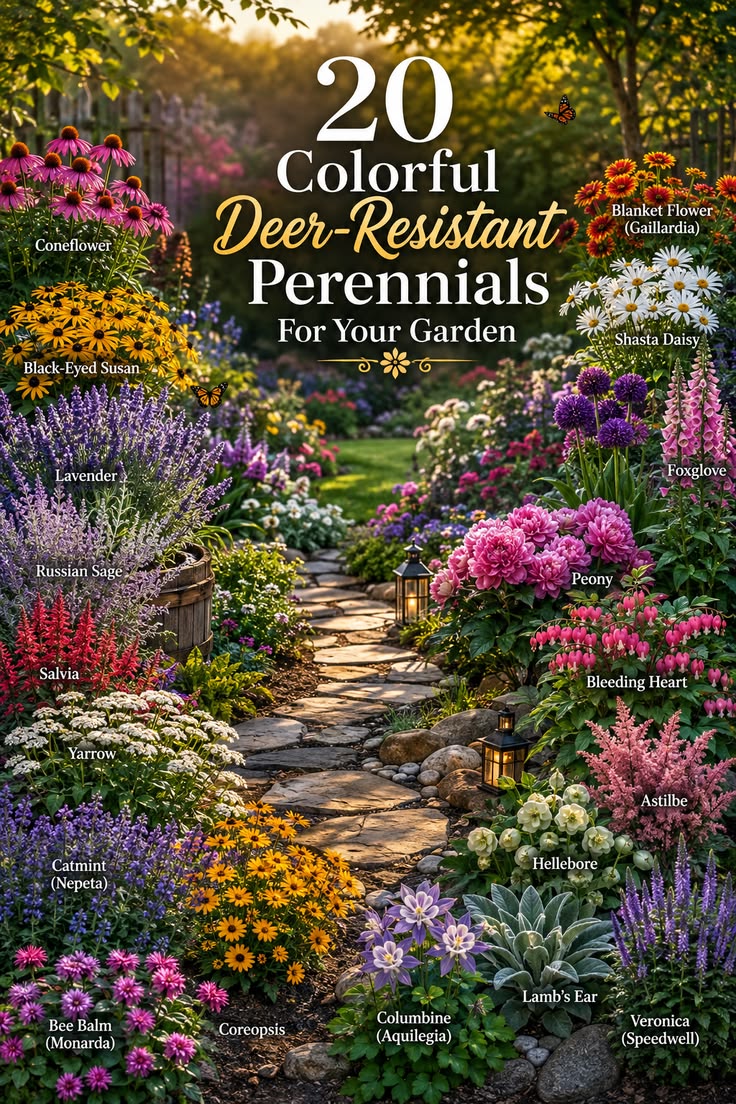
Building a garden that stays vibrant year after year without turning into a deer buffet takes the right plant choices — but it’s far from impossible. With the right mix of textured foliage, fragrant herbs, and deer-averse blooms, you can fill both sunny beds and shaded corners with color that lasts from spring through fall.
Here are 20 colorful, deer-resistant perennials for every part of your garden, along with quick care notes and an image for each.
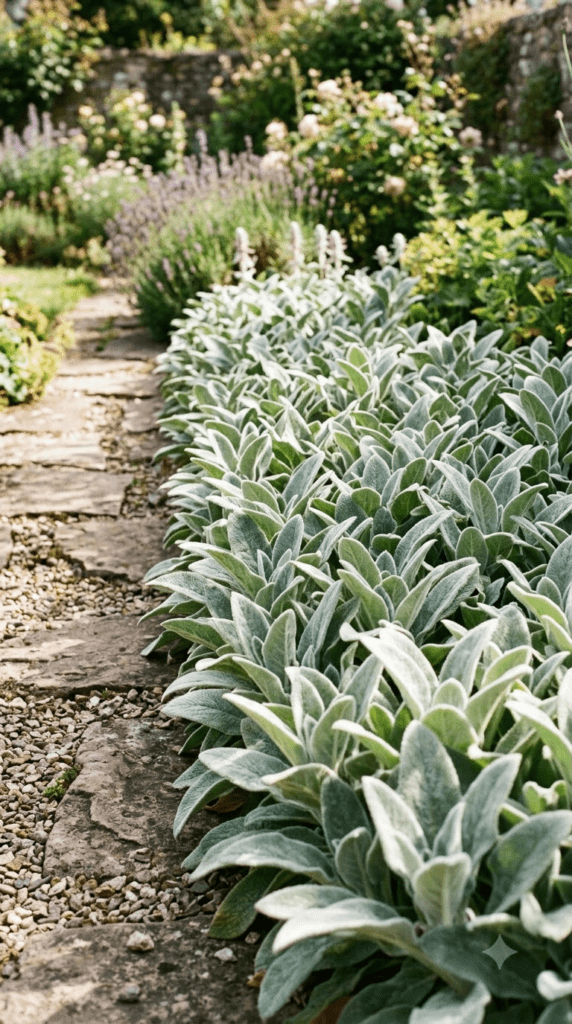
1. Lamb’s Ear (Stachys byzantina)
Lamb’s Ear’s soft, silvery, velvet-textured leaves add striking contrast to garden beds, and its fuzzy texture keeps deer away. It thrives in full sun to partial shade with well-drained soil, sending up purple-pink flower spikes in summer that bees love.
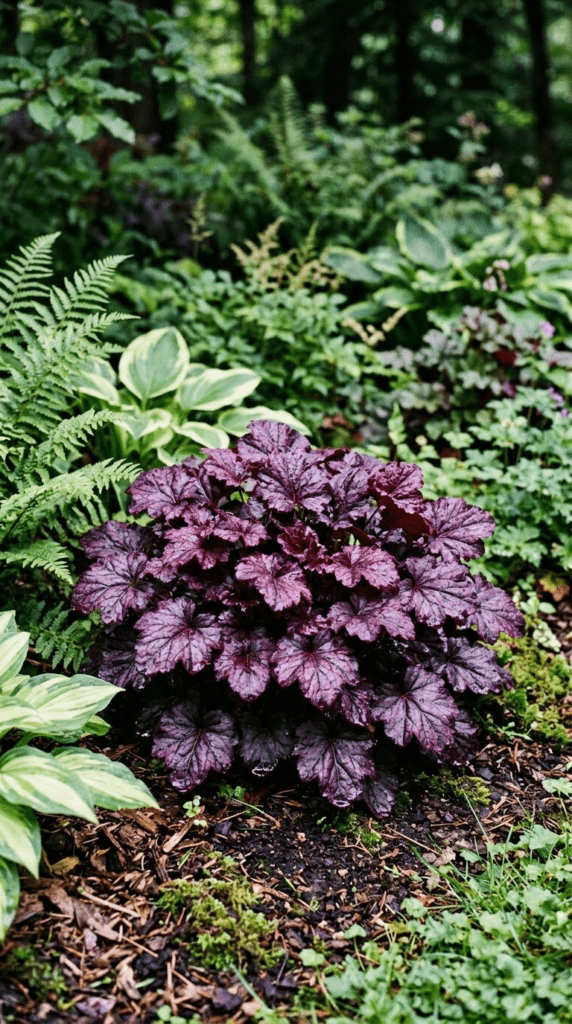
2. Heuchera ‘Palace Purple’
This perennial’s deep, glossy purple foliage brings rich color to flower beds in both sun and shade, with delicate white or pink flower spikes appearing in late spring. Deer typically avoid it, making it a reliable anchor for mixed borders with ferns and hostas.
16 Futuristic Bathroom Designs with Glowing LED Accents & Sleek Floating Vanities
24 Gorgeous Container Garden Designs You’ll Want to Copy
Rattlesnake Plant Care 101: 11 Secrets to Keep Those Wild Leaf Patterns Thriving
8 Stunning Money Plant Ideas to Transform Your Home Decor in 2026
Fiddle Leaf Fig Dropping Leaves? Here’s Why
Poolside Paradise: 17 Low-Fuss Plants That Turn Your Backyard Into a Resort
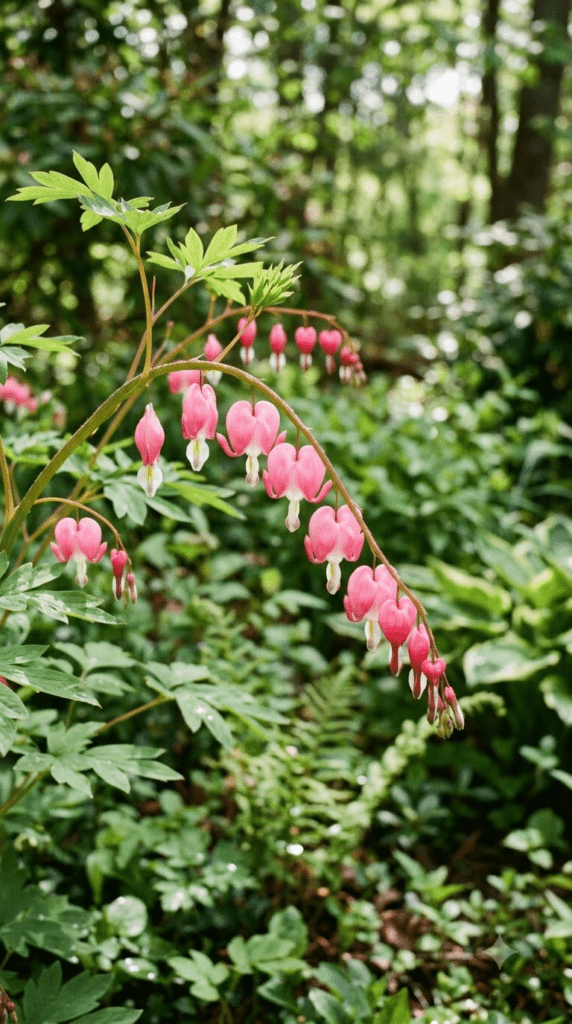
3. Bleeding Heart (Dicentra spectabilis)
Bleeding Heart’s delicate, heart-shaped pink and white blooms dangle from arching stems in early spring, thriving in morning sun and afternoon shade. It’s deer-resistant and pairs beautifully with ferns, hostas, and astilbes before going dormant in summer.
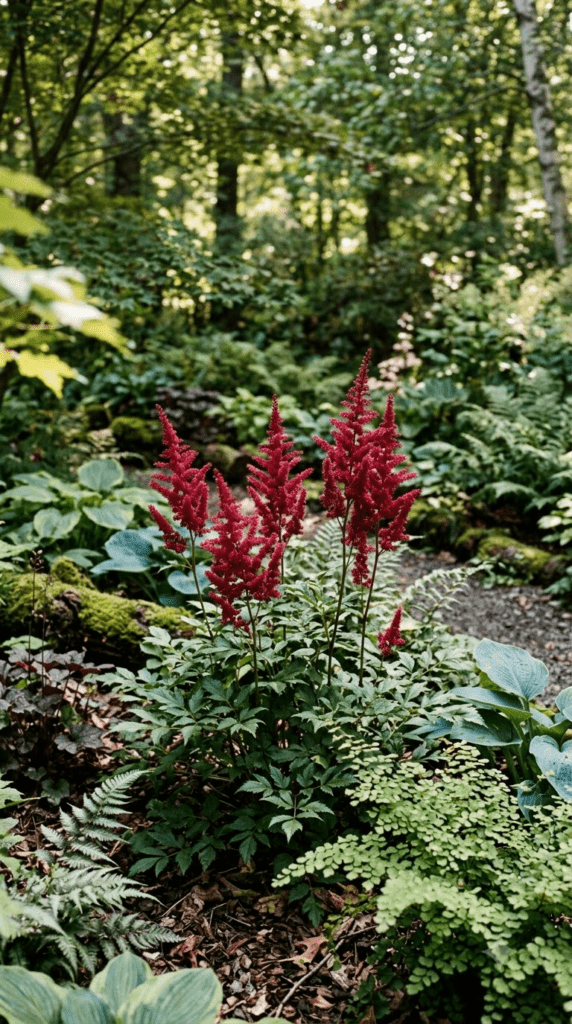
4. Astilbe ‘Fanal’
With deep red, feathery flower plumes and finely cut foliage, Astilbe ‘Fanal’ brightens shady corners from early to mid-summer. It thrives in part to full shade with consistently moist, rich soil, and deer generally leave it untouched.
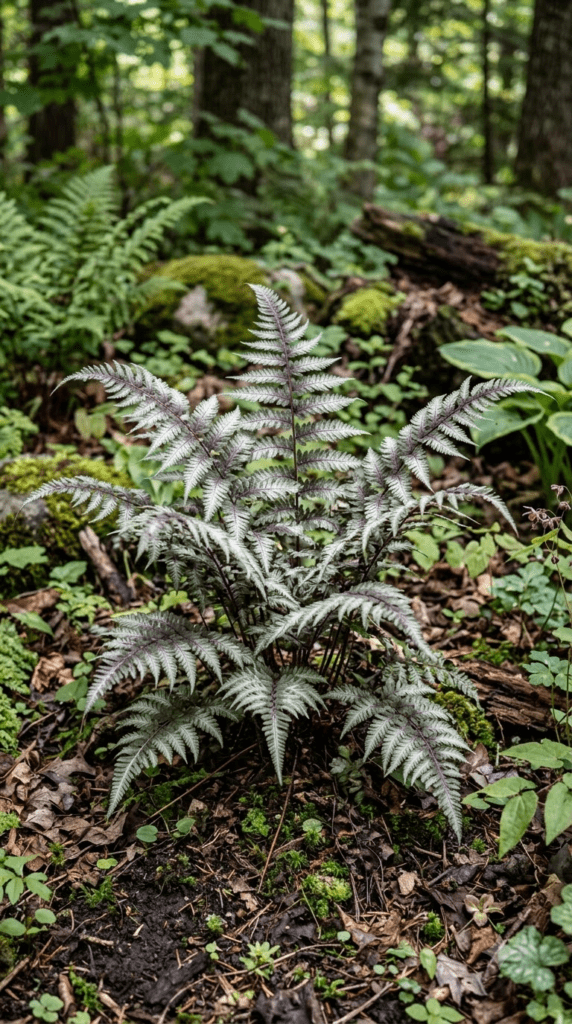
5. Japanese Painted Fern (Athyrium niponicum)
This fern’s silver, green, and purple fronds bring soft, shifting color to shady garden spots, thriving in partial to full shade with moist, well-drained soil. Deer typically pass it by, making it an easy pairing with hostas and heucheras.
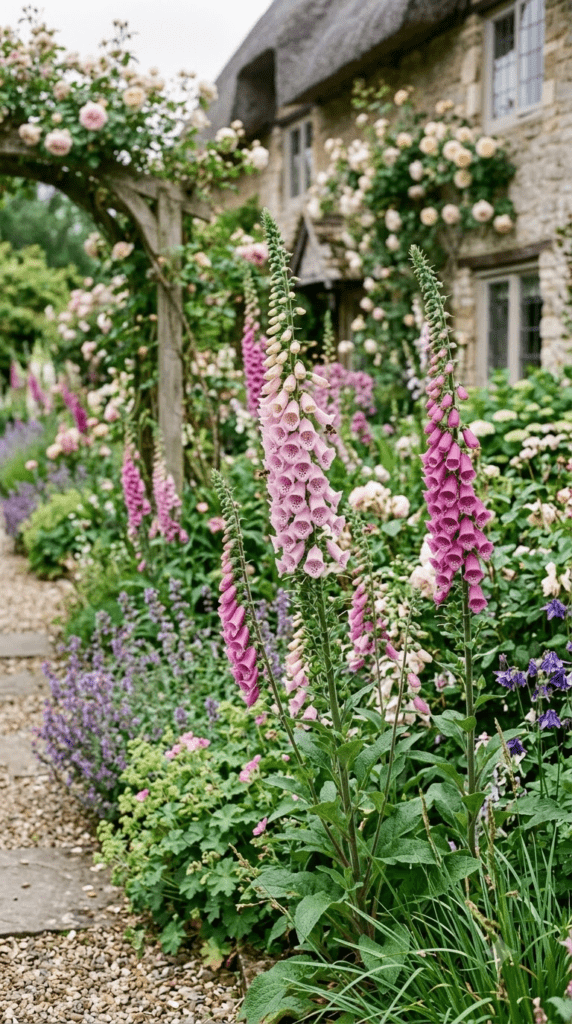
6. Foxglove (Digitalis purpurea)
Foxglove’s tall, bell-shaped blooms in pink, purple, white, and yellow add cottage-garden charm to both sun and partial shade, and its natural toxicity keeps deer away. It prefers moist, well-drained soil and often self-seeds for returning color each year.
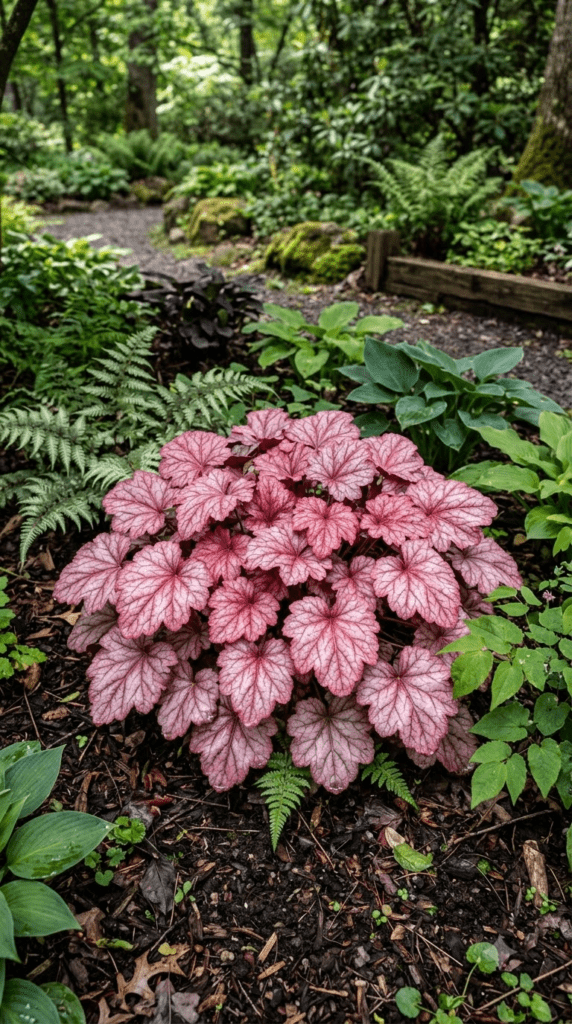
7. Coral Bells ‘Berry Smoothie’
This perennial’s rosy-pink, silver-sheened leaves provide color nearly year-round, even before its small white or pale pink flowers appear in late spring. It thrives in partial shade, stays low-maintenance, and deer typically leave it alone.
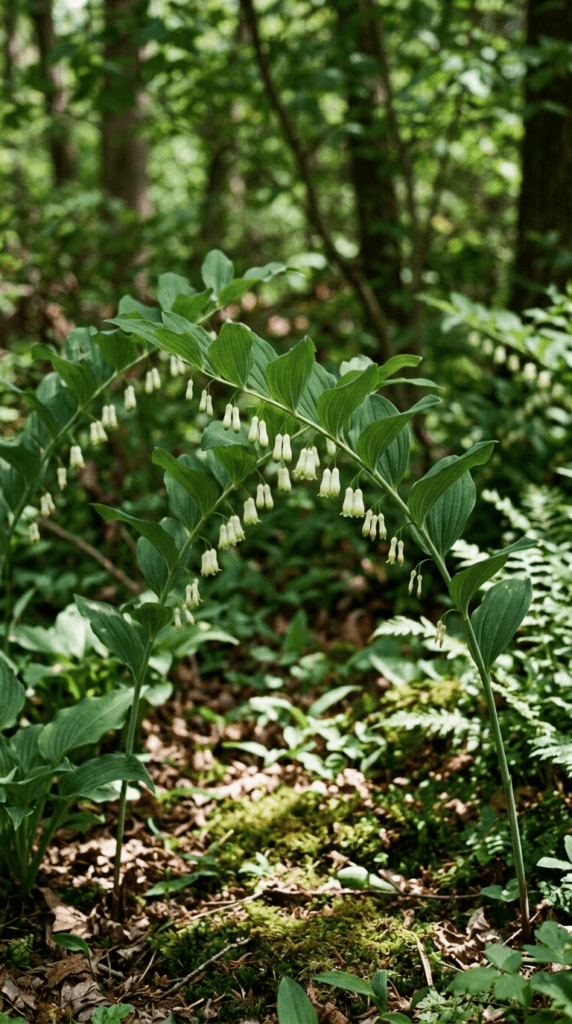
8. Solomon’s Seal (Polygonatum odoratum)
Solomon’s Seal’s arching stems and dangling white spring flowers bring quiet, graceful movement to shaded areas, thriving in moist, organically rich soil. Deer generally avoid it, and its foliage turns a gentle yellow before dying back for winter.
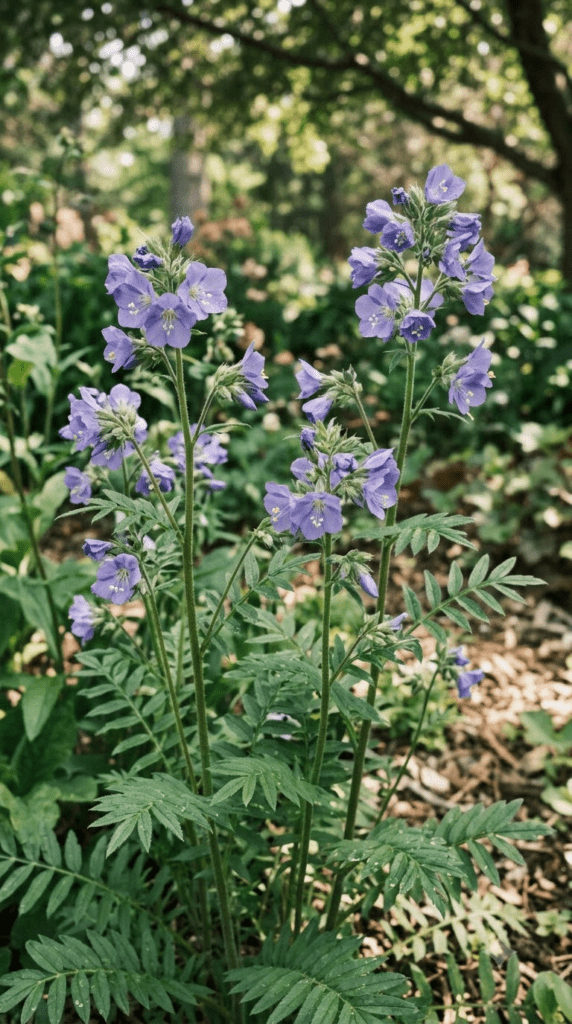
9. Jacob’s Ladder (Polemonium caeruleum)
Jacob’s Ladder’s delicate blue-purple flowers pop against ferny, laddered leaves, thriving in partial shade with moist, well-drained soil. It’s largely ignored by deer while drawing in bees, and pairs well with hostas or ferns in clusters.
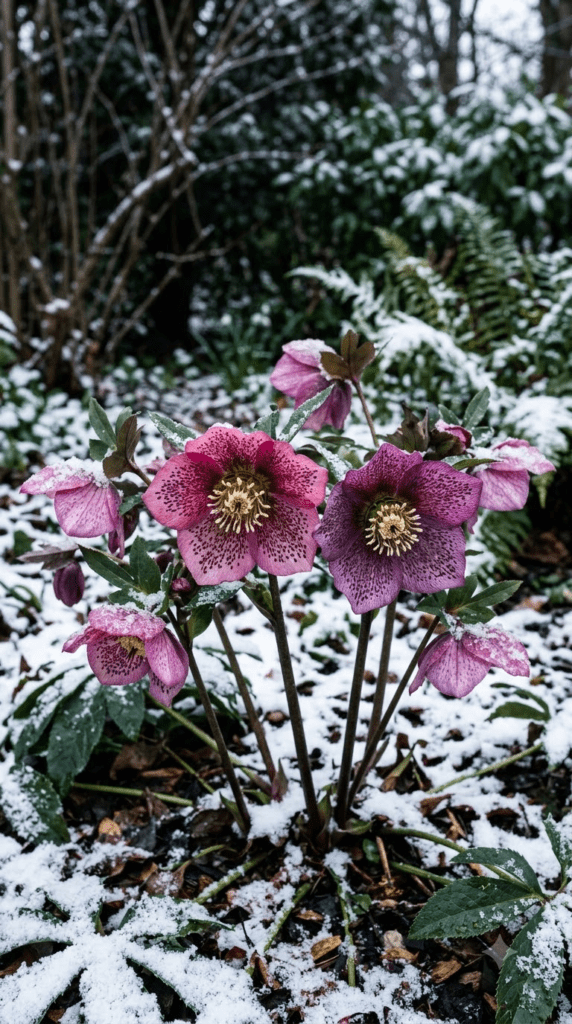
10. Hellebore ‘Winter Jewels’
Blooming in late winter to early spring when little else is flowering, Hellebore ‘Winter Jewels’ offers pink, white, purple, and green blooms that last for weeks. It’s cold-tolerant, deer-resistant, and thrives in partial shade with moist, well-drained soil.
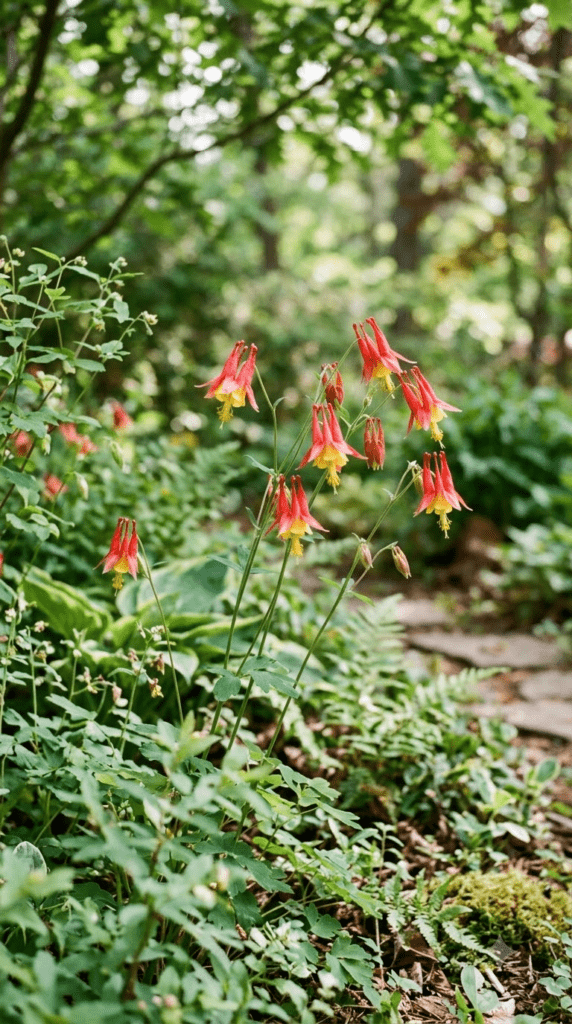
11. Columbine (Aquilegia canadensis)
Columbine’s bell-shaped flowers in red, yellow, pink, and blue bring graceful, early-season color to partial shade, attracting hummingbirds and butterflies. Deer generally avoid it, and it self-seeds readily to fill garden gaps over time.
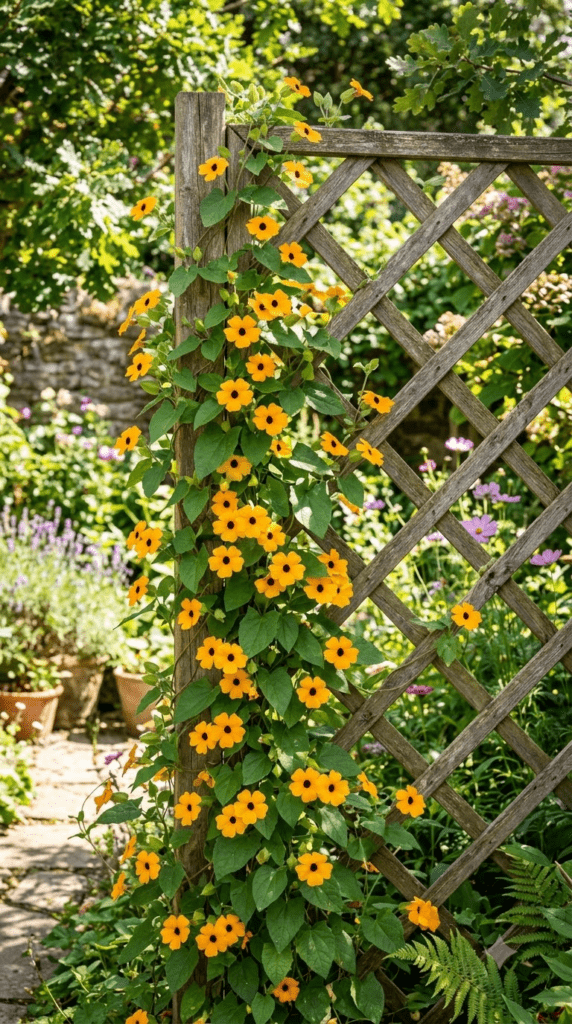
12. Black-Eyed Susan Vine (Thunbergia alata)
This fast-growing vine produces cheerful golden-orange or yellow blooms with dark centers, climbing fences and trellises through summer into early fall. It thrives in full sun to partial shade, and deer typically leave it alone.
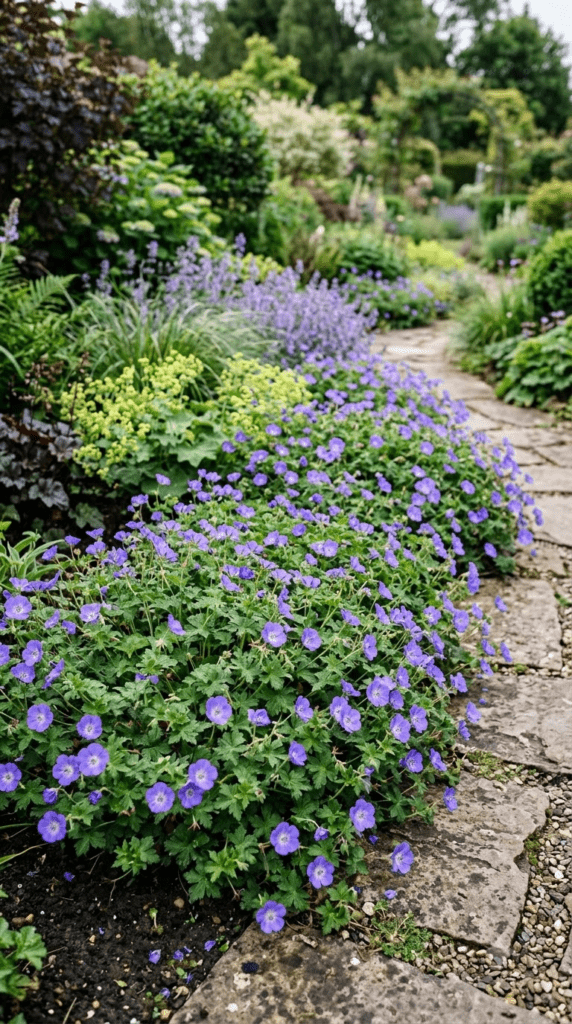
13. Geranium ‘Rozanne’
With a long bloom time from late spring to frost, Geranium ‘Rozanne’ produces bright violet-blue flowers over spreading, weed-suppressing mounds. It thrives in sun or partial shade and is rarely bothered by deer.
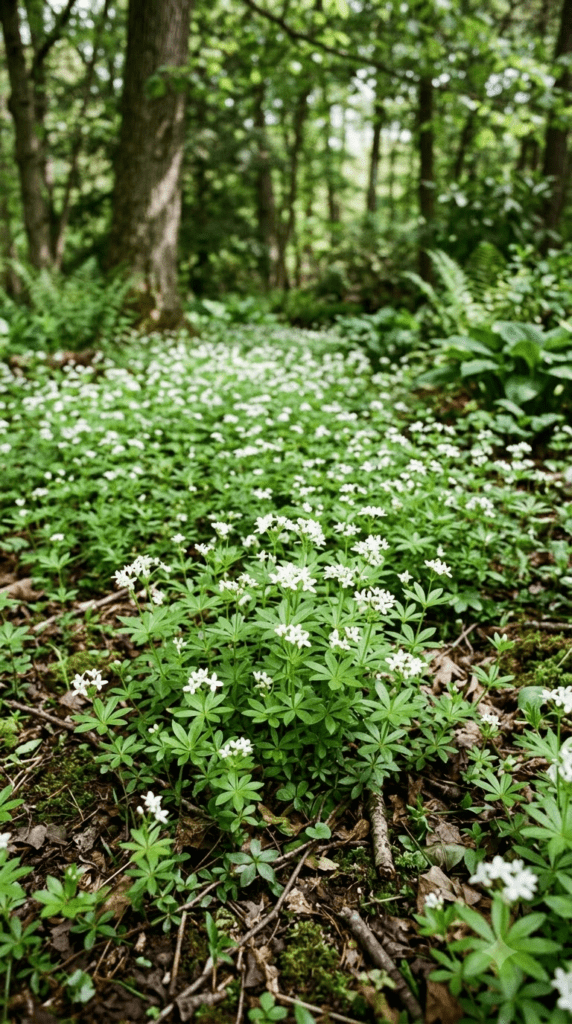
14. Sweet Woodruff (Galium odoratum)
Sweet Woodruff forms a neat, fragrant mat of star-shaped white flowers over soft green leaves in late spring, thriving in partial to full shade. It handles dry shade well, and deer generally steer clear of it.
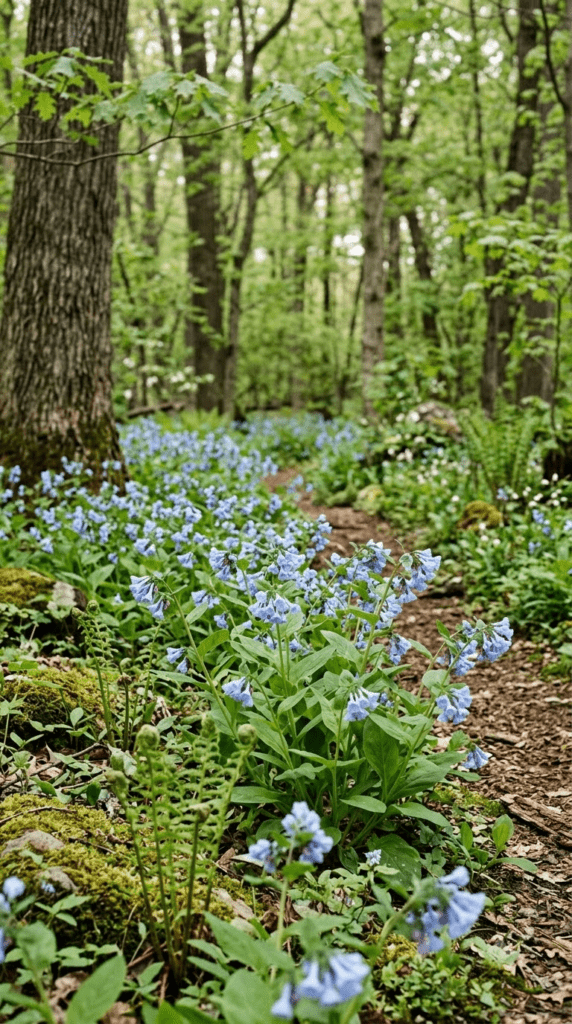
15. Virginia Bluebell (Mertensia virginica)
Virginia Bluebell’s delicate blue, bell-shaped blooms herald the start of spring in partly shaded, moist garden spots, attracting bees and butterflies. It’s largely unbothered by deer and rabbits, fading into dormancy by summer.
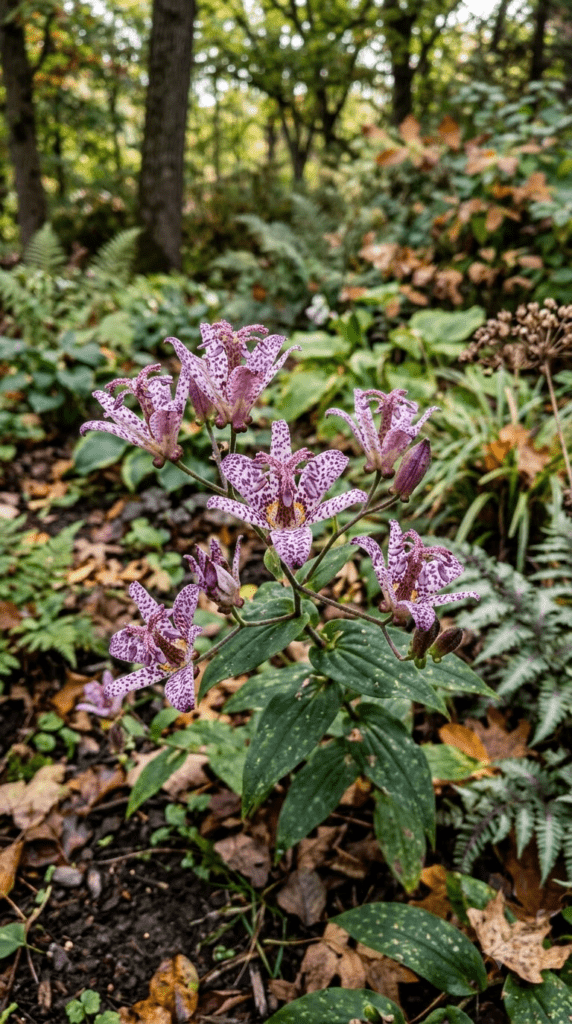
16. Toad Lily (Tricyrtis hirta)
Toad Lily’s small, orchid-like flowers speckled with purple, pink, and white bring late-season color to shaded gardens from late summer through fall. It’s low-maintenance, largely ignored by deer, and pairs nicely with ferns and hostas.
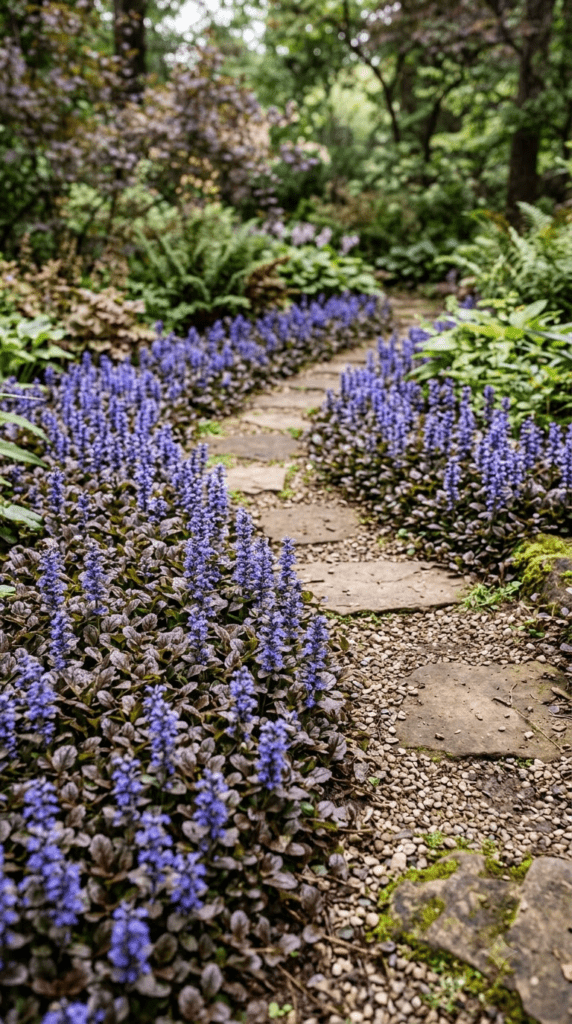
17. Ajuga ‘Chocolate Chip’
This compact ground cover’s bronze-purple leaves add bold, low-growing color to borders and walkways, sending up blue-violet flower spikes in spring. It thrives in sun or partial shade and deer typically show no interest.
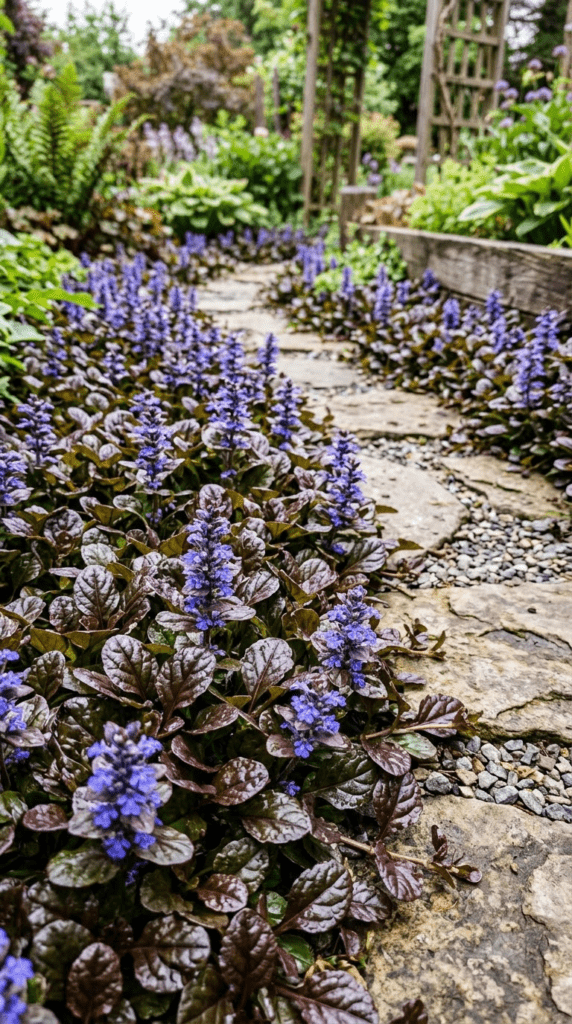
18. Bugleweed ‘Metallica’
With shiny bronze-purple leaves and spring spikes of blue blooms, Bugleweed ‘Metallica’ forms a dense, weed-suppressing ground cover in sun or partial shade. Deer generally leave it alone, and it spreads gently without becoming invasive.
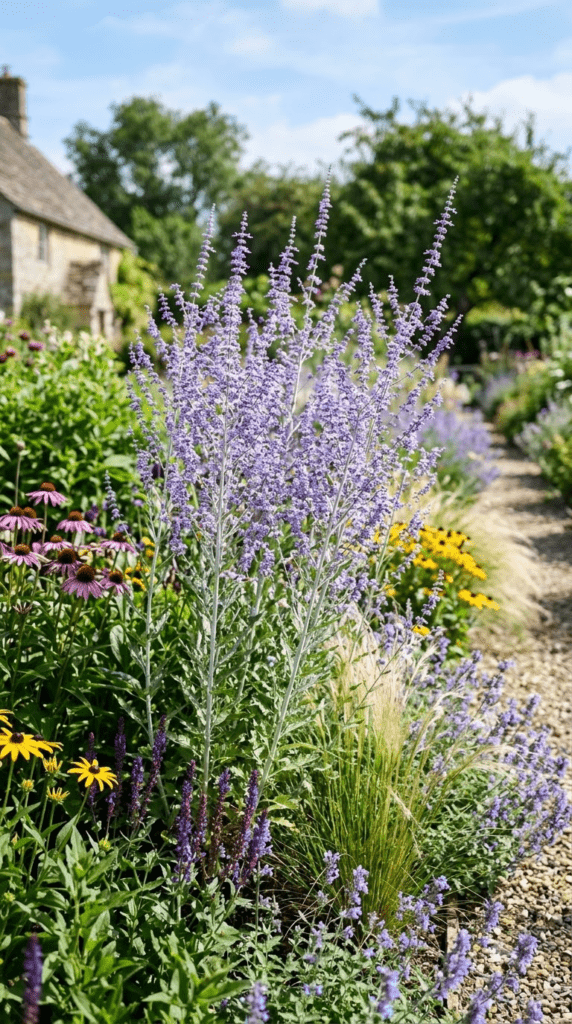
19. Russian Sage (Perovskia atriplicifolia)
Russian Sage’s tall, silvery stems and lavender-blue flowers bloom through the hottest months, thriving in full sun and well-drained soil with minimal watering. Its airy texture and deer resistance make it a favorite for sunny mixed borders.
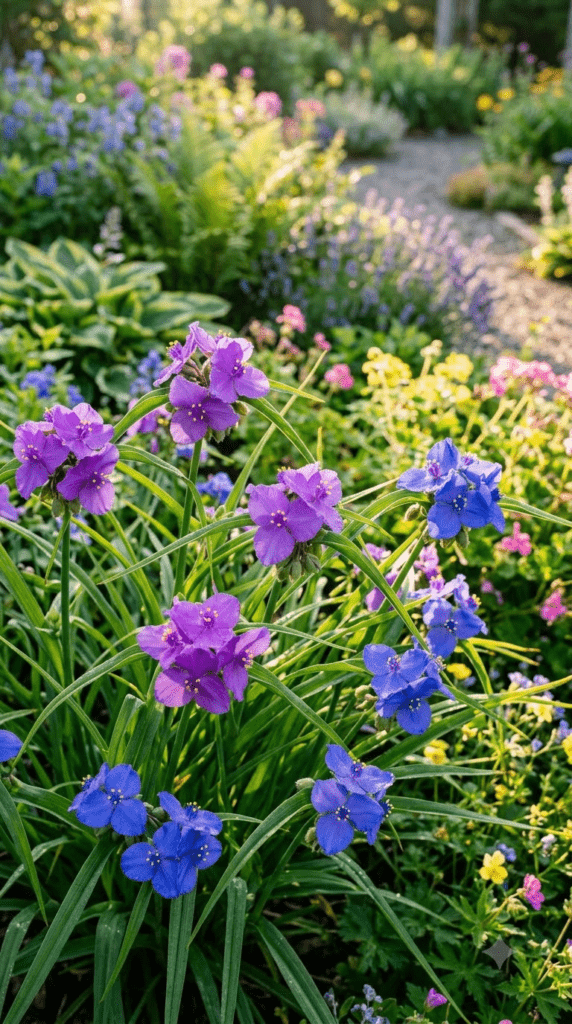
20. Spiderwort (Tradescantia virginiana)
Spiderwort’s blue, purple, or pink flowers open each morning and close by afternoon, adding daily-renewing color to sun or partial shade. It tolerates a range of soil conditions, attracts pollinators, and deer generally avoid it.
Planting and Caring for Deer-Resistant Perennials
Soil preparation: Most of these perennials prefer slightly acidic to neutral soil (pH 6.0–7.0). Loosen the top 8–12 inches of soil, work in compost or aged manure, and amend clay soil with coarse sand for better drainage.
Watering: Water deeply but infrequently — about once or twice a week — to encourage strong root growth. Drip irrigation or soaker hoses keep water at the roots and foliage dry, reducing disease risk.
Pruning and deadheading: Remove dead or weak stems early in the growing season, and deadhead spent blooms to encourage continuous flowering and better air circulation.
Design Ideas for Sun and Shade Gardens
Color schemes: In sunny spots, black-eyed Susans, coneflowers, and coreopsis bring warm yellows and blues. In shade, heucheras, astilbes, and Jacob’s Ladder offer deep purples and pinks.
Layering for texture: Place taller plants like Russian sage or ornamental grasses toward the back, mid-height perennials like daylilies in the middle, and low growers like sedum or ajuga up front for a balanced, layered look.
Final Thoughts
A colorful, deer-resistant garden is entirely achievable with the right plant palette. By combining textured foliage, fragrant deterrents, and reliably ignored bloomers across both sunny and shaded areas, you can build a landscape that stays lively through every season — without losing a single bloom to browsing deer.