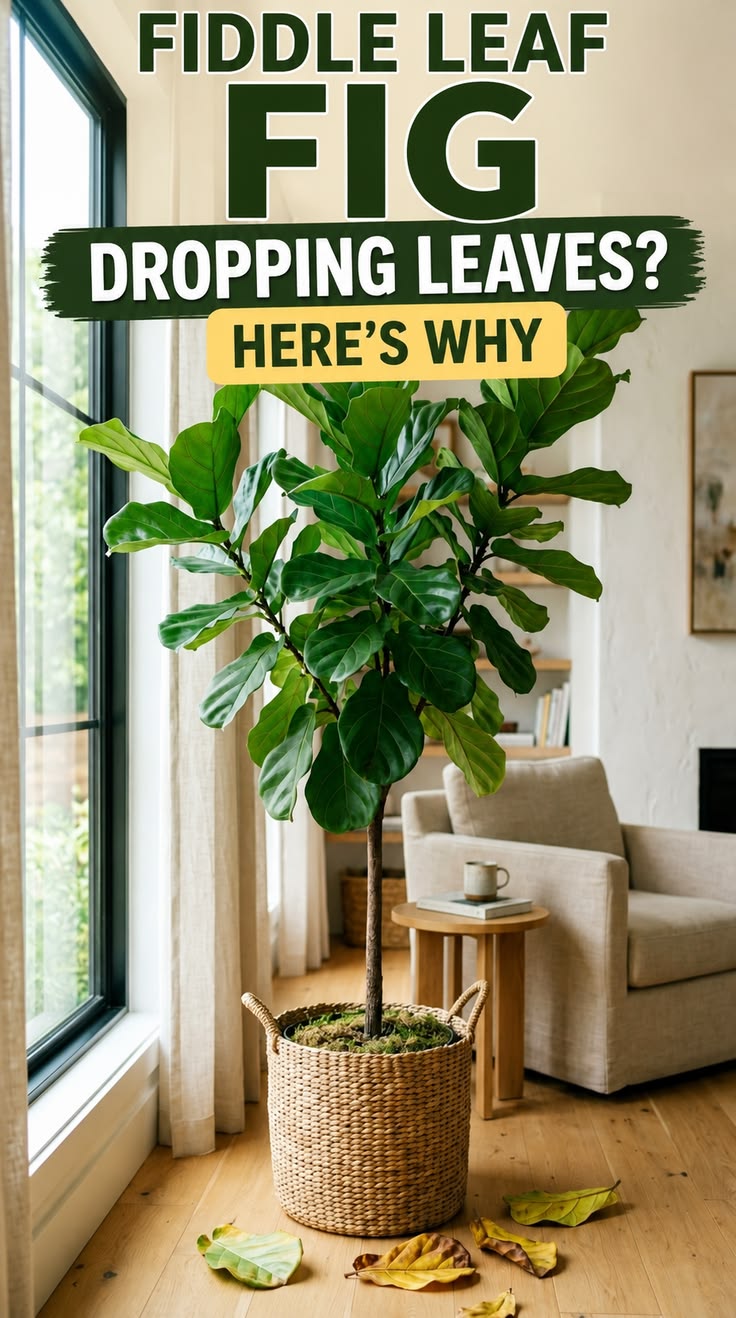
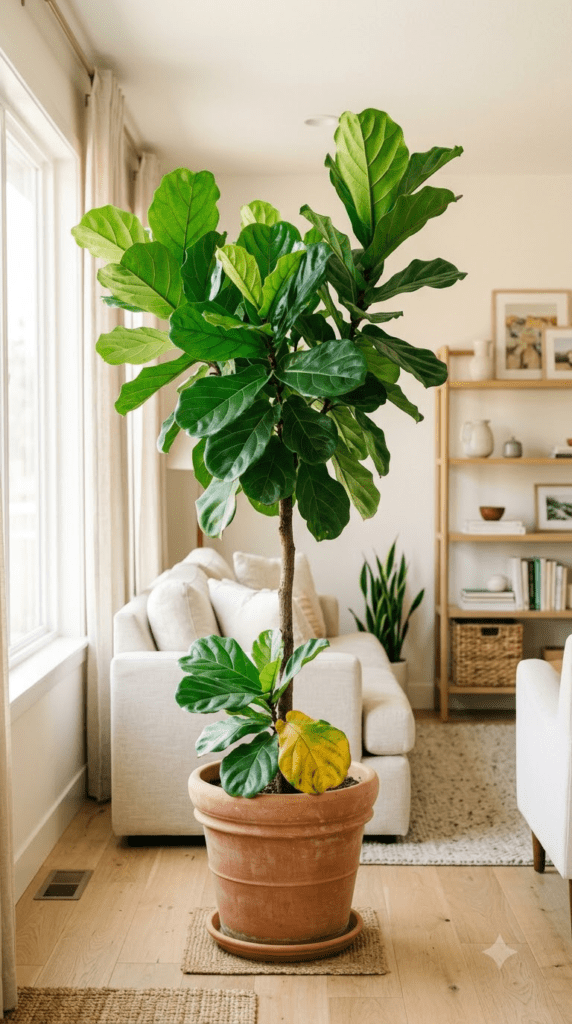
Few houseplants have quite the reputation of the Fiddle Leaf Fig (Ficus lyrata) — beloved for its large, violin-shaped leaves and dramatic architectural presence, but also notorious for being fussy and dropping leaves seemingly out of nowhere. If you’ve noticed your Fiddle Leaf Fig shedding leaves, don’t panic. Leaf drop is almost always a response to a specific, fixable stressor.
1. Overwatering (The Culprit)
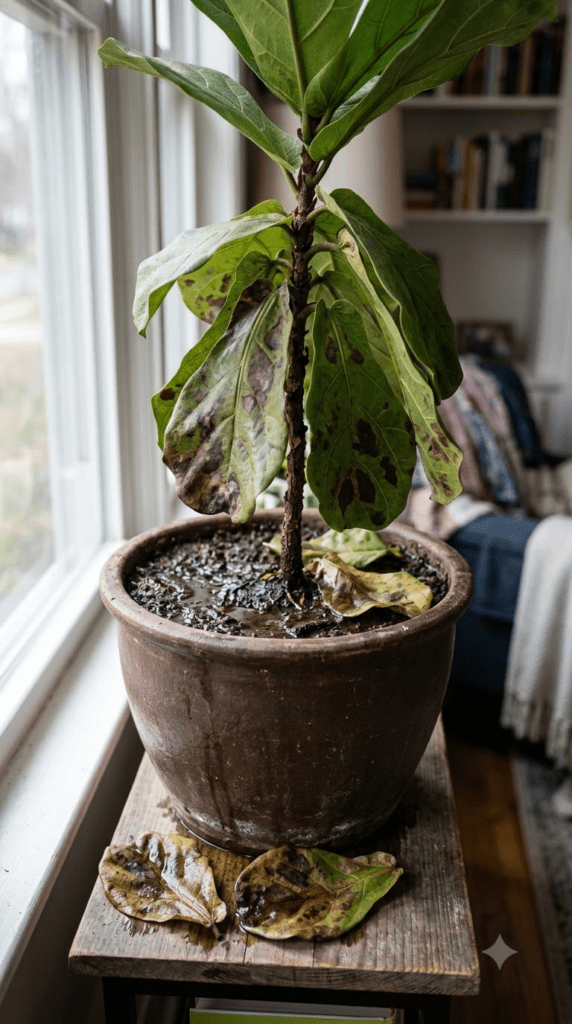
Overwatering is by far the most common cause of leaf drop in Fiddle Leaf Figs. Leaves that turn brown with dark spots, feel mushy, and drop from the bottom of the plant upward are a classic sign of soggy, waterlogged roots. Always let the top 2–3 inches of soil dry out before watering again.
Why it happens: Excess water suffocates the roots, cutting off oxygen and leading to root rot, which the plant signals through leaf loss.
2. Underwatering and Inconsistent Watering
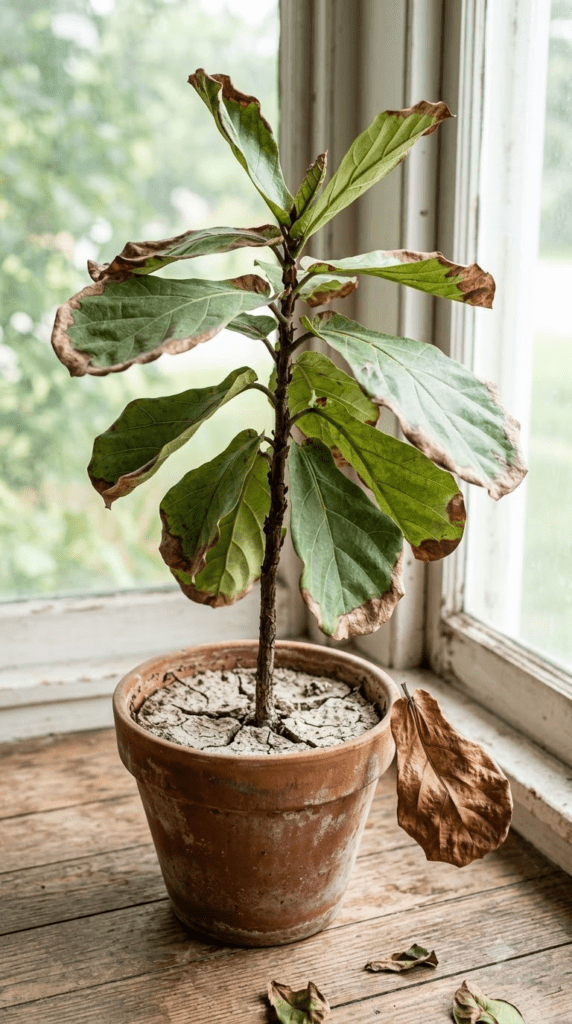
On the flip side, letting your Fiddle Leaf Fig go too long without water — or watering inconsistently — causes leaves to turn brown and crispy at the edges before dropping. This plant prefers a steady, predictable watering rhythm rather than sporadic drenching or drought.
Why it happens: Irregular moisture levels stress the root system, and the plant sheds leaves to conserve energy and water.
3. Sudden Change in Environment
Fiddle Leaf Figs are notoriously sensitive to change and often drop leaves after being moved to a new home, repotted, or even just relocated to a different room. This “shock” response is usually temporary as the plant adjusts to its new conditions.
Why it happens: Changes in light, humidity, and airflow disrupt the plant’s established equilibrium, triggering stress-related leaf loss.

4. Low Light Conditions
When placed too far from a light source, Fiddle Leaf Figs will drop older, lower leaves to conserve energy, since they can no longer support the full canopy without sufficient light. This plant needs bright, indirect light — ideally near an unobstructed east or south-facing window.
Why it happens: Insufficient light means less energy for photosynthesis, forcing the plant to shed leaves it can no longer sustain.
5. Cold Drafts or Sudden Temperature Changes
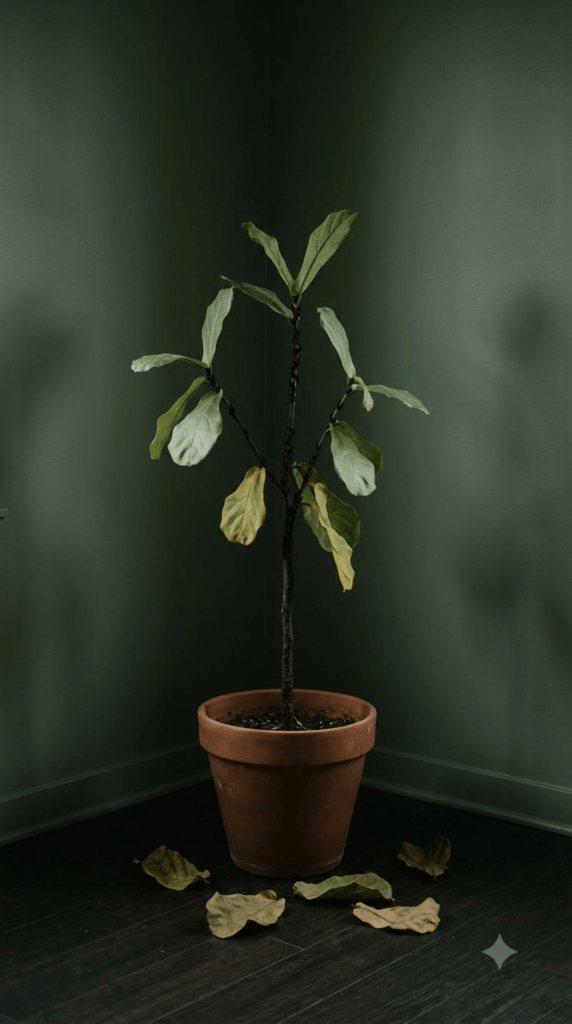
Placing your Fiddle Leaf Fig near a drafty window, air conditioning vent, or exterior door exposes it to temperature fluctuations it doesn’t tolerate well, often resulting in sudden leaf drop. Keep it in a stable spot away from drafts, ideally between 65–75°F (18–24°C).
Why it happens: Rapid temperature shifts stress the plant’s vascular system, causing it to shed leaves as a defensive response.
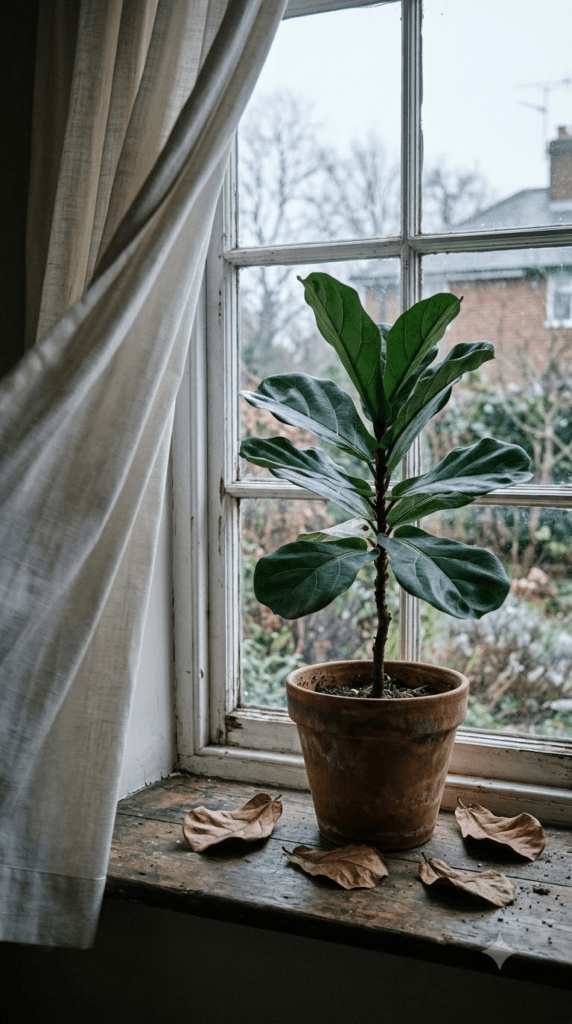
6. Root-Bound or Poor Soil Drainage
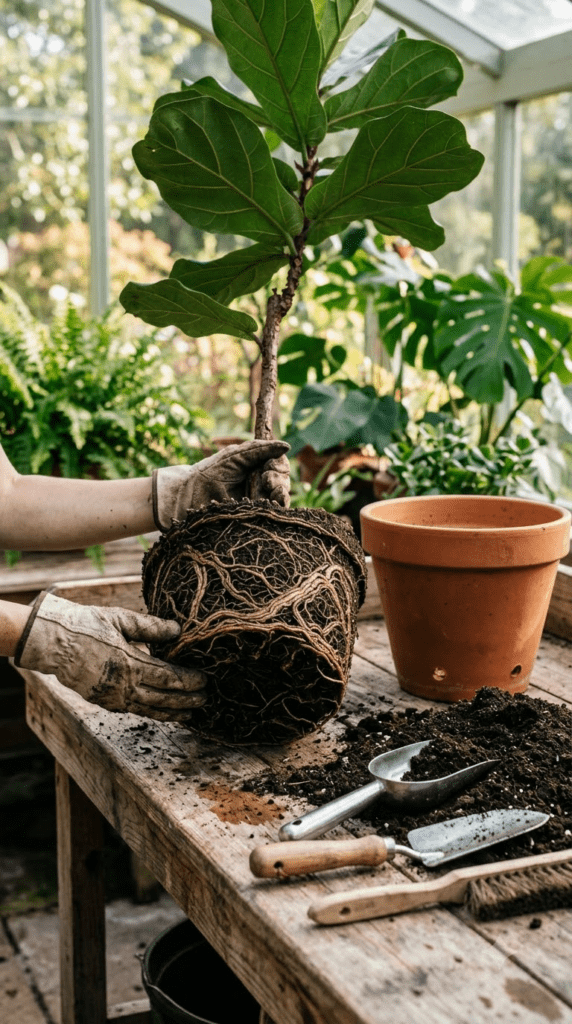
A Fiddle Leaf Fig that has outgrown its pot or is planted in dense, poorly-draining soil can experience restricted root growth, leading to stress and leaf drop. Check the roots every year or two and repot into fresh, well-draining soil when needed.
Why it happens: Cramped or waterlogged roots can’t properly absorb nutrients and water, weakening the plant’s ability to support its leaves.
7. Pest Infestation
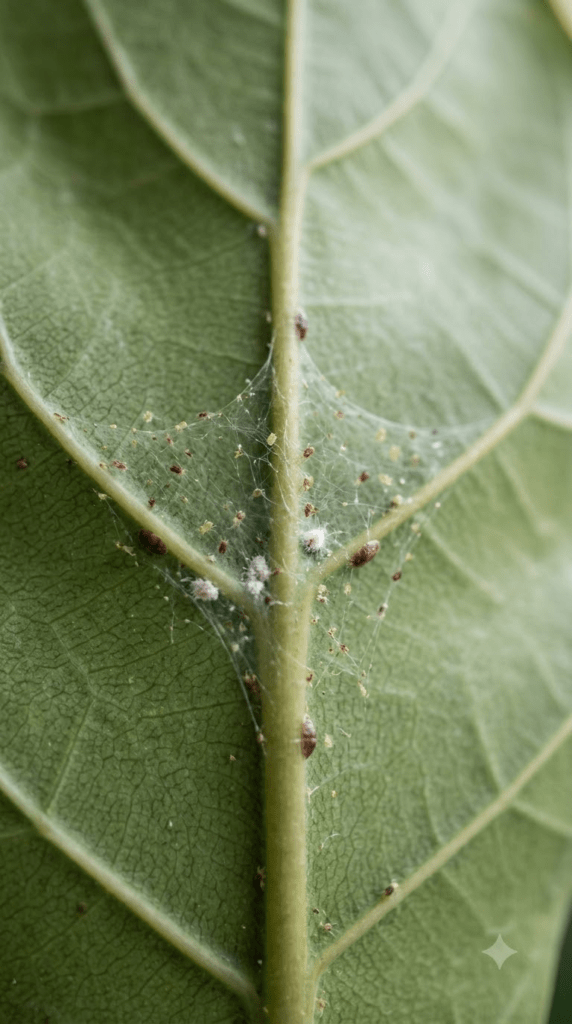
Spider mites, scale, and mealybugs can quietly infest a Fiddle Leaf Fig, weakening leaves until they yellow, brown, and eventually drop. Check the undersides of leaves and along stems regularly for small webs, sticky residue, or visible insects.
Why it happens: Pests drain the plant’s nutrients and introduce stress, causing weakened leaves to fall as the plant tries to protect itself.
8. Overfertilizing or Nutrient Burn
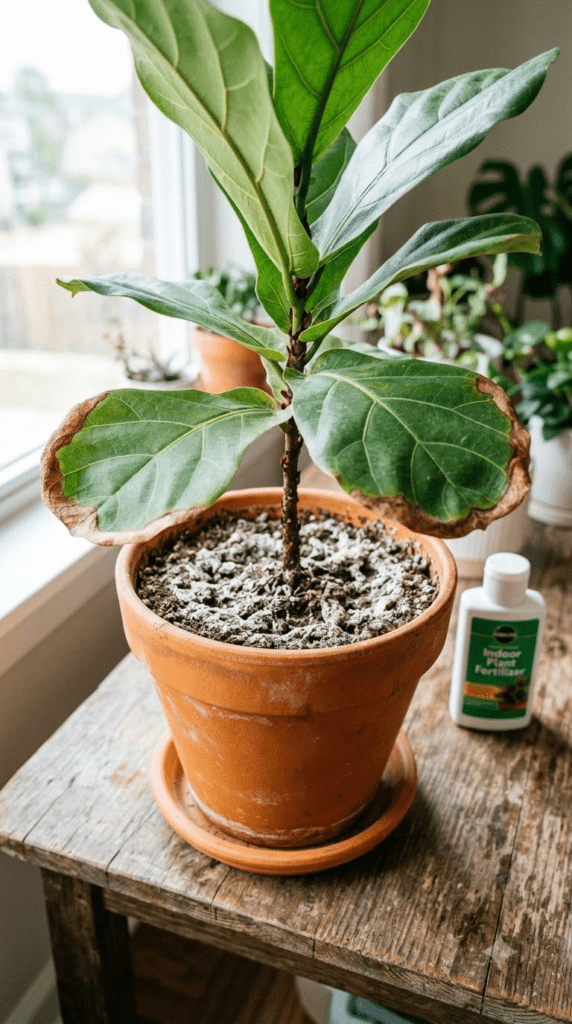
Too much fertilizer can build up salts in the soil, burning the roots and causing brown, crispy leaf edges followed by leaf drop. Stick to a diluted, balanced fertilizer no more than once a month during the growing season, and flush the soil occasionally with plain water.
Why it happens: Excess mineral salts damage root tissue, impairing the plant’s ability to take up water and nutrients properly.
9. Natural Aging and Lower Leaf Shedding
Not all leaf drop is a problem — it’s completely normal for a Fiddle Leaf Fig to shed a few older, lower leaves over time as it grows and redirects energy to new top growth. As long as it’s just one or two leaves occasionally and new growth is appearing, there’s no cause for concern.
Why it happens: This is simply part of the plant’s natural growth cycle, similar to how trees shed older leaves seasonally.
11 Houseplants That Naturally Cool Down Your Home
16 Futuristic Bathroom Designs with Glowing LED Accents & Sleek Floating Vanities
24 Gorgeous Container Garden Designs You’ll Want to Copy
Rattlesnake Plant Care 101: 11 Secrets to Keep Those Wild Leaf Patterns Thriving
8 Stunning Money Plant Ideas to Transform Your Home Decor in 2026
Final Thoughts
Leaf drop can feel alarming, but in most cases, it’s your Fiddle Leaf Fig’s way of communicating a specific, correctable issue — whether it’s watering habits, light levels, or a recent environmental change. Take note of where on the plant leaves are dropping, how they look before falling, and any recent changes to your care routine or home. Once you identify the root cause, a few simple adjustments are usually all it takes to get your fig back to thriving.
Quick Diagnostic Checklist
- Brown, mushy leaves + wet soil → Overwatering
- Crispy, dry leaves + dry soil → Underwatering
- Leaf drop after a move → Environmental shock (temporary)
- Sparse, yellowing lower leaves → Low light
- Sudden drop near a window/vent → Cold draft
- Circling roots, stunted growth → Root-bound
- Webbing or sticky residue → Pest infestation
- White crust on soil + burnt edges → Fertilizer buildup
- One or two lower leaves occasionally → Normal aging