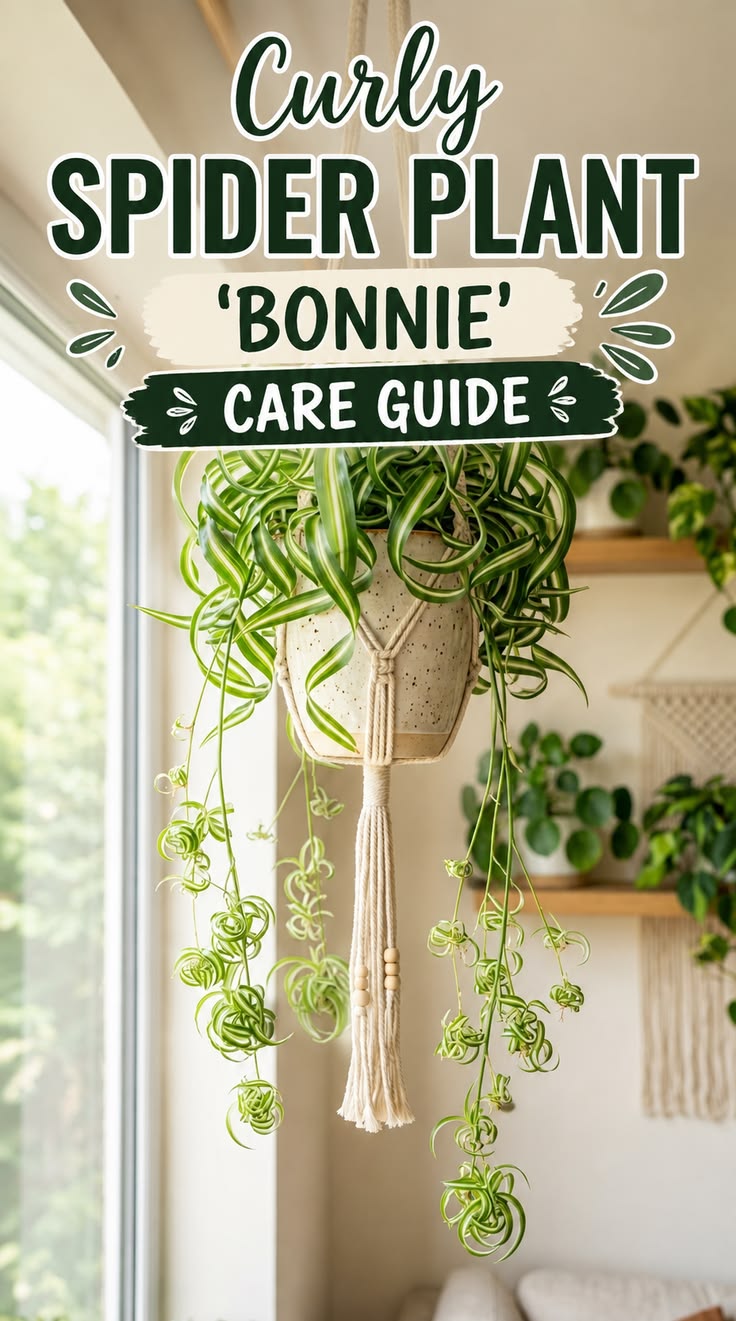
The Curly Spider Plant, or Chlorophytum comosum ‘Bonnie‘, is a whimsical twist on the classic spider plant, known for its tightly curled, ribbon-like leaves that spiral into playful ringlets. Just as easy-going as its straight-leafed cousin, ‘Bonnie’ brings texture, movement, and a touch of fun to any plant collection — and it’s nearly impossible to kill, making it perfect for beginners.
Here’s your complete care guide to keeping your Curly Spider Plant healthy and full of those signature curls, with an image prompt for each section so you can picture exactly what thriving looks like.
1. Light Requirements: Bright, Indirect Light
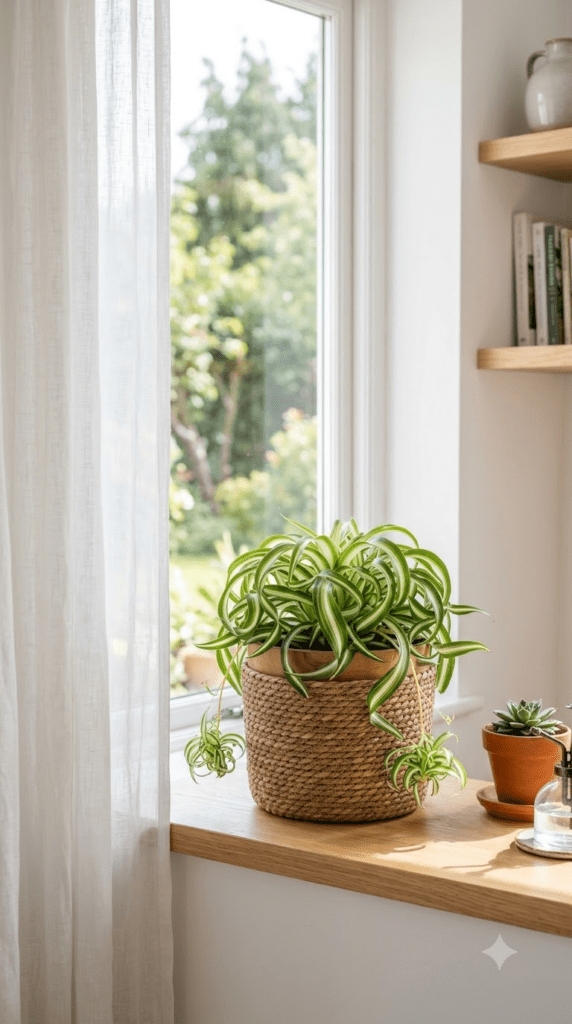
‘Bonnie’ thrives in bright, indirect light, though it can tolerate lower light conditions better than many houseplants. Too much direct sun can scorch the leaf tips and fade the variegation, while too little light can cause the curls to loosen and growth to slow.
Why it works: Balanced light keeps the leaves tightly curled and vibrant without stressing the plant.
2. Watering: Keep Soil Evenly Moist, Not Soggy
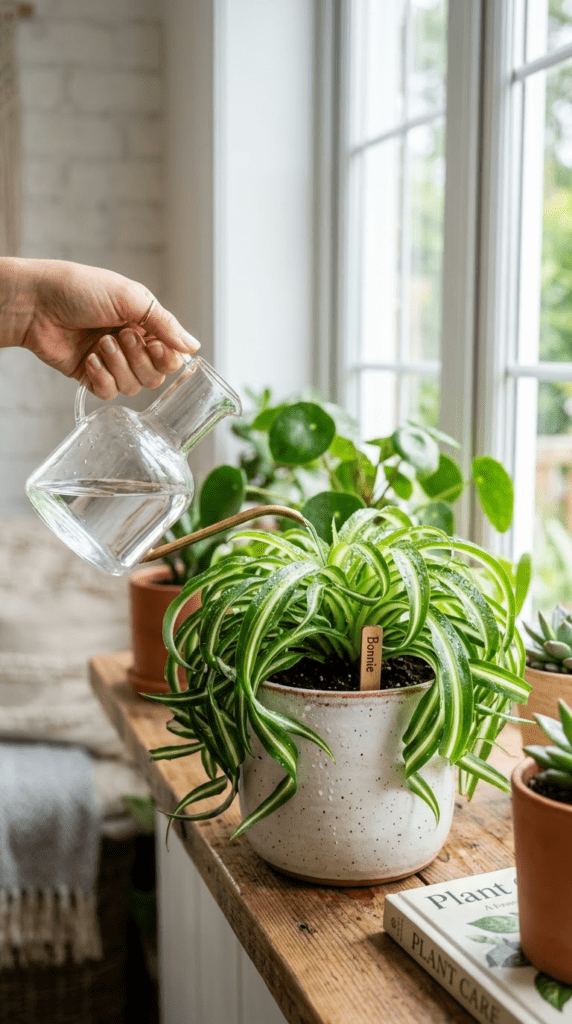
Water your Curly Spider Plant when the top inch of soil feels dry, keeping the soil evenly moist but never waterlogged. This plant is sensitive to fluoride and chlorine found in tap water, which can cause brown leaf tips, so using filtered or distilled water is ideal.
Why it works: Consistent moisture supports healthy curling growth while avoiding root rot and mineral-related leaf damage.
3. Humidity: Moderate to High for Best Curls
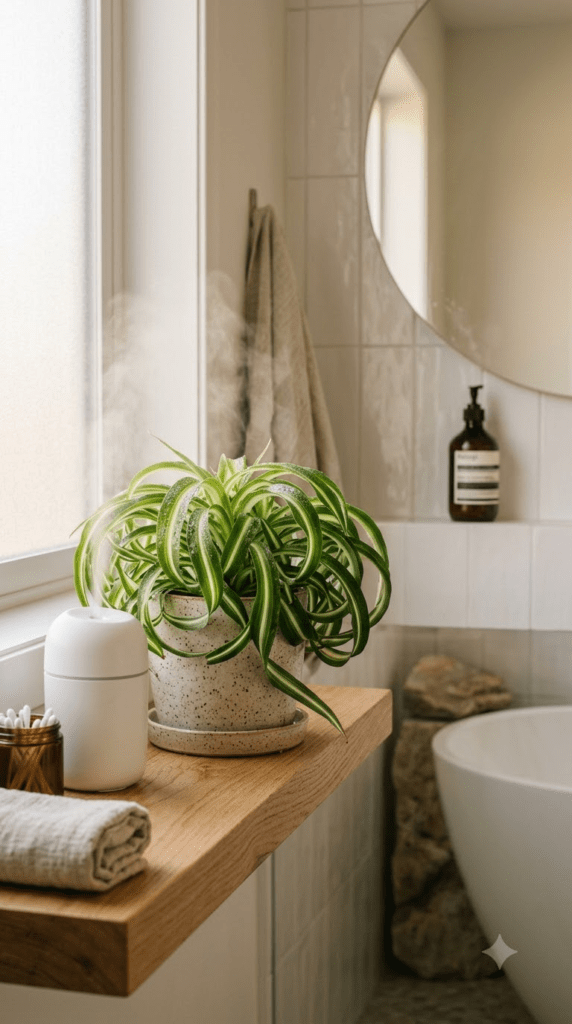
While ‘Bonnie’ tolerates average household humidity, higher humidity (around 40–50%) helps maintain crisp, well-defined curls and prevents crispy brown tips. Misting occasionally or placing it near a humidifier can make a noticeable difference in leaf appearance.
Why it works: Adequate moisture in the air keeps leaf edges hydrated, preserving the tight ringlet shape.
4. Soil: Well-Draining Potting Mix
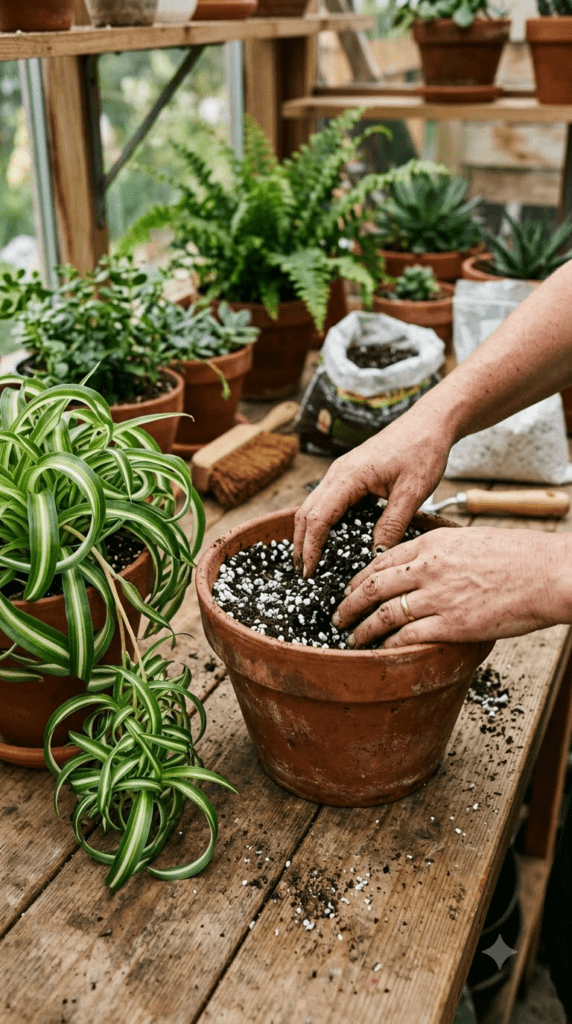
Plant ‘Bonnie’ in a well-draining, all-purpose potting mix, ideally with added perlite for extra aeration. Good drainage is essential to prevent the fleshy, water-storing roots from sitting in excess moisture.
Why it works: Loose, airy soil allows roots to breathe and reduces the risk of rot in this moisture-sensitive plant.
5. Temperature: Average Room Temperature is Ideal
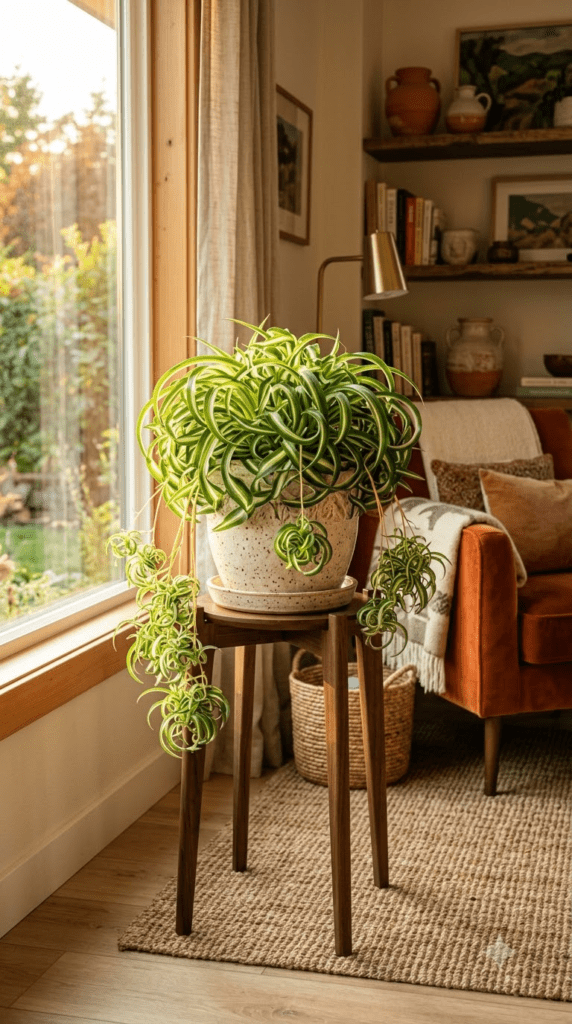
Keep your Curly Spider Plant in temperatures between 65–80°F (18–27°C), away from cold drafts, heating vents, or sudden temperature swings. It adapts well to typical indoor conditions, making it a low-fuss addition to most homes.
Why it works: Stable, moderate temperatures prevent stress that can cause the curls to loosen or leaves to yellow.
6. Fertilizing: Light Feeding in Growing Season
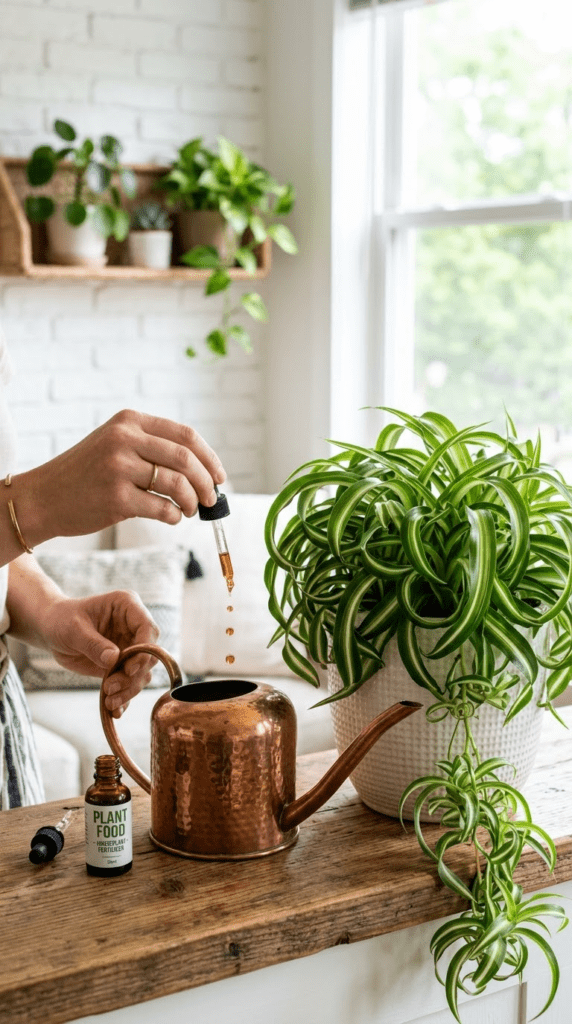
Feed ‘Bonnie’ with a diluted, balanced liquid fertilizer once a month during spring and summer. This plant is a light feeder, and over-fertilizing can actually cause brown leaf tips, so it’s best to under-feed rather than overdo it.
Why it works: Gentle, occasional feeding supports healthy growth without the salt buildup that damages sensitive leaf tips.
7. Pot Size: Slightly Snug Encourages Blooms and Pups
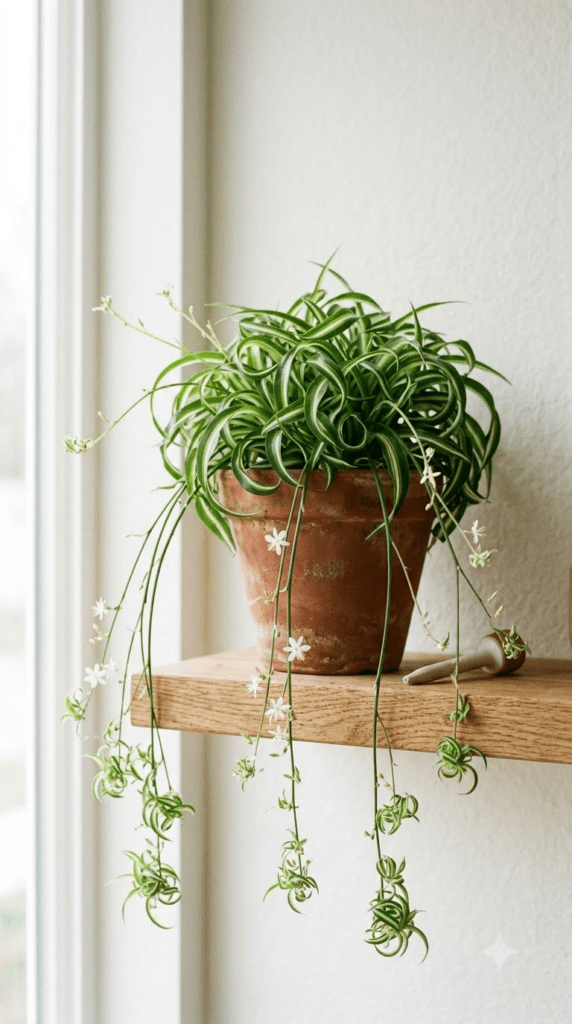
Curly Spider Plants actually flower and produce baby “pups” (plantlets) more readily when slightly root-bound, so avoid rushing to repot into an oversized container. Repot only every 1–2 years, or when roots are visibly circling the pot.
Why it works: A snug root environment triggers the plant’s natural reproductive response, resulting in charming little spiderettes.
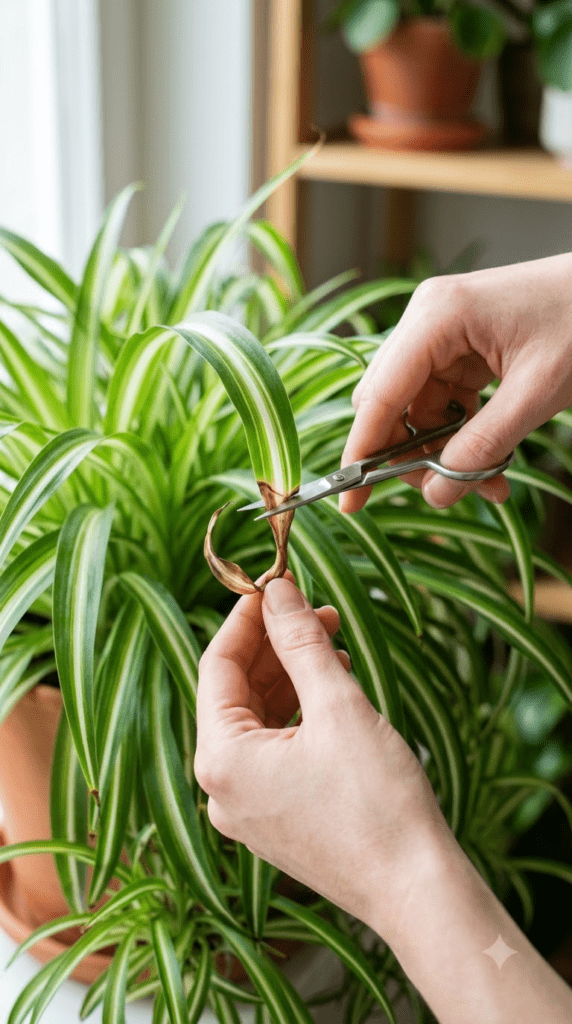
8. Trimming: Remove Brown Tips and Dead Leaves
Regularly snip off any brown, crispy leaf tips or fully dead leaves with clean scissors to keep the plant looking tidy and healthy. Trim at an angle following the natural curl of the leaf for a seamless look.
Why it works: Removing damaged growth redirects energy to healthy leaves and keeps the plant’s signature curls looking their best.
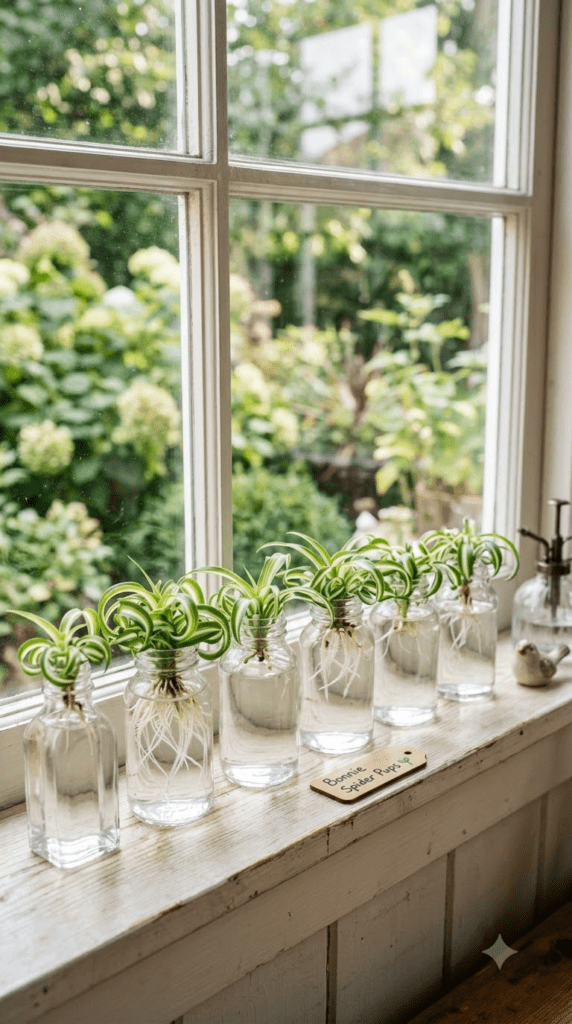
9. Propagation: Easy From Pups or Division
Propagate ‘Bonnie’ by snipping off the small plantlets (“pups”) that form on long stems and rooting them in water or soil, or by dividing a mature plant at the root ball into multiple sections. Both methods are highly successful and beginner-friendly.
Why it works: This plant’s natural pup production makes it one of the easiest houseplants to propagate and share.
10. Common Problems and How to Fix Them
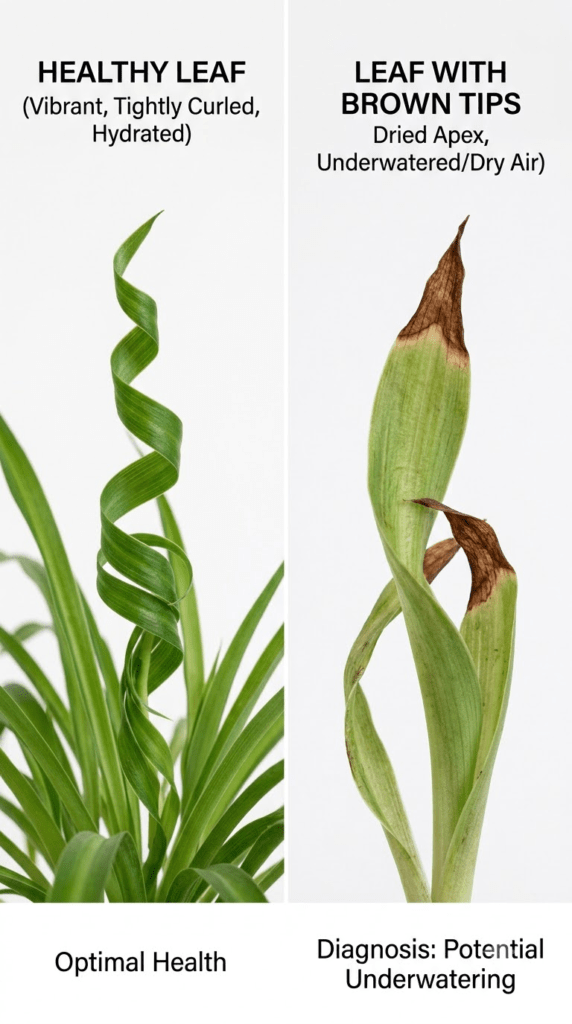
Brown leaf tips usually point to tap water sensitivity, low humidity, or fertilizer buildup — switch to filtered water and flush the soil occasionally to help. Loosening or uncurling leaves often signal too little light, while pale, washed-out foliage may mean too much direct sun. Adjusting light and water quality typically resolves most issues quickly.
11 Houseplants That Naturally Cool Down Your Home
16 Futuristic Bathroom Designs with Glowing LED Accents & Sleek Floating Vanities
24 Gorgeous Container Garden Designs You’ll Want to Copy
Rattlesnake Plant Care 101: 11 Secrets to Keep Those Wild Leaf Patterns Thriving
8 Stunning Money Plant Ideas to Transform Your Home Decor in 2026
Why it works: Recognizing early warning signs allows for fast, targeted fixes that keep the plant’s signature curls intact.
Final Thoughts
The Curly Spider Plant ‘Bonnie’ proves that low-maintenance and eye-catching aren’t mutually exclusive. With bright indirect light, consistent (ideally filtered) watering, and the occasional trim, this playful, ringlet-leaved beauty will reward you with lush, cascading curls and even the occasional baby spiderette to share with friends.
Quick Care Summary
- Light: Bright, indirect
- Water: Evenly moist soil; use filtered water
- Humidity: 40–50%
- Soil: Well-draining potting mix with perlite
- Temperature: 65–80°F (18–27°C)
- Fertilizer: Light monthly feeding in growing season
- Repotting: Every 1–2 years; slightly snug is fine