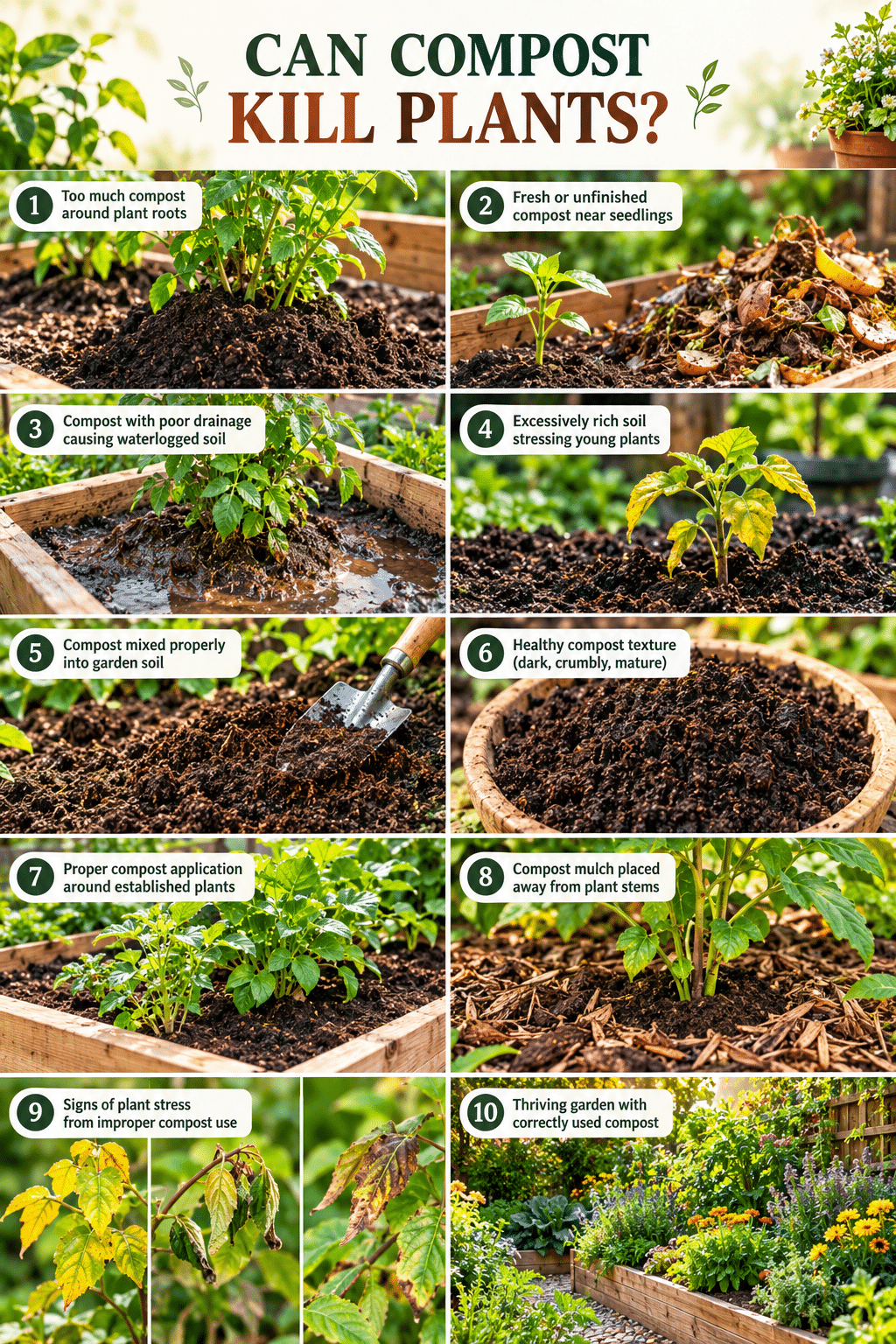
Compost has a reputation as one of the best things you can add to a garden — and most of the time, that reputation is well earned. But compost isn’t automatically safe just because it’s “natural.” Under the wrong conditions, compost can actually stunt growth, burn roots, or even kill plants outright. Understanding when and why this happens is the key to using compost effectively instead of accidentally working against your garden.
Here are 12 ways compost can harm or kill plants if used incorrectly, along with an image and a unique title for each.
1. Unfinished or “Hot” Compost
Compost that hasn’t fully broken down is still actively decomposing, generating heat and consuming nitrogen from the surrounding soil in the process. Applying unfinished compost directly around plant roots can scorch tender tissue and temporarily rob nearby plants of nitrogen.
Why it happens: The decomposition process itself competes with plants for nitrogen and can generate enough heat to damage roots and stems.
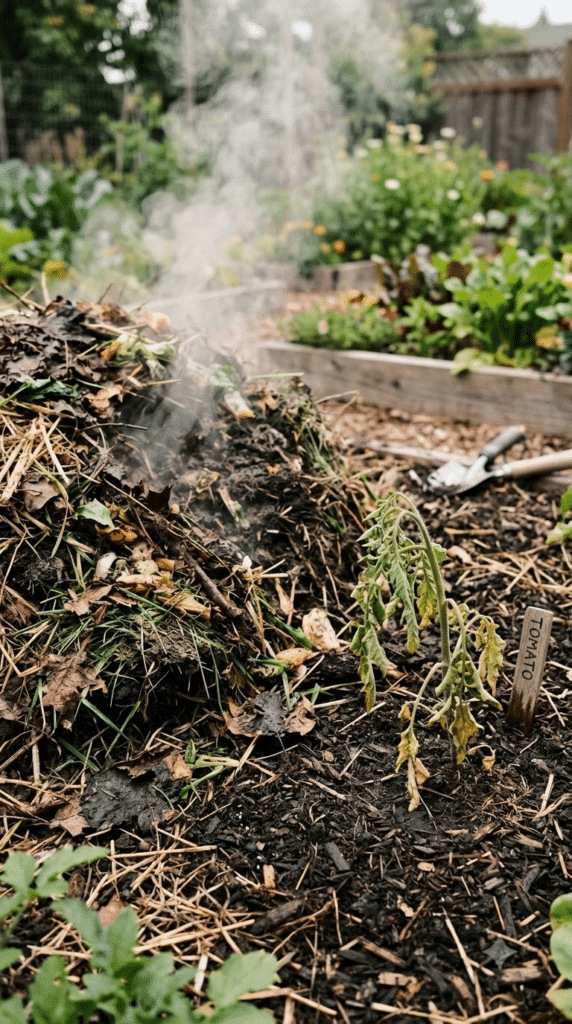
Image Title: “When Compost Is Still Too Hot to Handle”
2. Herbicide Contamination
Compost made from grass clippings, hay, or manure from animals that grazed on herbicide-treated pasture can carry persistent herbicide residues that survive the composting process entirely. These residues can stunt, curl, or kill sensitive plants like tomatoes and beans even in small amounts.
Why it happens: Certain herbicides are specifically designed to resist breakdown, allowing them to remain active in compost for months or even years after application.
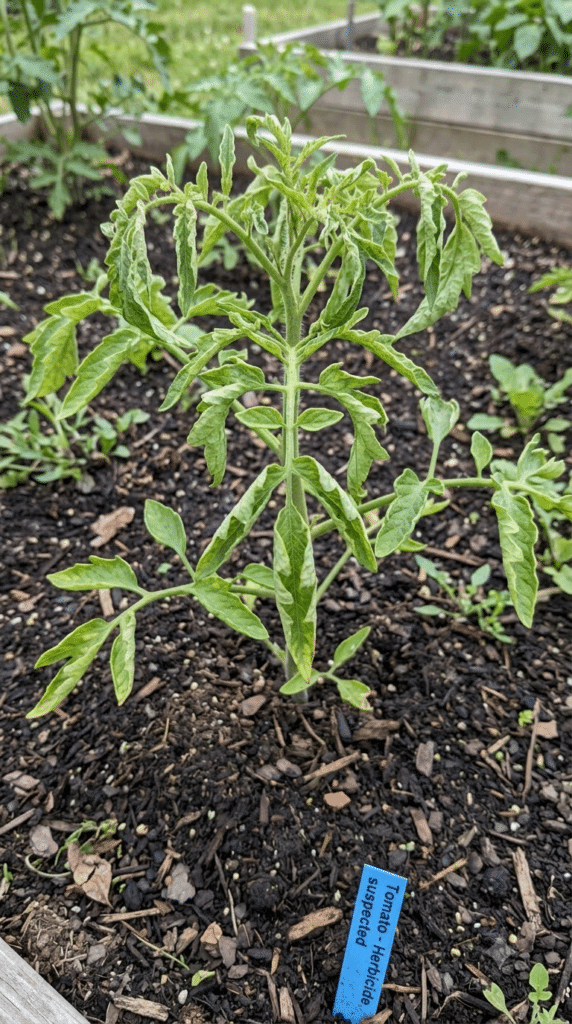
Image Title: “The Weed Killer That Wouldn’t Break Down”
3. Excess Salt Buildup
Compost made with large amounts of manure, especially from commercial livestock operations, can contain high salt concentrations that damage plant roots when applied too heavily. Symptoms include leaf scorch, wilting, and stunted growth despite adequate watering.
Why it happens: High salt levels in soil draw moisture out of root cells through osmosis, effectively dehydrating the plant from the roots up.
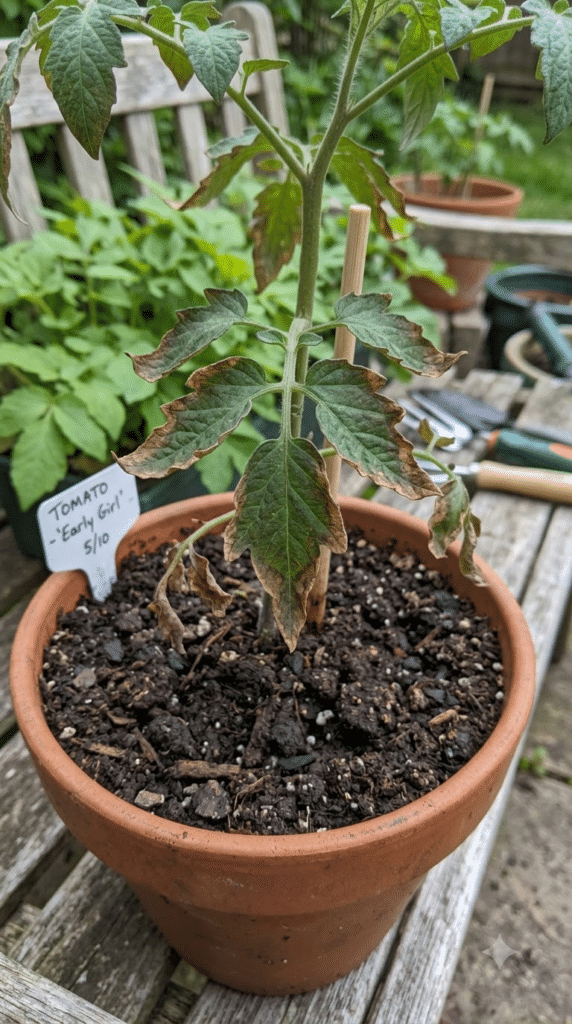
Image Title: “Too Much Salt Hiding in the Soil”
4. Compost Applied Too Close to Stems
Piling compost directly against plant stems or tree trunks — sometimes called “volcano mulching” when done with mulch — traps moisture against the bark and can lead to rot, fungal disease, and eventual plant death. Keeping compost a few inches away from stems allows for proper airflow.
Why it happens: Constant moisture against stem tissue softens and breaks down protective bark, creating an entry point for rot and disease-causing organisms.
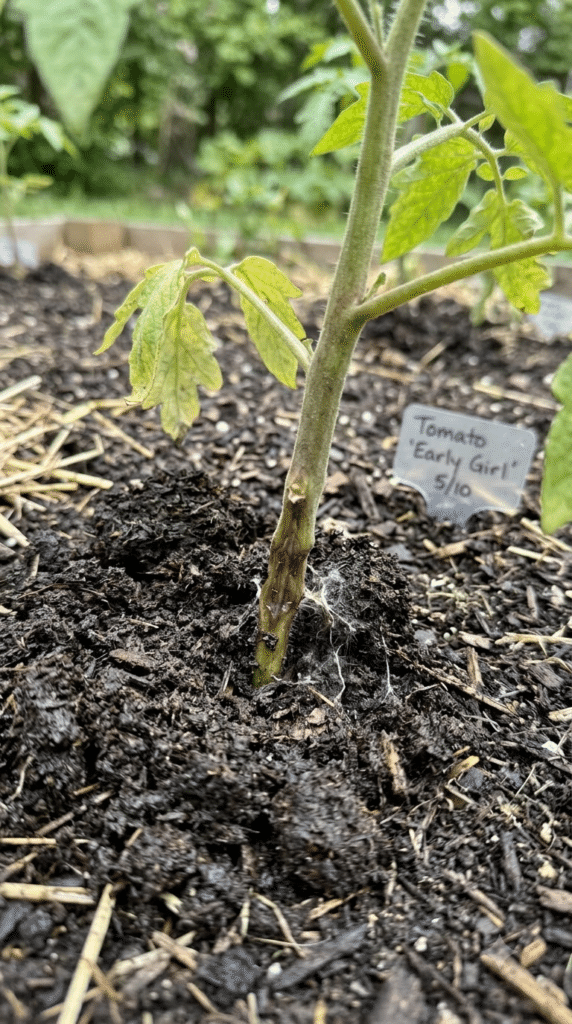
Image Title: “Piled Too High, Too Close to the Stem”
5. Persistent Plant Pathogens
Compost that never reached a high enough temperature during decomposition may harbor plant pathogens, weed seeds, or fungal spores that survive and later infect garden plants. Properly “hot” composting, which reaches 130–160°F, is necessary to kill most harmful organisms.
Why it happens: Many plant diseases and weed seeds require sustained high heat to be neutralized, and compost that stays cool throughout the process doesn’t reach that threshold.
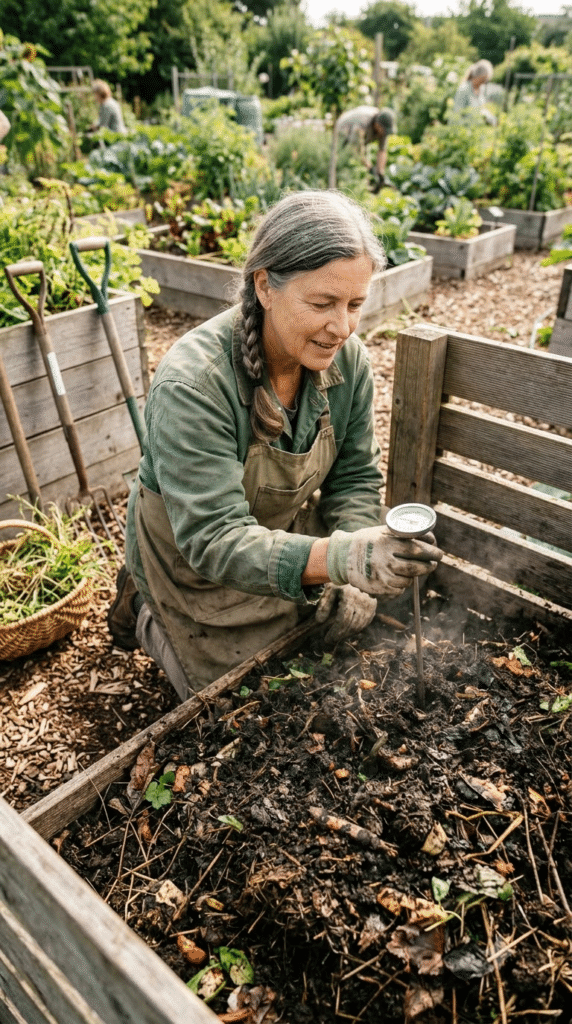
Image Title: “Checking Whether the Heat Did Its Job”
6. Overly Acidic or Alkaline Compost
Compost made predominantly from one material — like heavy amounts of pine needles or wood ash — can skew significantly acidic or alkaline, throwing off the soil pH in ways that make nutrients unavailable to plants. Testing compost and soil pH before heavy application helps avoid this imbalance.
Why it happens: Extreme pH levels interfere with a plant’s ability to absorb essential nutrients from the soil, even when those nutrients are technically present.
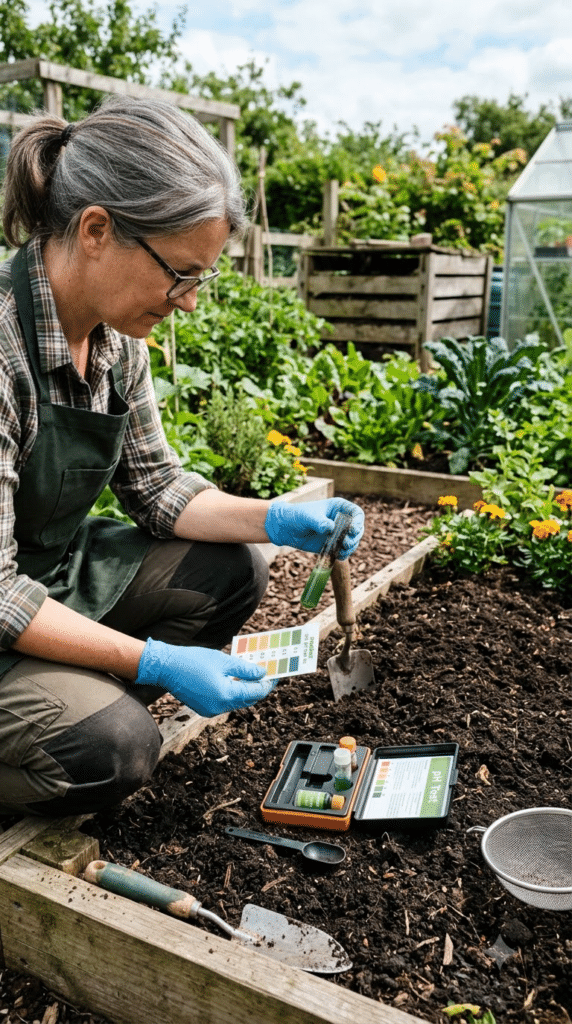
Image Title: “When the Balance Tips Too Far One Way”
7. Excess Nitrogen from Fresh Manure
Fresh, unaged manure is extremely high in nitrogen and ammonia, both of which can chemically burn plant roots and foliage if applied directly rather than composted first. Manure should always be aged or fully composted for several months before use around plants.
Why it happens: High concentrations of ammonia and soluble nitrogen salts are directly toxic to plant root tissue in fresh, unprocessed manure.
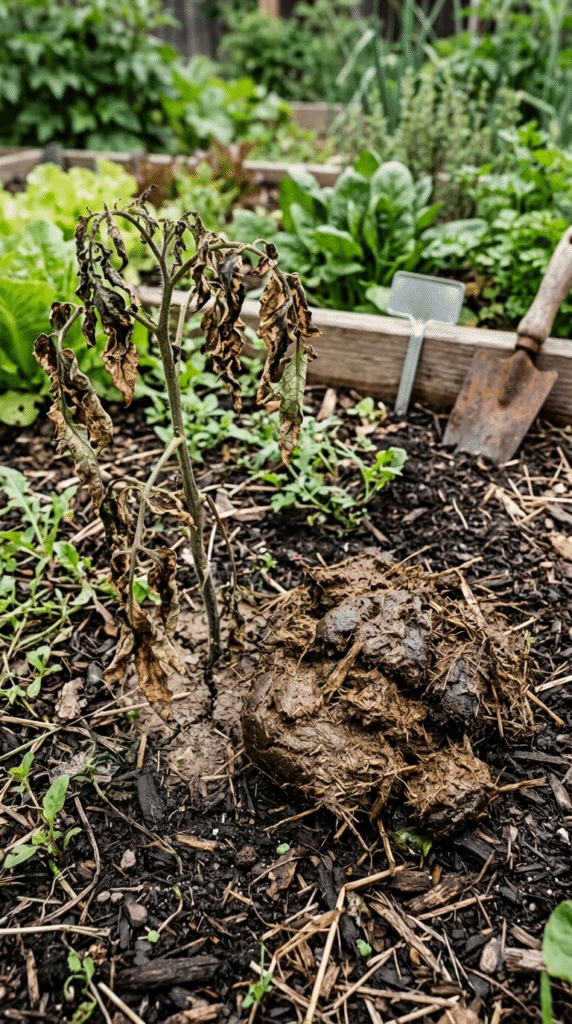
Image Title: “Manure That Needed More Time to Age”
8. Compost Contaminated with Plastic or Chemicals
Compost made from mixed household waste can sometimes contain microplastics, synthetic fibers, or chemical residues from treated materials, which can interfere with soil health and root development over time. Sourcing compost from a trusted supplier or making your own from known ingredients reduces this risk.
Why it happens: Contaminants can alter soil structure and introduce toxins that disrupt healthy root and microbial activity in ways that aren’t always immediately visible.
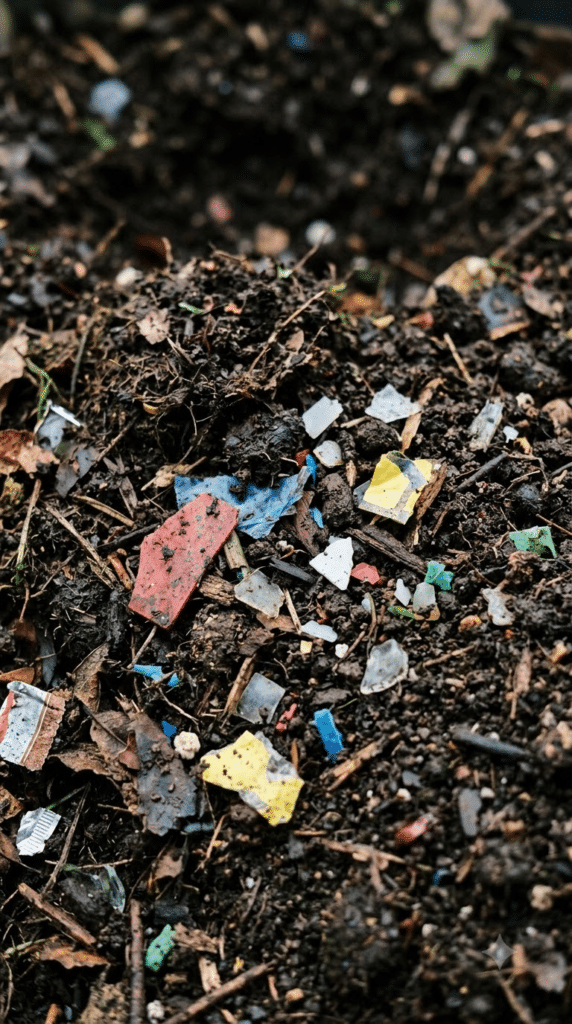
Image Title: “What Shouldn’t Be in the Compost Pile”
9. Over-Application Suffocating Roots
Piling on too much compost at once, especially in poorly draining soil, can compact and suffocate plant roots by limiting oxygen availability. A thin, well-worked layer mixed into existing soil is far more effective than a thick, undisturbed pile.
Why it happens: Roots need oxygen just as much as water and nutrients, and an overly thick, dense compost layer can trap excess moisture and starve roots of air.
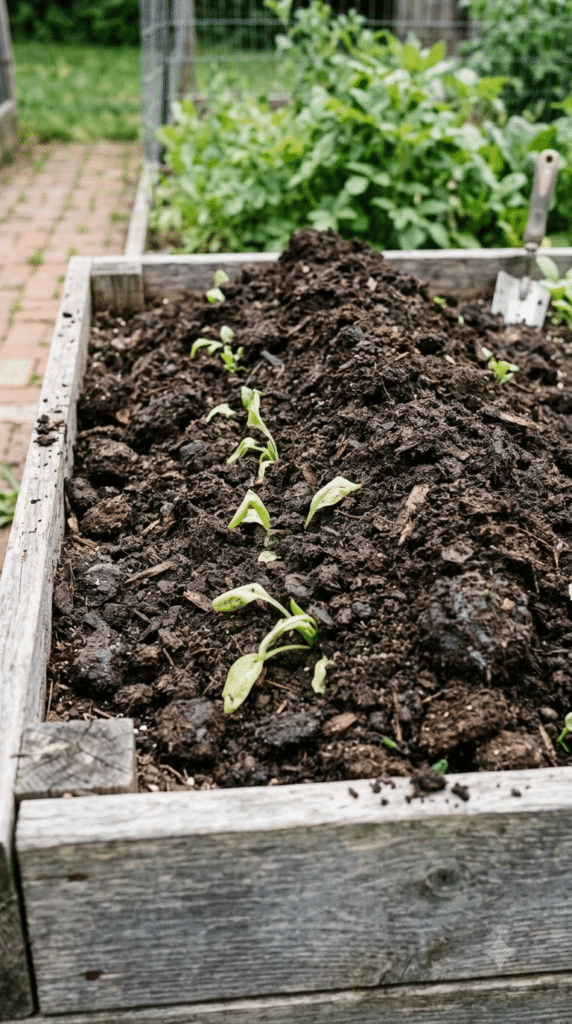
Image Title: “Too Much of a Good Thing, All at Once”
10. Compost from Diseased Plant Material
Adding diseased plant material — like blight-infected tomato vines or powdery mildew-covered squash leaves — to a compost pile that doesn’t reach sufficient heat can allow those pathogens to survive and reinfect the garden later. Diseased material is often safer to dispose of separately rather than composting it at home.
Why it happens: Many fungal and bacterial plant diseases can persist in plant debris and soil for extended periods, especially without the sustained heat needed to destroy them.
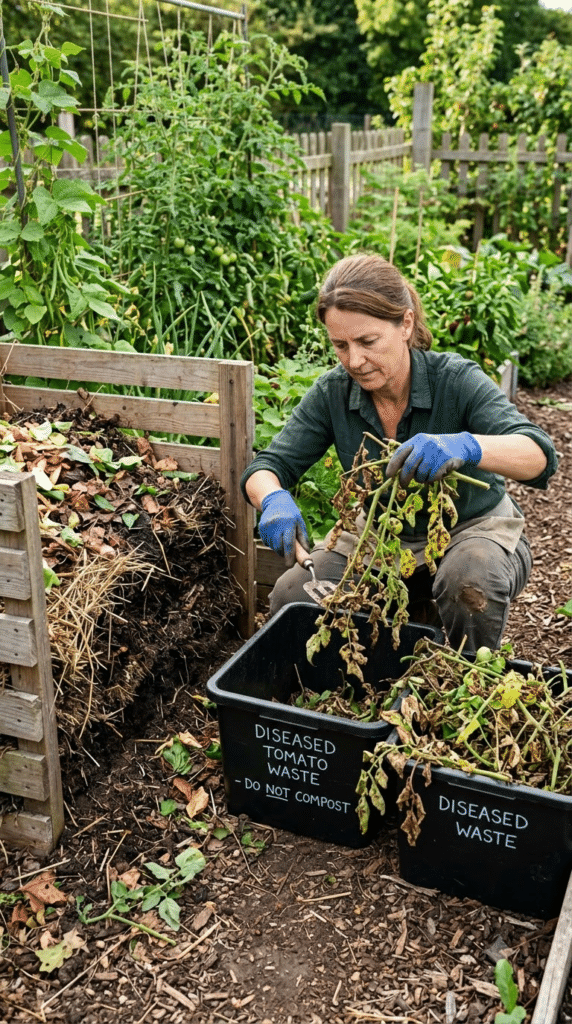
Image Title: “Keeping Disease Out of the Pile”
11. Compost with Persistent Weed Seeds
Compost that doesn’t heat up sufficiently may leave weed seeds intact rather than destroying them, leading to a fresh wave of unwanted weeds competing with garden plants for nutrients and light. Properly maintained hot compost piles significantly reduce viable weed seed survival.
Why it happens: Many weed seeds have tough outer coatings designed to survive harsh conditions, requiring sustained heat above a certain threshold to be neutralized.
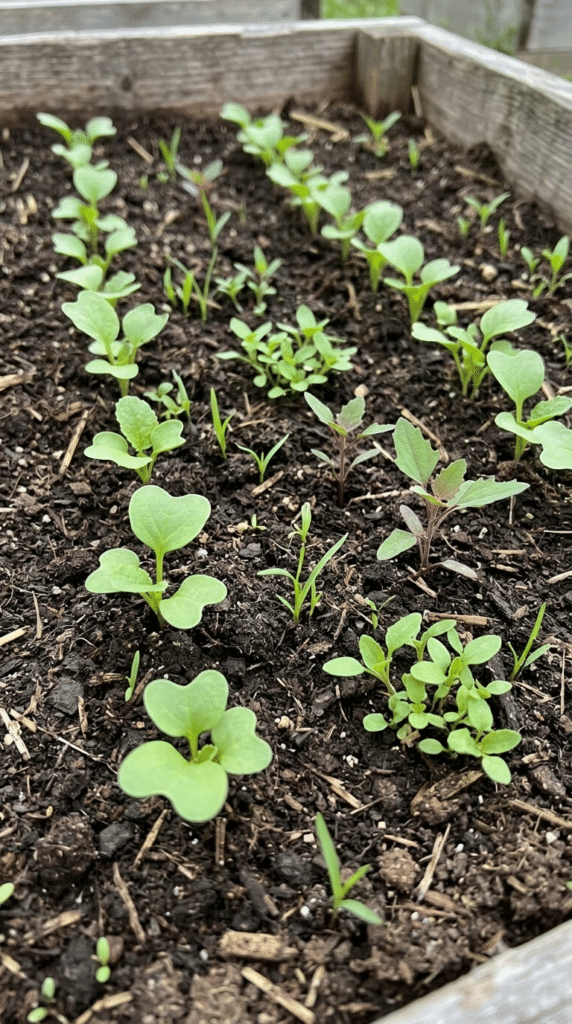
Image Title: “A Pile That Didn’t Get Hot Enough”
12. Using Compost Too Soon After Application
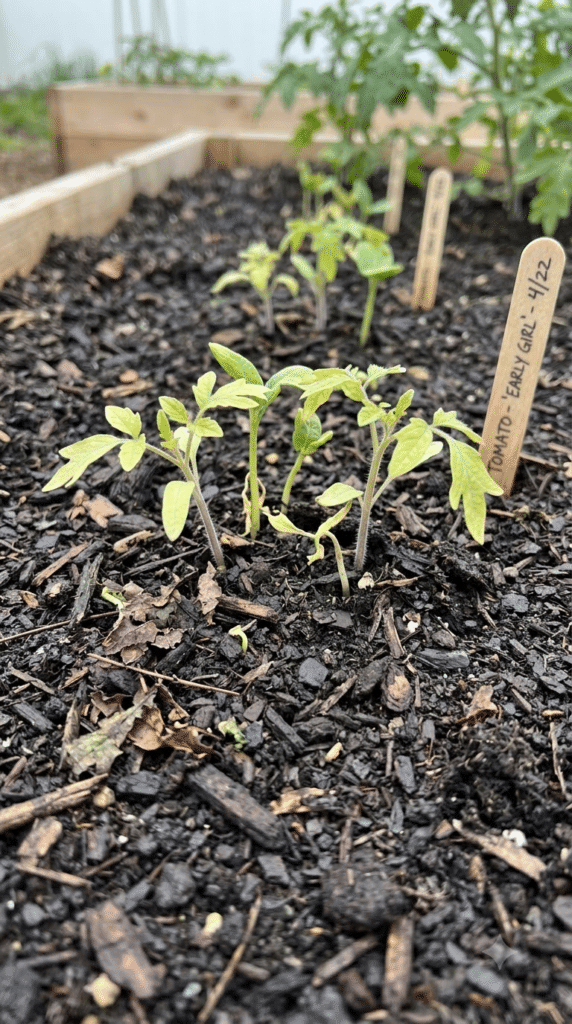
Applying fresh compost immediately before planting, without giving it time to settle and stabilize, can expose young seedlings to concentrated nutrients, uneven moisture, or lingering heat from decomposition. Waiting one to two weeks after application before planting allows the compost to integrate more safely into the soil.
Why it happens: Freshly applied compost is still in a state of chemical and microbial flux, and young, sensitive seedlings are more vulnerable to that instability than established plants.
How to Use Compost Safely
Let it fully finish: Properly finished compost should look dark, crumbly, and earthy, with no recognizable food scraps or strong odor — if it still smells sour or looks unfinished, give it more time.
Know your sources: Be cautious with compost made from grass clippings or manure of unknown origin, since herbicide contamination isn’t visible until plants show symptoms.
Apply in moderation: A one- to two-inch layer worked into the top few inches of soil is typically sufficient; more isn’t always better.
Keep it away from stems: Always leave a small gap between compost and the base of plant stems or tree trunks to prevent rot.
Test before large-scale use: If you’re uncertain about a compost source, do a small test planting before applying it broadly across your garden.
Final Thoughts
Compost isn’t inherently dangerous, but it isn’t automatically foolproof either — problems almost always trace back to how it was made or how it’s applied, rather than compost itself being harmful. By using fully finished compost from trusted sources, applying it in reasonable amounts, and keeping it away from direct stem contact, you can enjoy all the soil-building benefits of compost without accidentally putting your plants at risk.