
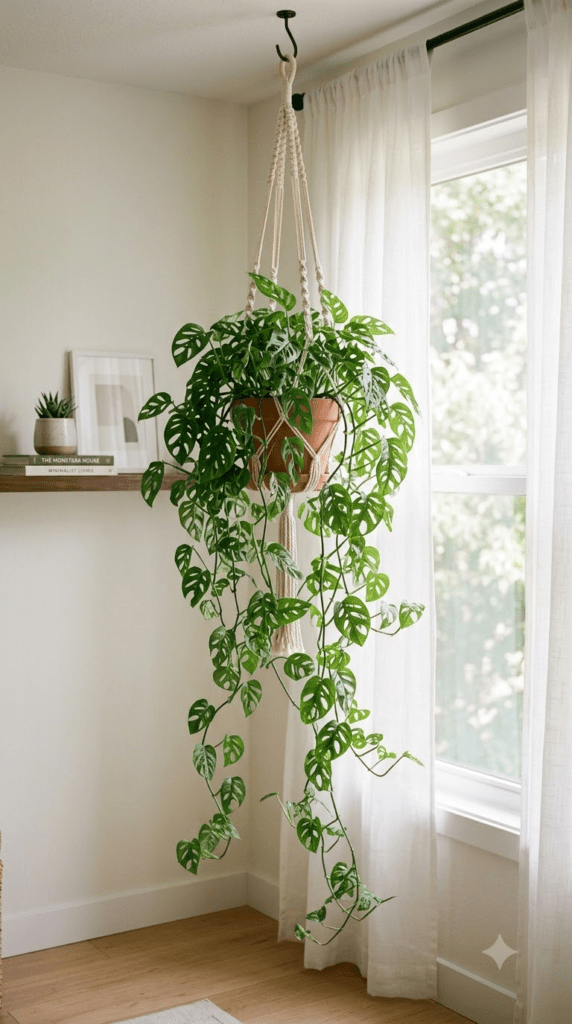
With its charming heart-shaped leaves covered in natural holes and fenestrations, the Monstera Adansonii — commonly known as the Swiss Cheese Plant or Swiss Cheese Vine — has become one of the most sought-after houseplants for good reason. It’s fast-growing, relatively low-maintenance, and adds an instant jungle vibe to any space, whether trailing from a hanging basket or climbing a trellis.
1. Light Requirements: Bright, Indirect Light is Key
Monstera Adansonii thrives in bright, indirect light — think a spot a few feet back from an east or north-facing window, or filtered light through a sheer curtain. Direct sun can scorch its delicate leaves, while too little light leads to leggy growth and fewer fenestrations (the signature holes).
Why it works: Mimicking its natural understory habitat (growing beneath a rainforest canopy) gives the plant enough light to thrive without burning.
2. Watering: Let the Soil Dry Between Waterings
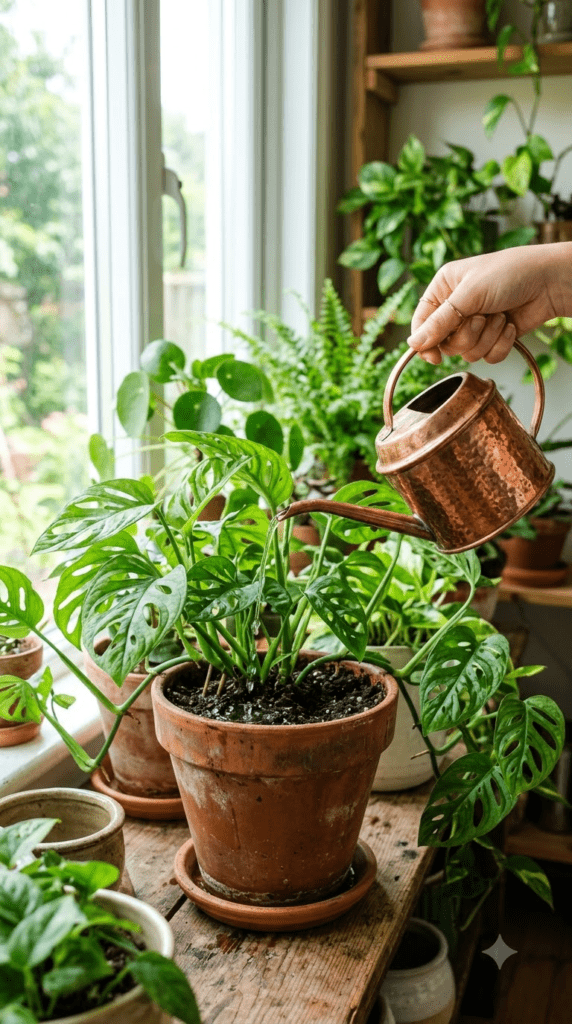
Water your Swiss Cheese Plant when the top 1–2 inches of soil feel dry to the touch, typically every 7–10 days depending on humidity and light levels. Overwatering is one of the most common causes of root rot in this species, so always ensure the pot has proper drainage.
Why it works: Allowing slight drying between waterings prevents soggy soil and root suffocation while still keeping the plant hydrated.
3. Humidity: Aim for 50–60%
As a tropical rainforest native, Monstera Adansonii loves humidity. While it can tolerate average household conditions, boosting humidity to 50–60% with a pebble tray, humidifier, or grouping with other plants will result in larger, glossier, more fenestrated leaves.
Why it works: Higher humidity reduces leaf stress and encourages the plant to produce its signature holes more consistently.
11 Ways to Get a Fuller, Bushier Monstera

4. Soil: Well-Draining and Airy
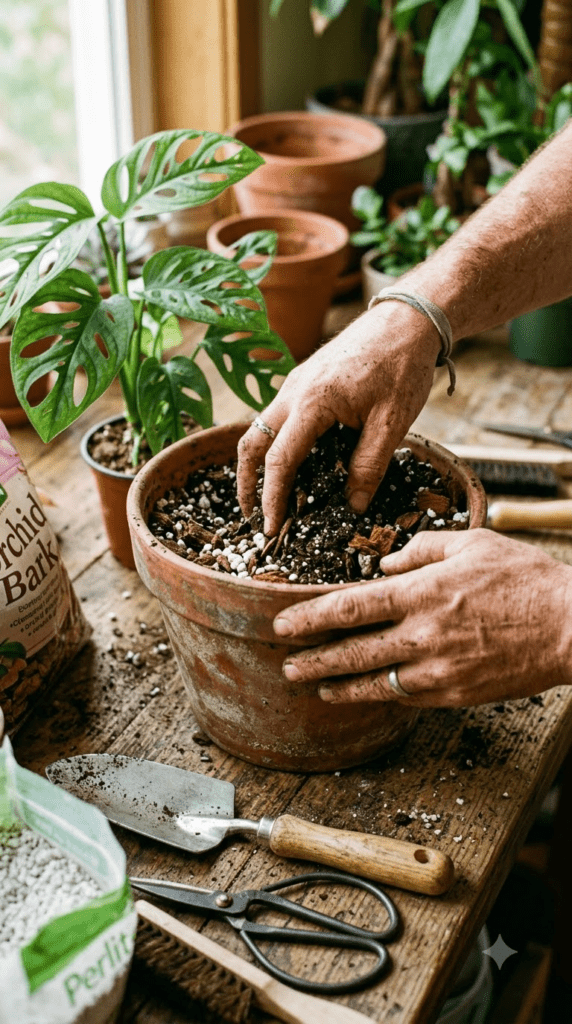
Use a chunky, well-draining potting mix — a blend of regular potting soil, perlite, and orchid bark works well to replicate the loose, airy substrate this epiphytic plant would naturally grow in. Avoid dense, compacted soil that retains too much moisture.
Why it works: Good drainage and aeration protect the roots from rot while still holding enough moisture for healthy growth.
5. Temperature: Keep It Tropical
Monstera Adansonii prefers temperatures between 65–85°F (18–29°C) and should be kept away from cold drafts, air conditioning vents, and windows during winter. Sudden temperature drops can cause leaf drop and stunted growth.
Why it works: Stable, warm conditions mimic its native tropical environment and prevent stress-related damage.

6. Fertilizing: Feed During Growing Season
Feed your Swiss Cheese Plant with a balanced, diluted liquid fertilizer every 4–6 weeks during spring and summer when it’s actively growing. Skip fertilizing in fall and winter when growth naturally slows down.
Why it works: Regular feeding during active growth supports lush, vibrant foliage and faster vine development.

7. Support: Give It Something to Climb
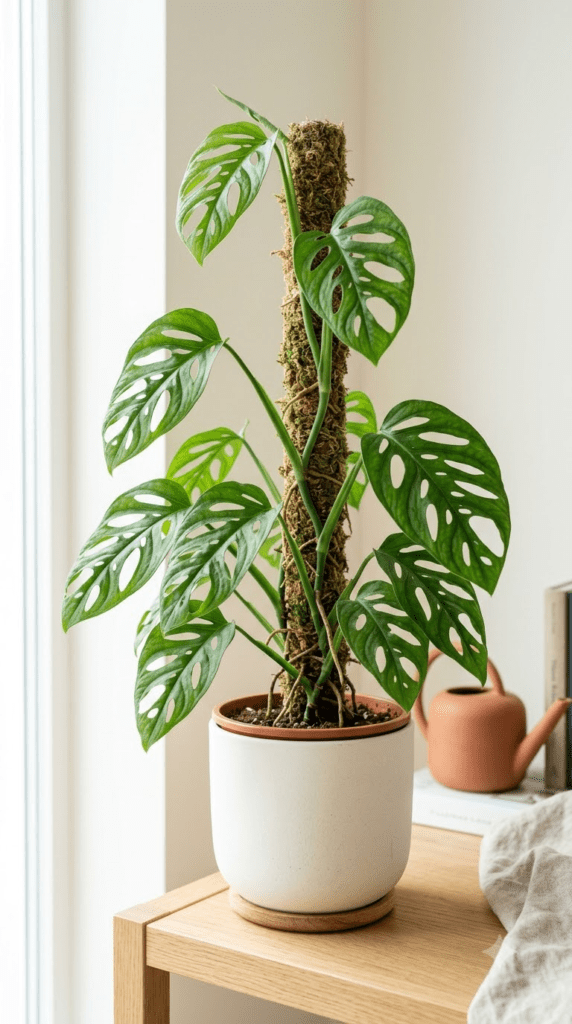
While Monstera Adansonii can trail beautifully from a hanging basket, giving it a moss pole, trellis, or wooden stake to climb will encourage larger leaves with more pronounced fenestrations, closely mimicking how it grows in the wild up tree trunks.
Why it works: Climbing triggers the plant’s natural maturation process, leading to bigger, more dramatic foliage over time.
8. Pruning: Encourage Fuller, Bushier Growth
Regularly pinch or prune trailing vines just above a node to encourage branching and prevent legginess. Use the cuttings to propagate new plants or fill out the same pot for a denser, bushier look.
Why it works: Strategic pruning redirects the plant’s energy into producing multiple new growth points instead of one long, sparse vine.
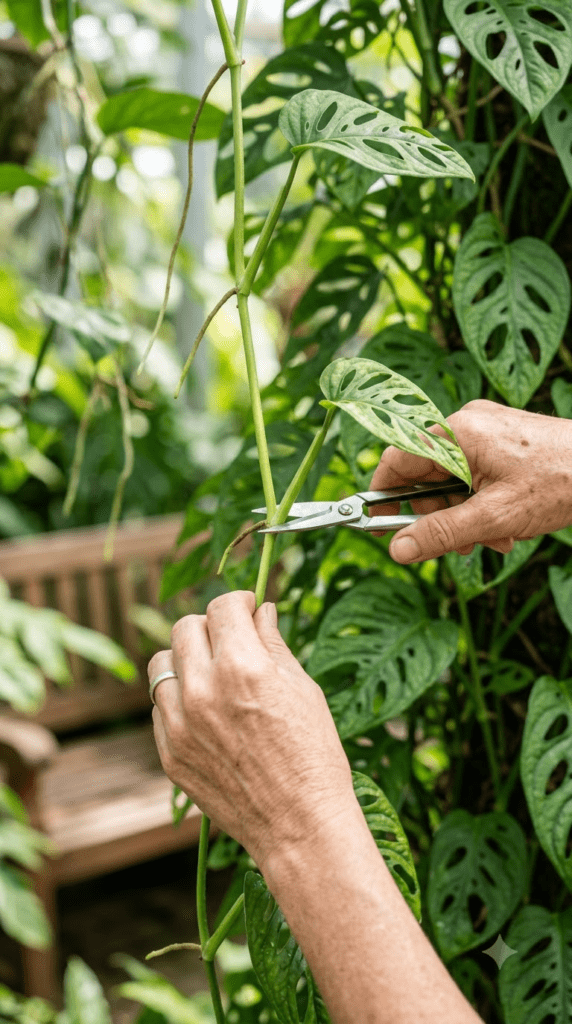
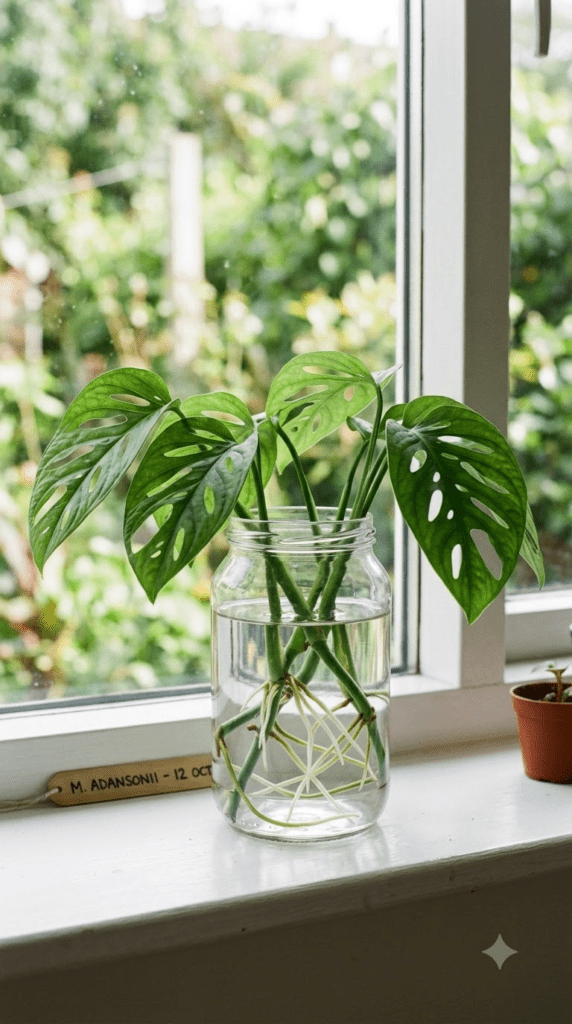
9. Propagation: Easy Water or Soil Method
Monstera Adansonii propagates easily from stem cuttings containing at least one node. Place cuttings in water until roots develop (2–4 weeks), then transfer to soil — or plant cuttings directly in a well-draining mix kept consistently moist.
Why it works: Node-based propagation is highly reliable for this species, making it easy to multiply your plant collection or share with friends.
10. Common Problems and How to Fix Them
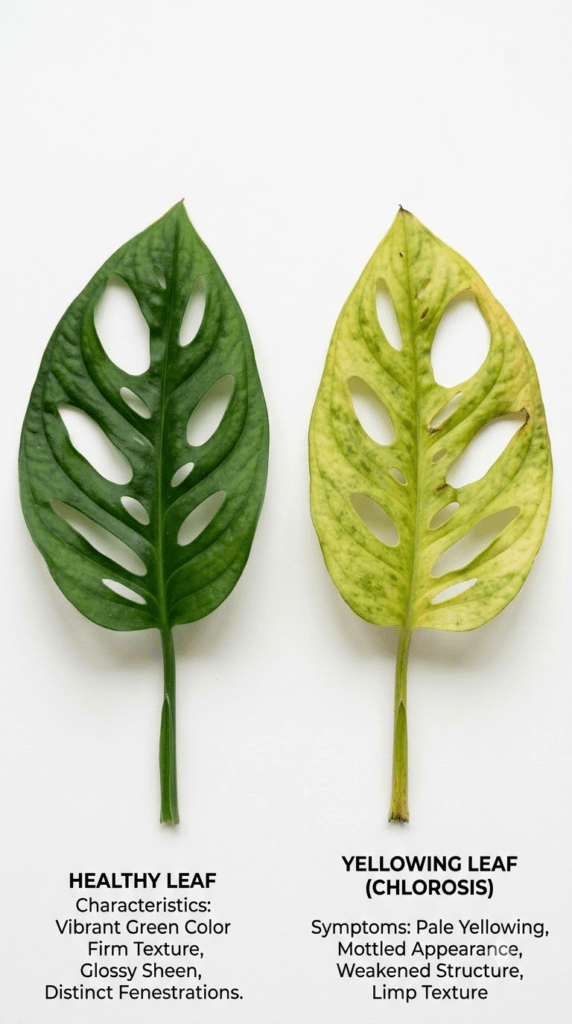
Yellow leaves often signal overwatering, while brown, crispy edges point to low humidity or underwatering. Leggy growth with few fenestrations usually means the plant needs more light or a climbing support. Catching these signs early and adjusting care accordingly will keep your Swiss Cheese Plant thriving long-term.
11 Houseplants That Naturally Cool Down Your Home
16 Futuristic Bathroom Designs with Glowing LED Accents & Sleek Floating Vanities
24 Gorgeous Container Garden Designs You’ll Want to Copy
Rattlesnake Plant Care 101: 11 Secrets to Keep Those Wild Leaf Patterns Thriving
8 Stunning Money Plant Ideas to Transform Your Home Decor in 2026
Why it works: Understanding the visual cues your plant gives you allows for quick, targeted fixes before problems worsen.
Final Thoughts
Monstera Adansonii is a rewarding plant for beginners and seasoned plant parents alike — forgiving enough to bounce back from minor mistakes, yet responsive enough to reward good care with lush, dramatically fenestrated foliage. With the right light, watering rhythm, humidity, and occasional pruning, your Swiss Cheese Plant can quickly become one of the standout pieces of your indoor jungle.
Quick Care Summary
- Light: Bright, indirect
- Water: When top 1–2 inches of soil are dry
- Humidity: 50–60%
- Soil: Chunky, well-draining mix
- Temperature: 65–85°F (18–29°C)
- Fertilizer: Every 4–6 weeks in growing season
- Support: Moss pole or trellis for larger leaves